Beneath the desert sands just south of Cairo, a cemetery older than the Roman Empire, older than the Trojan War, keeps giving up its dead — and the world keeps being astonished. The story of Saqqara’s latest 4,000-year-old tomb unearthed at Saqqara is really a story about time layered on time, silence broken by shovels, and a sacred plateau that has barely begun to confess what it knows.
Saqqara: Egypt’s First Great Necropolis (circa 3100-2686 BCE)
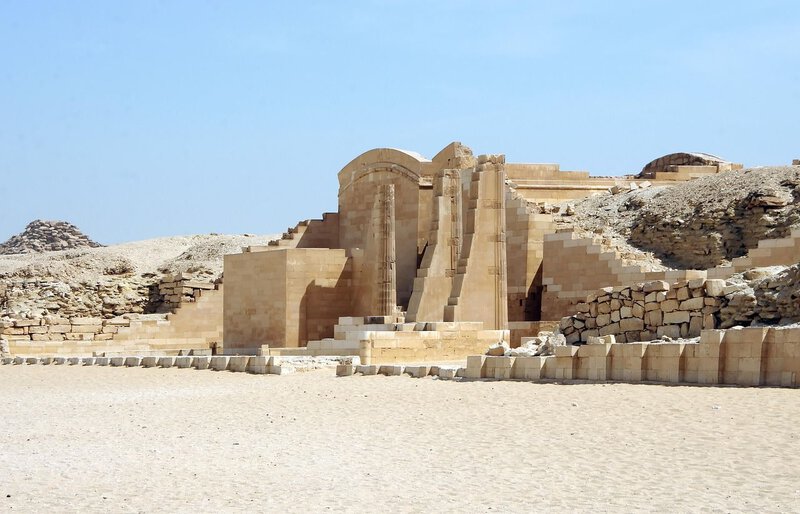
When pharaonic civilization was still finding its footing, Egypt’s earliest rulers looked out across a limestone plateau rising above the Nile floodplain and decided this is where the dead belong. Saqqara sat just south of Memphis, the young nation’s capital — close enough to the living city that priests and mourners could walk its edges, yet high enough above the annual flood to stay dry for eternity. That practical geography quickly became sacred geography, and in ancient Egypt the two are rarely separable.
The site stretches roughly seven kilometers north to south, and from the very beginning it accumulated burials the way a river accumulates silt — steadily, relentlessly, layer upon layer. Saqqara’s emergence as a necropolis was not the result of a single royal decree so much as a gravitational pull: generation after generation of Egyptians returned to the same desert ground, cutting new tombs through the roofs of older ones, threading shafts between shafts, until the plateau became less a place and more a three-dimensional archive of Egyptian civilization.
Imhotep’s Step Pyramid Anchors the Plateau (circa 2650 BCE)
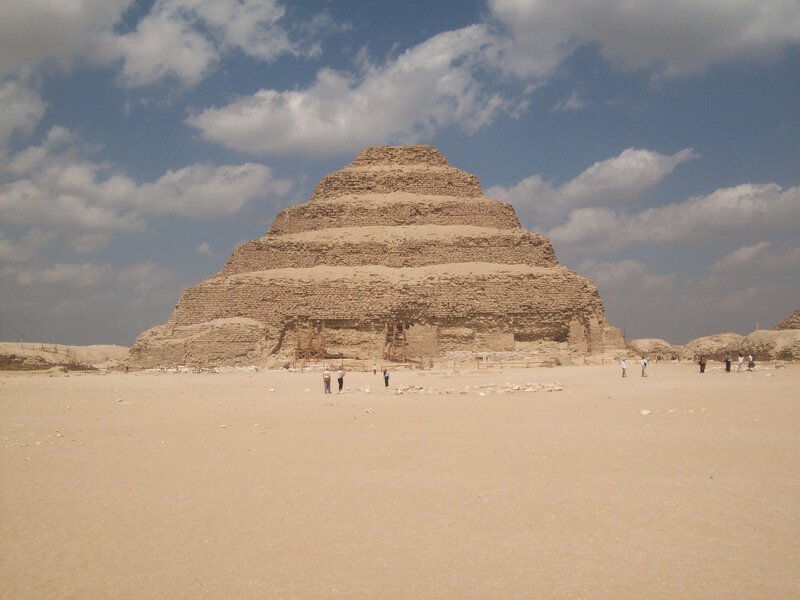
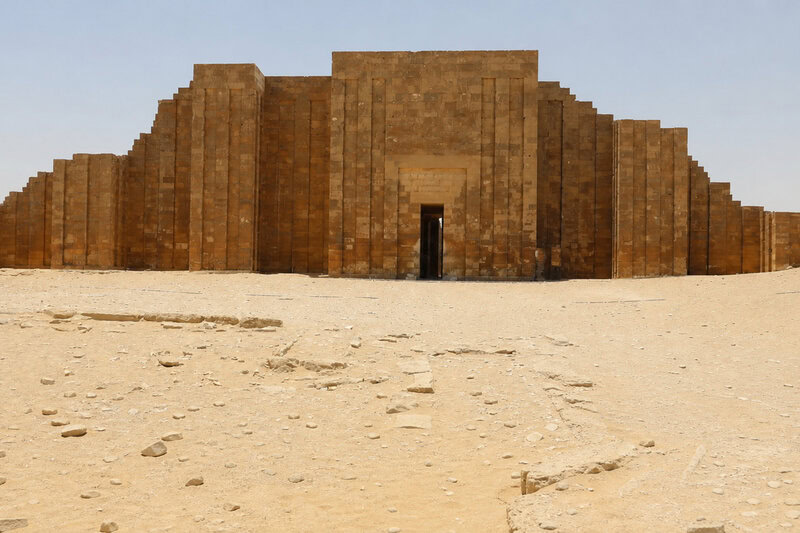
Around 2650 BCE, the architect-priest Imhotep did something no one had done before: he stacked six stone mastabas of decreasing size on top of one another and created the Step Pyramid of Djoser, rising approximately 62 meters into the desert sky. It is widely regarded as the world’s oldest large-scale cut-stone structure, and its ambition was immediately legible to anyone who saw it. Where there had been a flat-tomb cemetery, there was now a monument that commanded the horizon for miles in every direction.
The pyramid’s effect on Saqqara’s future was profound. Elite Egyptians wanted to spend eternity in prestigious company, and proximity to Djoser’s monument became the ancient equivalent of a prime address. For the next two and a half millennia, nobles, priests, and high officials would keep choosing Saqqara — not despite the crowds already buried there, but in part because of them. Every excavation at the site today happens in the literal and archaeological shadow of that first great stone gesture.
A High-Ranking Official Is Sealed Into His Tomb (circa 2000 BCE)
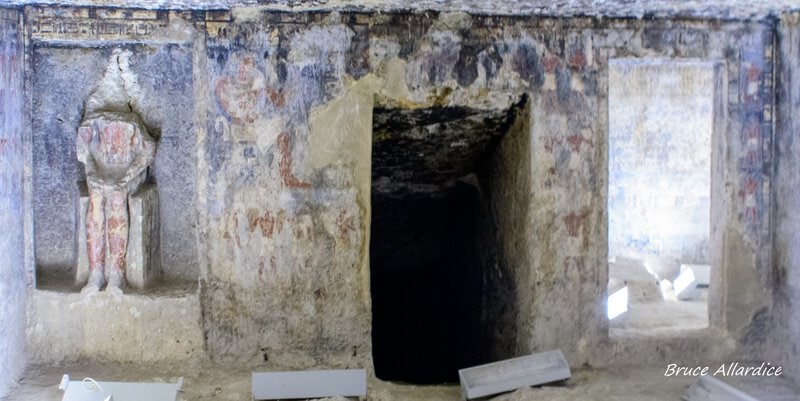
At or near the dawn of Egypt’s Middle Kingdom, a man of considerable status was lowered into a tomb cut from Saqqara’s bedrock and sealed away from the living world. His name has not yet been determined, but his rank is written clearly in stone: only elite officials commanded the resources for a multi-chamber, rock-cut tomb with decorated walls. This was not a modest burial scraped together by a modest family — it was a deliberate, expensive, and ceremonially loaded act of remembrance.
Three sealed stone sarcophagi were placed inside the chambers, a detail that speaks to both the occupant’s importance and the care his survivors invested in his passage to the afterlife. Archaeologists who later examined the Saqqara tomb found that its architecture bore all the hallmarks of high-status burial practice circa 2000 BCE — the kind of tomb that expected to be visited, tended, and remembered for generations.
The False Door: A Threshold Between the Living and the Dead (circa 2000 BCE)
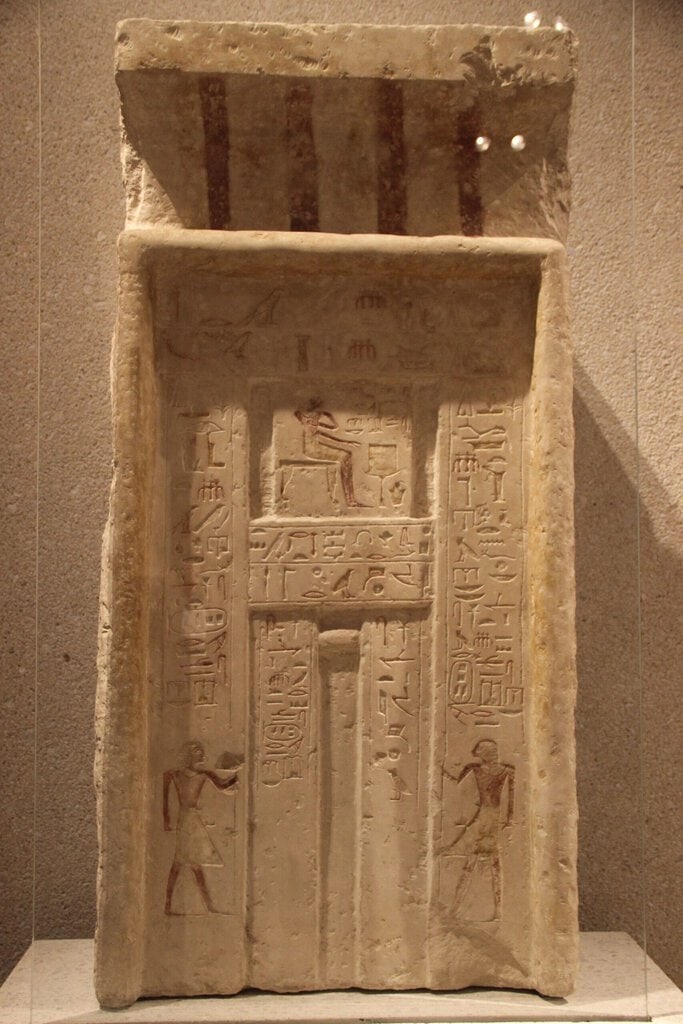
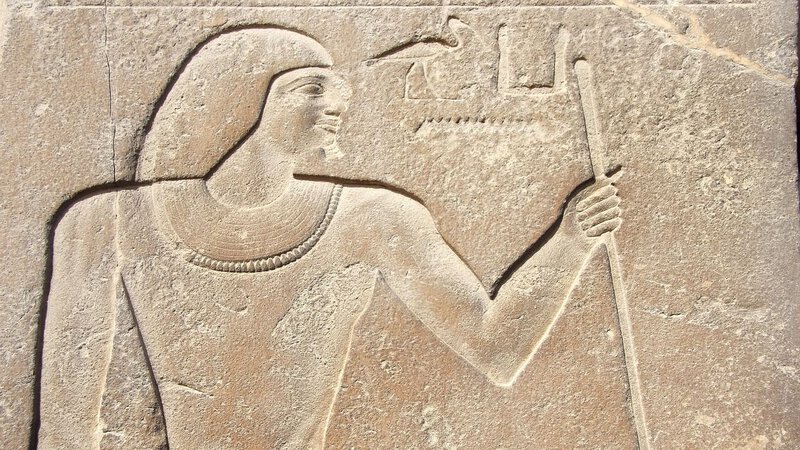
Among the tomb’s most striking features was a false door — a slab of stone carved and painted to resemble a real doorway, but opening onto nothing but solid rock. To a modern eye it can look like a cruel joke, a door that leads nowhere. To an ancient Egyptian, it was the most important threshold in the building. In the theology of the period, the deceased’s spirit — the ka — would emerge through that carved portal to receive food offerings left by priests and family members at its base.
The presence of a false door is not merely decorative; it is a social statement. Maintaining a mortuary cult required living people willing to keep showing up with bread, beer, and linen, which in turn required wealth, influence, and family continuity across generations. The false door found inside this Saqqara tomb confirms that whoever rested here expected — and could reasonably demand — that kind of sustained ritual attention from the world he had left behind.
Ancient Looters Force Their Way In
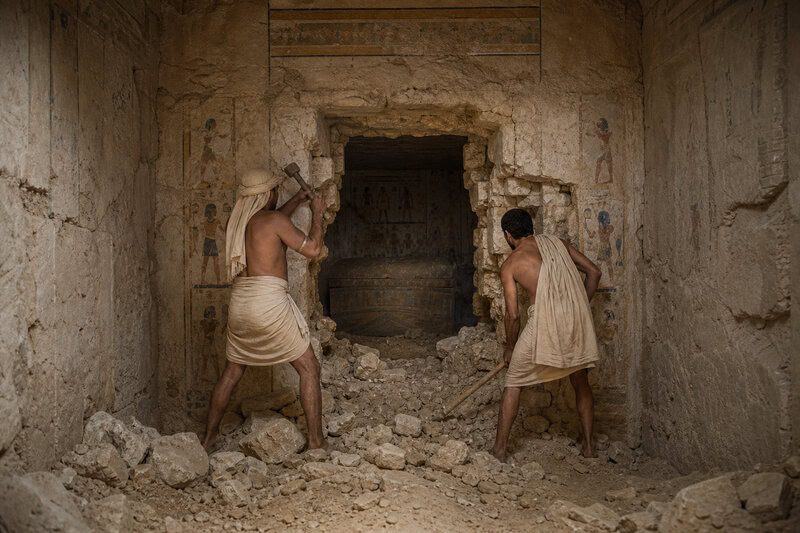
At some unknown point after the tomb was sealed, thieves found their way inside. This was, statistically speaking, almost inevitable: the vast majority of ancient Egyptian burials were breached by looters, sometimes within decades of the original interment, sometimes centuries later. The most portable valuables — jewelry, amulets of precious metal, and any gold or silver grave goods — almost certainly disappeared in those hands, carried off into an economy that had no interest in preserving the archaeological record.
And yet the looting was incomplete. Whether the thieves worked in haste, were interrupted, or simply failed to locate every sealed chamber, they left behind a remarkable quantity of material. That gap between what was taken and what survived is itself a piece of evidence — a hint that the original burial assemblage was so rich that even a determined looting could not empty it entirely.
Undisturbed for Roughly Four Millennia: The Tomb Waits Beneath the Sand
After the ancient disturbance, the tomb passed out of human awareness entirely. Desert sand drifted over its entrance. Later construction phases at Saqqara — and there were many, across dynasty after dynasty — buried it further under debris and rubble. The plateau kept accumulating its dead above and around the forgotten chambers, sealing them ever more deeply beneath the present surface of the site.
This roughly four-millennium silence is not unusual at Saqqara; it is characteristic. The site’s underground network of shafts, galleries, and burial chambers is still only partially mapped, and vast sections have never been touched by systematic modern excavation. The sheer scale of what remains unknown is precisely why significant finds keep emerging — and precisely why this particular discovery is less a surprise than a confirmation of what Egyptologists have long suspected about how much the plateau still holds.
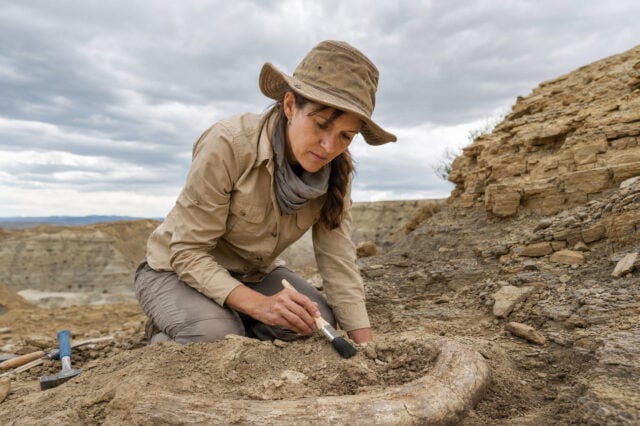
Modern Excavation: Archaeologists Open the Chambers and Inventory the Survivors
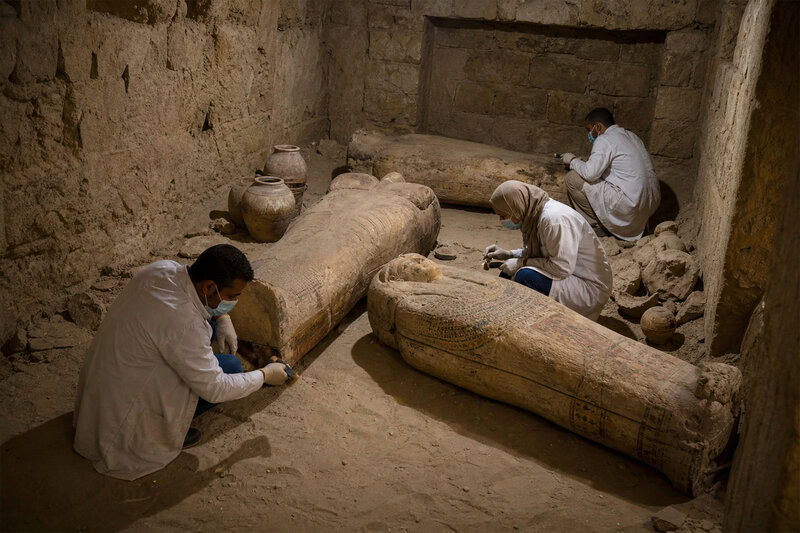
When Egyptian archaeologists finally cleared the burial chambers, the inventory of survivors was striking for a tomb that had already been looted. Human remains were present. Pottery lay among the debris. Painted funerary cartonnage — sheets of linen or papyrus stiffened with plaster and covered in religious imagery — had once adorned or wrapped the mummy, preserving a visual record of the owner’s spiritual identity that thieves had no obvious use for and left behind.
More than 100 faience objects, including small glazed amulets and figurines, were recovered from the chambers. Among the finds was a wooden statue of a falcon — not a casual decorative choice. The falcon was the avatar of Horus, god of kingship and divine protection, and its presence in a burial context gives the object a devotional weight that sets it well apart from mere ornamentation. Taken together, the recovered artifacts paint a picture of a burial that was, even in its plundered state, richer than most ancient Egyptians could have imagined for themselves.
The Faience Hoard: More Than 100 Objects Reframe the Burial’s Wealth
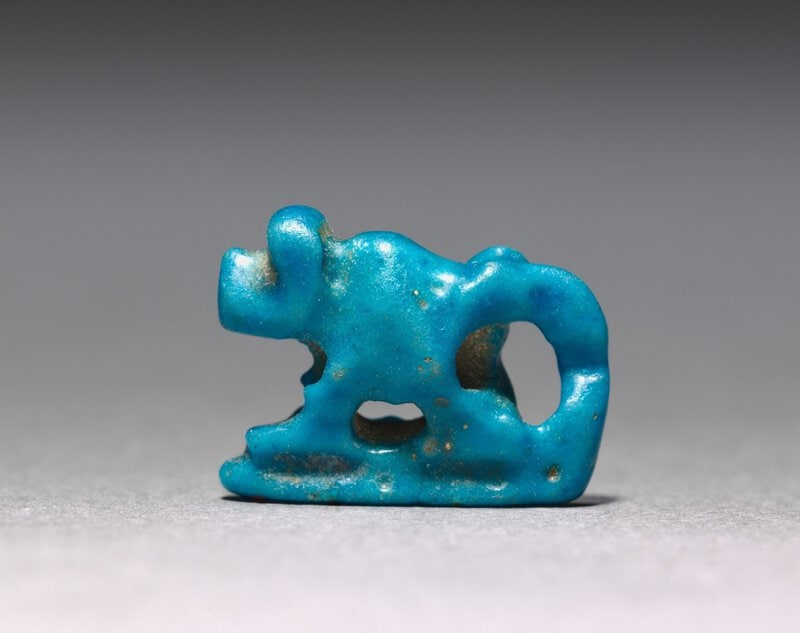
Faience — a glazed non-clay ceramic typically fired to a turquoise or blue-green finish — was the prestige material of ancient Egyptian amulet-making. Its color was not arbitrary: blue-green was symbolically tied to fertility, rebirth, and the life-giving waters of the Nile, making faience objects potent companions for the deceased’s journey through the afterlife. Producing them in quantity required skilled craftspeople and access to established trade networks, which meant that a large faience assemblage was, in its own quiet way, a display of power and social standing.
Recovering more than 100 faience pieces from a single tomb — even one that had been looted — signals that the original collection was extraordinary. Thieves apparently overlooked or undervalued these small objects, possibly because they were not made of gold, which is the archaeologist’s gain. The quantity is large enough to allow researchers to analyze production patterns and material sourcing, offering a statistical window into the craft and trade networks operating around 2000 BCE in ways that a handful of isolated objects never could.
The Discovery Goes Public and Joins a String of Saqqara Breakthroughs (September 2026)
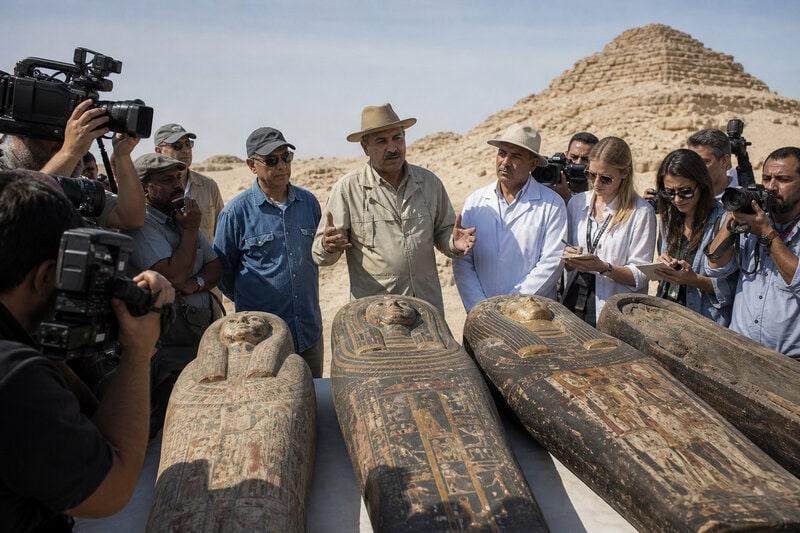
Coverage of the find appeared in major outlets — including Archaeology Magazine, Smithsonian Magazine, and Popular Mechanics — on or around September 1, 2026, placing it squarely within a sustained cycle of headline-making Saqqara discoveries. For readers who had been following the site’s recent output, the announcement carried a familiar quality — not because it was unremarkable, but because Saqqara had trained the world to expect the remarkable.
The broader context made the find even more resonant. Recent years at the site had already produced vividly painted New Kingdom tombs, a vast network of Late Period burial shafts, and mummified animals counted in the millions. Each new tomb discovered at Saqqara adds another data point to the same emerging conclusion: the site is not winding down its revelations — it is accelerating them.
Why Saqqara’s Secrets Keep Coming: The Bigger Picture
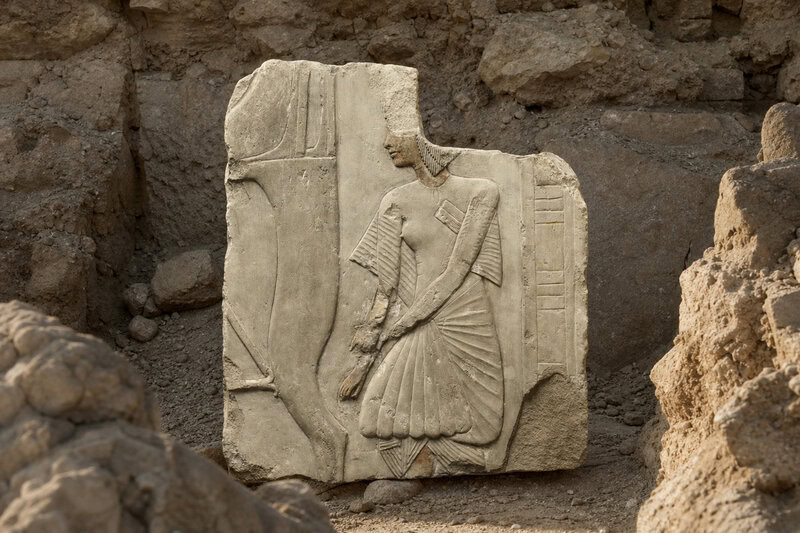
Egyptologists estimate that only a fraction of Saqqara’s total footprint has been excavated to modern scientific standards. Many of the digs conducted before the twentieth century were destructive by contemporary measures — artifacts removed without stratigraphic records, context lost forever — meaning that zones considered “cleared” a century ago may still hold significant material waiting for a careful modern team. The plateau’s use spans from the First Dynasty around 3100 BCE all the way through the Coptic Christian era, creating a stratigraphic layer cake in which each century’s burials were cut through, and sometimes accidentally preserved by, the centuries that followed.
The 4,000-year-old tomb reported in 2026 is a vivid illustration of that reality. Saqqara’s ongoing stream of discoveries is not a run of lucky accidents — it is the predictable output of a site operating at a scale that modern archaeology has only begun to take seriously. Beneath its surface, the desert keeps its secrets with extraordinary fidelity, and Saqqara, by any honest reckoning, has barely been scratched.
From the first pharaohs who chose this plateau above the Nile to the excavators who cleared these chambers in 2026, Saqqara has always rewarded patience. Given that the site’s depths remain largely uncharted, there is every reason to believe the next discovery is already waiting — sealed in the dark, a few meters below the sand.