11. Benjamin Franklin’s will indicated his distaste for women wearing jewelry

Despite being a polymath of prodigious reputation on both sides of the Atlantic, Benjamin Franklin, in his will and on his tombstone, identified himself simply as a printer. His humility was misplaced. Franklin was one of the most influential of the Founders, a noted diplomat, an innovative musician, an inventor whose contributions are still in use in the form of the lightning rod, the Franklin stove, bifocals, and others, the founder of newspapers, almanacs, and lending libraries, and much more. His Philadelphia funeral was attended by more than 20,000 souls at a time when the population of that city was under 29,000 residents. He also left behind a substantial estate despite having arrived in Philadelphia nearly penniless decades earlier.
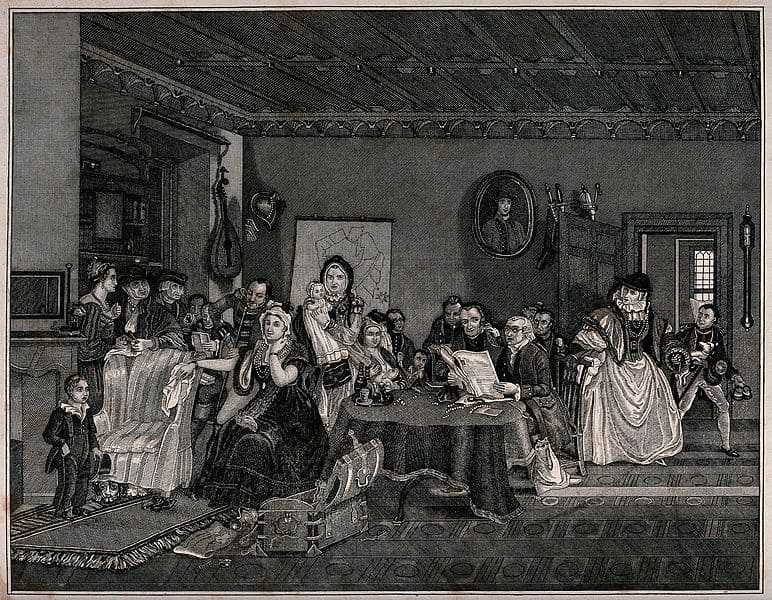
He disposed of that estate by providing large endowments to both Philadelphia and his native Boston (the Boston fund grew to over $5 million). His printing press went to his daughter. He also provided his daughter with over 400 diamonds which he had accrued over the years but his bequest contained a proviso which reflected the humble manner in which he had presented himself in Paris when attending the salons during the American Revolution. Franklin demanded in his bequest that the diamonds not be used as jewelry, nor worn as decoration by his daughter, “and thereby introduce or countenance the expensive, vain, and useless fashion of wearing jewels in this country”.


