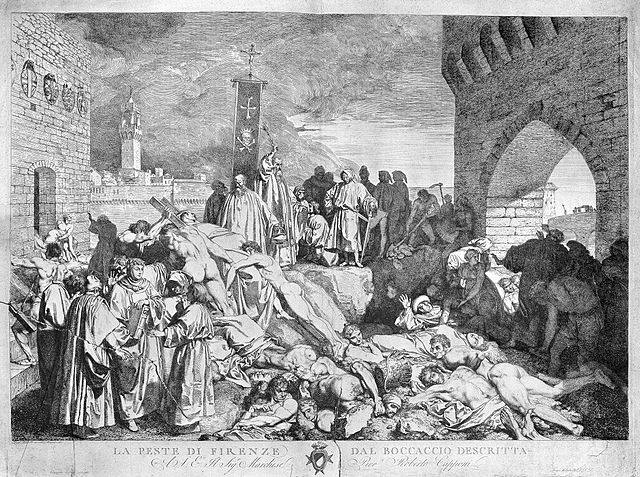

14. Music And The Arts Reflected The Misery
Before the Black Death, life was happy, abundant, and great all around. Think of it as the Roaring 20s before the Great Depression. Music was plentiful and happy, and the art was beautiful. Artists were respected professionals who often interacted with princes and the Pope. During the Black Death, things changed for the worst. Music became rare and grim. People would hear the grim church bells chime day and night constantly due to increasing deaths. Eventually, people had enough of the bells, and they stopped chiming with every death since the toll was too great.
Paintings took a darker turn during this period. They were overflowed with tortured souls, death, dying, fire, brimstone, and all around darkness. Thousands of craftsmen, artists, painters, writers, and art patrons perished from the plague. Many artists began painting the Grim Reaper, Hell, and Satan due to the insecurity of survival. Others stopped creating art altogether because they believed it was hopeless to create beauty in a world full of death and destruction. So not only was the world a mess, music, and art didn’t help to ease the hopelessness.


