The Four Chaplains
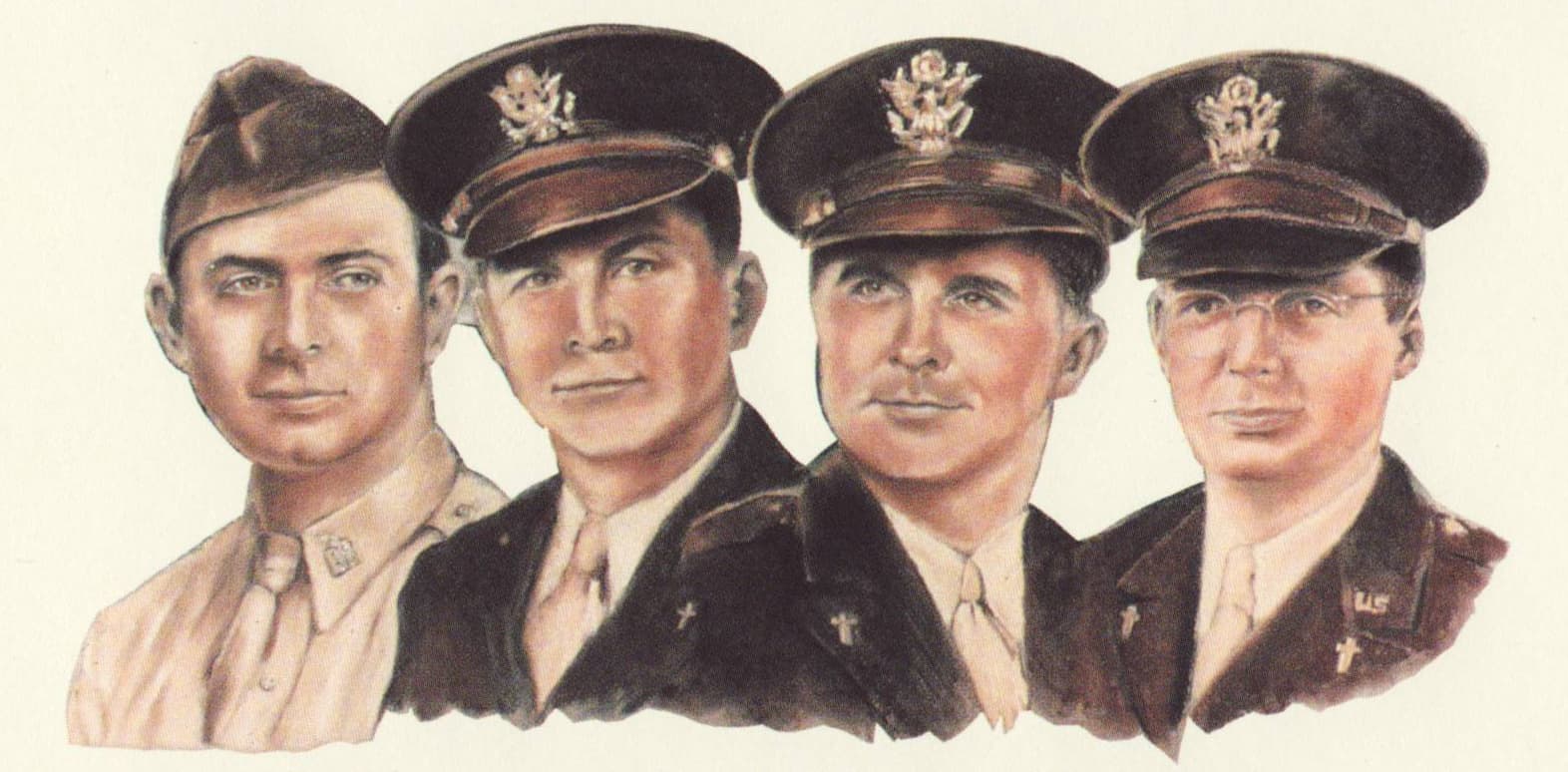
George L. Fox, Alexander D. Goode, Clark V. Poling and John P. Washington: Collectively, they have become known as the ‘Four Chaplains‘ and are remembered for not only giving their own lives for others, but for offering comfort to those whose end was near. Throughout the Second World War, stories of heroism were commonplace. However, that of the Four Chaplains continues to be told and held up as a pure example of self-sacrifice.
The four men had met at the Army Chaplains School at Harvard University. And, while their backgrounds and faith may have differed (Fox was a Methodist minister, Goode was a rabbi with a Ph.D., Washington was a Catholic priest, and Clark a revered of the Reformed Church of America), history brought them all together. In February of 1943, all four were aboard the Dorchester, a renovated luxury liner being used to transport troops. In all, 902 souls were on the ship as it sailed through the treacherous Atlantic waters from Newfoundland to Greenland. On the evening of 2 February, the enemy attacked. A torpedo from a Nazi U-boat scored a direct hit. The ship was doomed.
Numerous stories came out of that night, mostly told by the surviving seamen. They all paint a remarkable picture of extreme courage in the face of certain death. All four chaplains got busy looking after others. They all gave up their life jackets and refused to abandon the ship. They tended to the men who had been wounded by the explosion caused by the torpedo. For those unable to get off the boat and to safety, they offered spiritual counseling. Finally, as the Dorchester started to vanish under the waves, survivors spoke of seeing the four holy men linked arm-in-arm, praying aloud to the very end.
In 1961, the U.S. Congress approved a new, and unique, award. The posthumous Special Medal for Heroism was conferred on all of the Four Chaplains (they were ineligible for the Medal of Honour since the rule states it must be awarded for bravery while under enemy fire). All four men have also been remembered on postage stamps, in statues and with chapels dedicated to their memory across the world.


