Italian POWs in the United States
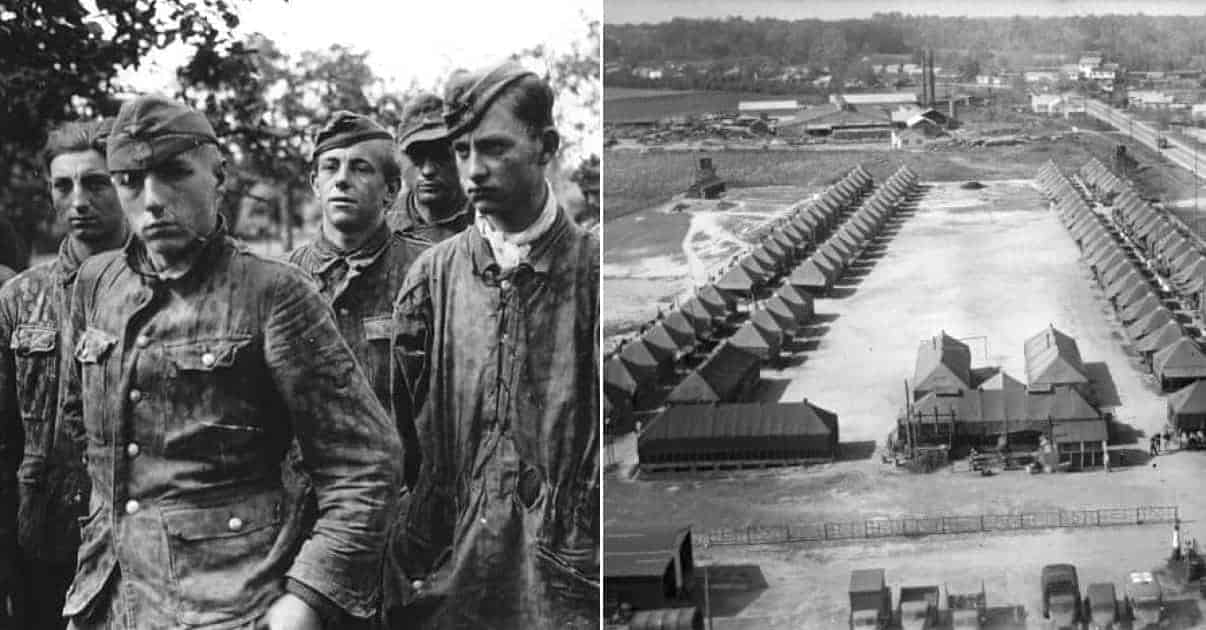
By the late summer of 1943 the Italians were knocked out of the war. Mussolini was overthrown and held prisoner until he was rescued by German paratroopers led by Otto Skorzeny and taken to Germany. The Badoglio government in Italy signed an armistice, and Italy became an ally of the United States and other nations at war with the Germans. At the time there were just over 50,000 Italian prisoners of war in the United States, most of them held in camps dedicated to Italian prisoners, but some held in camps which also held German prisoners, albeit in separate compounds from their former allies.
The situation for the Italians was complicated by the situation in Italy. The German Army continued to hold most of Northern Italy, and Hitler installed Mussolini as the head of the puppet government established there in mid-September 1943. The United States further confused the issue with the creation of the Italian Service Units. Nearly 45,000 Italian POWs joined the Italian Service Units, which led to their relocation to sites across the United States. Unlike the German prisoners of war, who were ostensibly not allowed to work on projects which supported the war effort, the ISUs were directly involved in war related projects and industries.
The Italians who refused to join the ISUs were transported to prisoner of war camps and remained isolated for the rest of the war. The Italians who did join were, after relocation, given far greater and ever increasing freedom of movement, and many integrated into existing Italian-American communities. The Catholic Church in many instances played a leading role in helping these men adjust to their new lives in America. The Italians were for the most part still retained in camps, but there were far fewer restrictions on their movement and social activities, and the practice of using the honor system to leave and return to the camps unguarded was common.
Midwestern Italian camps were regulated more strictly than those on either the east or west coast. On the east coast there remained an air of hostility towards the Italians, generated by the fact that Italy’s participation in the war had brought the Italian neighborhoods of New York, Boston, and Philadelphia under harsh scrutiny during the war’s early years. The west coast was where the Italians found their warmest welcome. The west coast was physically and emotionally more closely tied to the Pacific War. US ships returned to West Coast ports for repairs and troops shipped out via those same piers. Anti-Asian feeling was far more common than anti-Italian once Italy was out of the war.
The Italian prisoners of war were repatriated beginning in January of 1946, and by then many had developed relationships within the United States which made them want to remain there. Many returned to the United States after seeing the ruins of Italy and the lack of viable jobs. The number of Italians prisoners of war to return to the United States after repatriation is unknown for certain, but the fact that many of those who joined the Italian Service Units as well as those who refused returned, is well known. As a side note, the greatest rate of attempted POW escapes in the United States as a percentage of the prison population was from the Italian camps where the non-collaborative troops were sent beginning in 1943.


