
The Japanese prisoners of war in the United States
Relatively few Japanese prisoners of war were held in the United States. This was for several reasons, not the least of which being the relatively low number of Japanese who surrendered. Japanese troops, sailors, and airmen captured in the South Pacific were turned over to Australia and New Zealand by the Americans, who retained title as holding the prisoners and paid the Allied countries for their support. Japanese troops captured during the drive across the Central Pacific were brought to the United States. For the most part Japanese prisoners were cooperative with their captors, and offered what information they knew of Japanese military plans and deployments.
Part of the problem for the Japanese prisoners was the existence of Japan’s Bushido code, which rendered anyone surrendering to the enemy a reflection of shame and failure. The Japanese did not want their families to be made aware of this shame and in that they were abetted by the Japanese government, which throughout the war did not acknowledge the existence of Japanese prisoners of war. American camp commanders, as well as their Australian and New Zealander counterparts, used this to their advantage when interrogating prisoners or applying disciplinary action.
Camp commanders and interrogators would threaten to write to a prisoner’s family in Japan, through the protecting powers, and inform them of the status of the prisoner. Wanting to spare their families the ignominy of their failure to honor the Bushido code led many Japanese prisoners to behave in accordance with their captor’s wishes. Japanese prisoners suspected of having more in-depth information regarding the state of the Japanese government and military were sent to special interrogation facilities in California and Virginia. At these camps, the prisoner’s quarters were wiretapped, and interrogators often used the time honored “good cop, bad cop” technique, but there was no use of physical torture.
At the end of the war the entire Japanese military became prisoners of war, most of them just long enough to be disarmed, and many were placed in work details formed to clear up damage, and dismantle military facilities which remained standing. The US Navy retained numerous prisoners to destroy military equipment and facilities on the many islands which had been bypassed by the leap frogging campaign across the Central Pacific. America retained over 70,000 Japanese prisoners until the end of 1946 for use as work details. The British held Japanese prisoners until the end of 1947, using them to help re-establish the French and Dutch colonies in Southeast Asia and the Pacific.
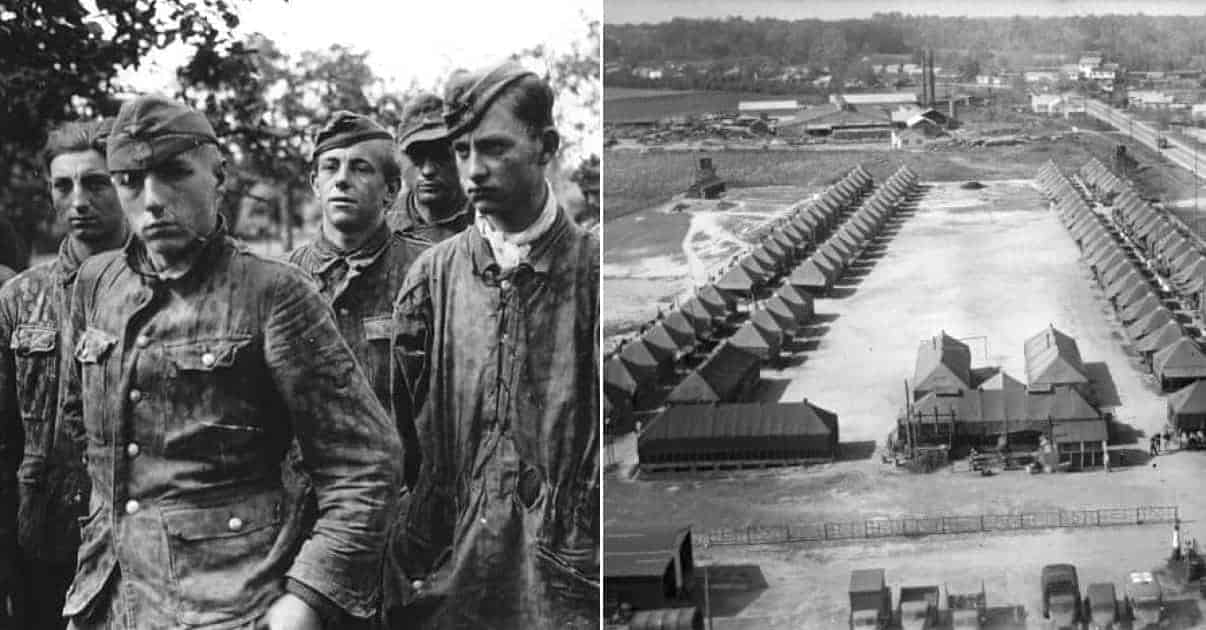
Whether German, Italian, or Japanese, those prisoners of war who found themselves in American hands fared far better than those held by the other combatant countries during the Second World War. Hundreds of German and Italian prisoners left behind records of their stay in American hands, and nearly all of the reports were favorable regarding both their treatment and what they saw and learned of the American people. The Japanese were often astounded that they were not butchered and eaten by the Americans, as they had been told they would be. It’s safe to say that by 1944 the safest and most comfortable place on earth for a German, Italian, or Japanese soldier was inside an American prisoner of war camp.
Where do we find this stuff? Here are our sources:
“Prisoners in Paradise: Italian POWs held in America during WWII”, by Camilla Calamandrei, online
“Men in German Uniform: POWs in American during World War II”, by Antonio Thompson, 2010
“Nazi Prisoners of War in America”, by Arnold Krammer, 1979
“German POWs in North American: The Journey to Prison Camps”, by Glenn Sytko, Uboat.net


