
Changes to the compulsory work program
It was clear to all involved that the compulsory labor program was major contributor to camp morale, as well as supporting the American war effort. German enlisted prisoners were granted an allowance of ten cents per day, for their use to purchase incidentals to make their existence more pleasant. Obviously ten cents a day did not go far, and the eighty cents they were paid for their labor was a big help. Nonetheless their officers resented the use of their men and attempted to find ways to circumvent the system by issuing complaints to the Americans and backing them up by ordering work stoppages.
Often these complaints were couched in language which described unsafe work conditions (a violation of the Geneva Convention) or exposed the prisoners to threats from civilians. The War Department, as part of cracking down on the control of the prisoners through uncooperative German officers, initiated several changes to the work program. Since nothing in the Geneva Convention prevented it, the American officers in the camps withheld food from prisoners who refused to work, providing them rations of bread and water, and refused them the maintenance allowance. Those refusing work were issued 18 ounces of the detested white bread per day.
There was no limit to the amount to water such men were allowed to consume, and bread and water was usually sufficient to bring the reticent prisoner back to work in just a few days. In the late winter of 1944 the War Department initiated a program by which workers were evaluated by their employers, with the reports being provided to the American guards and the Provost Marshal’s office. Workers were no longer paid based on their rank in the German Army. Instead they were paid by performance, with some being given less than eighty cents per day, and others being compensated by up to $1.20 per day. The authority of the German officers was weakened further.
By the summer of 1944 many German officers, tired of the boredom and confinement of the camps, were volunteering for the work program. These officers were assigned as were the enlisted men, in accordance with their skills and the demand for their work. With the US Army no longer tied to rank as the basis of its pay scale, the German officers received the same as the enlisted and were evaluated in the same manner. As American, French, British, and Canadian troops assaulted the beaches at Normandy about 7% of the German officers in American custody were working in the United States.
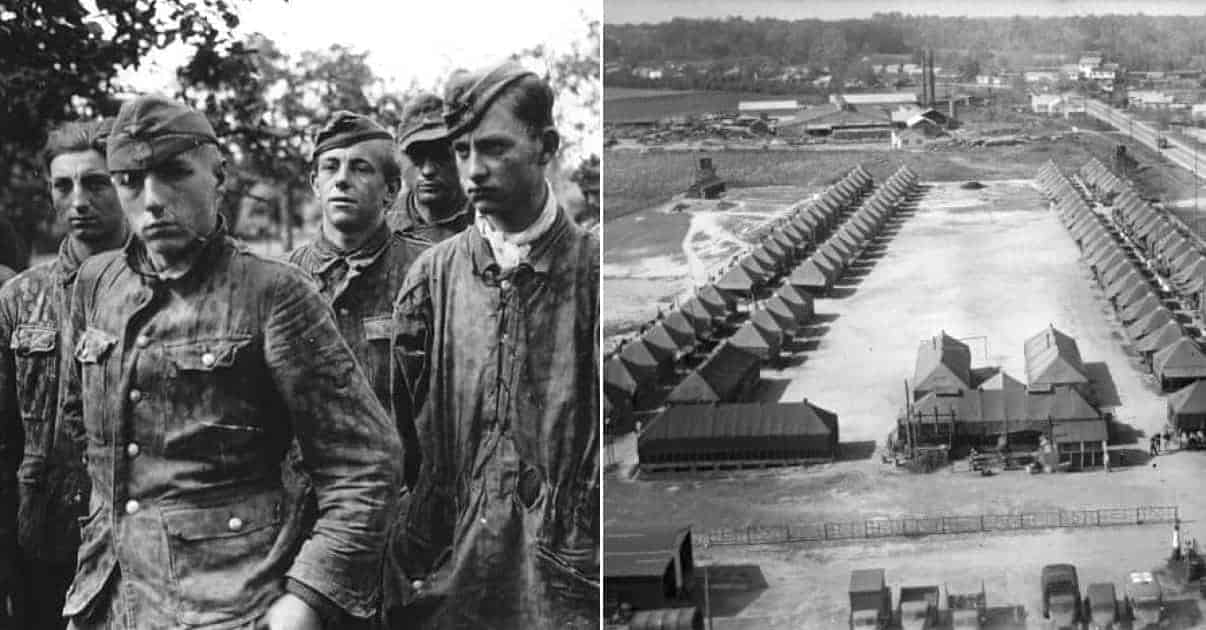
As more and more Germans entered the work program the number of camps needed to house them increased. The state of Wisconsin alone had 38 camps and satellites, placed among a large German community, some of them having gone to Wisconsin to escape the rise of the Nazis the preceding decade. The expansion of the work camps presented the Army with a new set of problems as prisoners of war labored in the fields and factories. Fraternization, particularly with members of the opposite sex, became an issue. In many factories, American women and German prisoners worked together during all shifts, and rumors of extracurricular activities were common.


