
7 – The Glencoe Massacre, 1692
The English Civil War ended in 1651 in England, 1653 in Ireland and 1654 in Scotland. The history of Scotland in the Civil War period cannot be understood without the religion of the era: the Scots were a separate type of Protestant to both the King’s Anglicans and Cromwell’s Puritans and had maintain their version of religion, Presbyterianism, as the dominant faith north of the border. They had first fought King Charles when he attempted to foist his Anglican Book of Common Prayer on Scotland in 1638, leading to the so-called Bishop’s Wars, before the full conflagration of the Civil War broke out.
Once the Civil War period – the War of the Three Kingdoms, as it is sometimes known after the theatres in England, Ireland and Scotland – had ended, there was the Commonwealth, a republic under Cromwell, the Protectorate, a dictatorship of Cromwell, then a restored monarchy under Charles II and finally the Glorious Revolution, in which Charles’ younger brother James II was deposed by Parliamentarians, who placed the constitutional monarch, William of Orange, on the throne. William was Dutch and staunchly Protestant and, in the new Bill of Rights adopted on his accession, Catholics were debarred from ever taking the throne again.
James II of England had also been James VII of Scotland, and his subjects north of the border were far less receptive to the newly instituted order. The Highlanders in particular had never taken to Protestantism in any form and were seen as a nuisance by the authorities, who began to intervene in the intermittent warfare that had existed between clans for generations. The MacDonalds of Glencoe were one such clan that had long stayed outside the mainstream and, when the first Jacobite – that is to say, pro-James II – Rising occurred in 1689, they rallied to the banner. The first rising failed, but when the victorious English attempted to make the clans swear an oath to William, many refused. The Macdonalds of Glencoe found themselves the ones to be made an example of: they were not powerful, not particularly numerous, politically isolated and had a reputation for causing trouble to the authorities. In the early months of 1692, the order was put out to deal with them.
“You are hereby ordered to fall upon the rebels, the McDonalds of Glencoe, and put all to the sword under seventy,” read the order sent to the Clan Campbell, the representatives of the Earl of Argyll’s Regiment of Foot in the Highlands. They were billeted with the Macdonalds, as was commonplace at the time. Captain Robert Campbell, the leader of the Regiment, was staying with the Chief himself. They would prove to be as bad a set of guests as history can provide. When one Captain Drummond arrived with the above orders, he delivered them to Campbell and then went to play cards with his Macdonald hosts. That night, 38 Macdonald men were killed as the regiment fulfilled their orders, burning the Glencoe settlement to the ground. A further 40 Macdonald women and children later died of exposure as they ran off into the wintery glen.
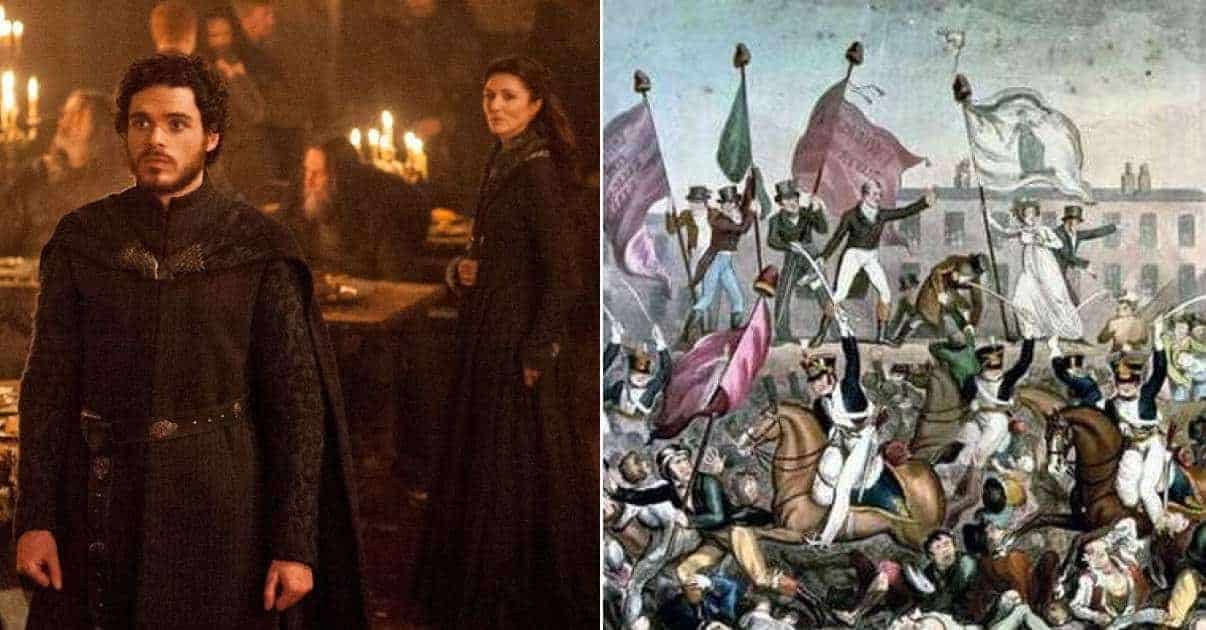
The Glencoe Massacre sent shockwaves throughout Scotland. While many were not friendly towards the Macdonalds, the manner in which they were killed appalled Scottish society. Sir Thomas Livingstone wrote “It is not that anyone thinks the thieving tribe did not deserve to be destroyed but that it should have been done by those quartered amongst them makes a great noise.” Indeed, of all the massacres covered in this list, it is the most that actually resembles something from Game of Thrones: George RR Martin is thought to have been inspired by the Glencoe Massacre when writing the Red Wedding scenes of A Storm of Swords.


