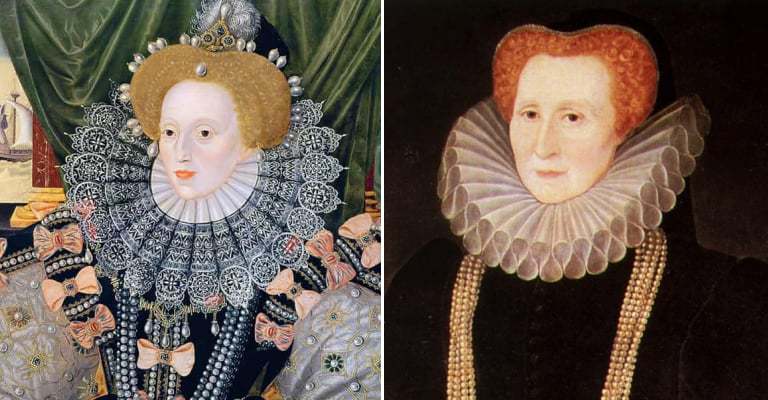

The Two Besses
The lives of Queen Elizabeth and Bess of Hardwick were intertwined. As mentioned above, Elizabeth was godmother to Henry, Bess’s eldest son with Cavendish, and her second daughter of that marriage was named in honor of the Queen. In 1559, Elizabeth named Bess a Lady of the Privy Chamber, a significant honor which involved only minor tasks, such as folding nightgowns and caring for jewelery. This also meant that Bess had direct access to the Queen, and could bring matters to her attention. This appointment helped Bess to have Cavendish’s debt, for which she was then responsible, drastically reduced.
When Bess was the subject of malicious rumors about her relationship with a tutor to her children, shortly before marrying Talbot, Elizabeth helped her to put the scandal to bed. It is not surprising to learn that the two got along well: both were self-assured, fiercely independent women in a time when being male was everything. Elizabeth was even recorded once to say of Bess, ‘I assure you, there is no Lady in this land that I better love and like’, and requested her attendance on several occasions. In turn, Bess was ever loyal and respectful to the Queen.
Inevitably, there were some clashes between the two, which some historians have blown out of proportion. Chief amongst these was Bess’s continued closeness to Katherine Grey, sister of Lady Jane, and widely seen as Elizabeth’s likely successor. Katherine secretly married without Elizabeth’s permission, and her royal blood meant that, by law, this was punishable by death. Katherine was thrown in the Tower, and a plot to usurp Elizabeth was suspected. Bess, who had been informed by Katherine shortly before her arrest, was questioned about her involvement. There was no plot, and Bess was released, and good relations thenceforth resumed.


