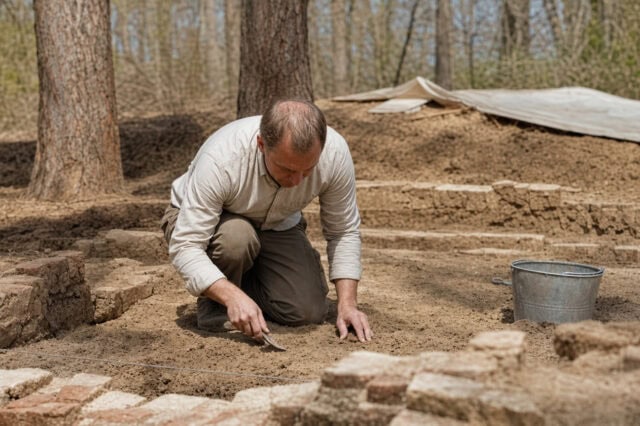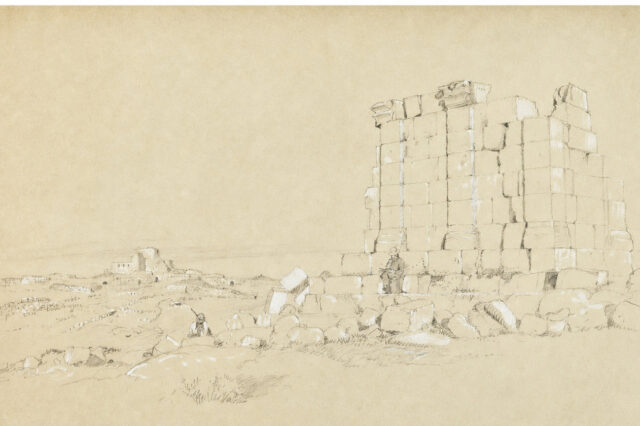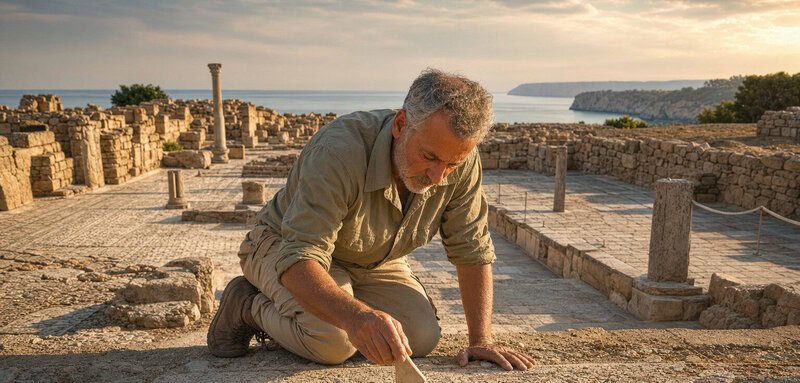
Somewhere beneath the sun-baked soil near the Sea of Galilee, a mosaic floor waited nearly two millennia before archaeologists brushed it clean — and when they did, it named Peter. That single shard of stone-and-pigment history is a reminder of how much the spade keeps overturning, and how many assumptions about the world of the apostles still need correcting, including some about the very programs dedicated to sharing those discoveries.
These Events Are Just Church Preaching Dressed Up as Science
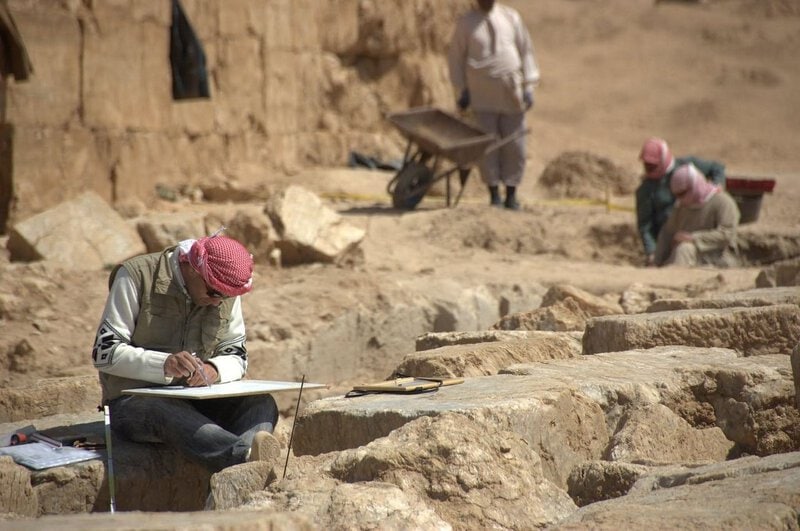
Walk into La Sierra University’s annual Archaeology Discovery Weekend — now in at least its 18th year at Riverwalk Parkway — and you will not find a pulpit at the center of the room. You will find stratigraphic profiles, field photographs, and working archaeologists discussing provenance. The archaeology is the content, not a wrapper for devotional messages. Even Amazing Facts International’s “HIS STORY: A Bible Archaeology Summit” — which is explicit about its faith orientation — structured its two-day program around physical evidence aligned with Scripture, requiring presenters to engage with the material record rather than bypass it.
Biblical archaeology as a discipline operates under the same field standards as classical or Near Eastern archaeology: documented provenance, peer review, and published findings. The religious significance of a site does not exempt excavators from methodological rigor, and responsible public programs reflect that. Mistaking the subject matter for the method is one of the most persistent misreadings of what these weekends actually do.
Peter Was Only a Legendary Figure Invented Decades After Jesus — Archaeology Has Nothing to Say About Him
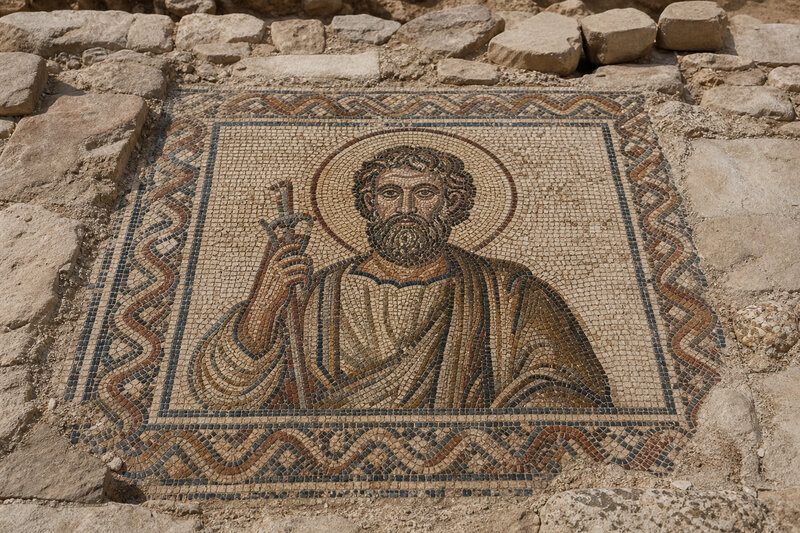
The claim that Peter is a theological construct with no historical footprint collides directly with what excavators uncovered near the Sea of Galilee: an ancient church containing a preserved mosaic that explicitly names him “Chief of the Apostles.” That is not a manuscript tradition or a later theological claim — it is stone, grout, and pigment, datable, anchored in geography, and sitting in the precise region the Gospels associate with Peter’s fishing career. The mosaic pushes the community memory of Peter’s leadership back into an era when eyewitness or near-eyewitness memory was still active, undercutting arguments that his prominence was a purely late invention.
First-century AD archaeology around the Galilee lakeshore has also confirmed the existence of the kind of fishing-village economy the Gospels describe — the hooks, the boat timbers, the processing facilities — lending contextual credibility to the social world Peter is placed in. Archaeology cannot write a biography, but it can confirm that the world the texts describe was real, and that the people remembered within it were remembered quickly and locally, not centuries later and far away.
These Archaeology Weekends Attract Only Local Church Audiences With No Scholarly Reach
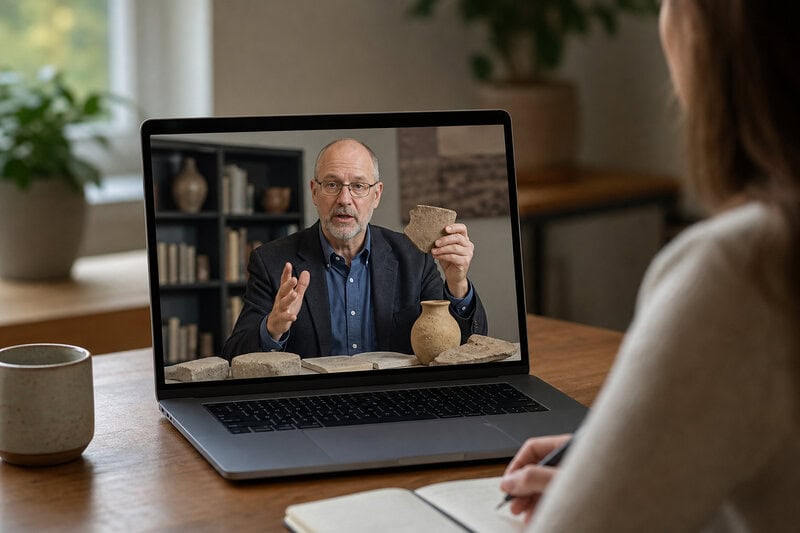
When the 12th Annual Archaeology Discovery Weekend shifted to a condensed three-hour virtual format, something unexpected happened: participants logged in from well outside Southern California, turning a regional campus event into an international conversation. That international reach demonstrated that interest in the archaeology of ancient Israel and the historical evidence surrounding the apostles crosses geographic and denominational lines, pulling in curious general learners alongside faith communities. The audience for this material is broader than critics assume.
That wider reach also carries a consequence worth noting: when findings enter a broader public conversation — mosaic inscriptions, first-century household objects, Galilean synagogue plans — they face a more demanding and diverse audience than a local congregation would supply. Presenters who reach participants across time zones tend to bring more rigorous material, not less. The virtual experiment did not dilute the scholarship; it pressure-tested it.
First-Century Galilee Was a Rural Backwater Too Primitive to Leave an Archaeological Record
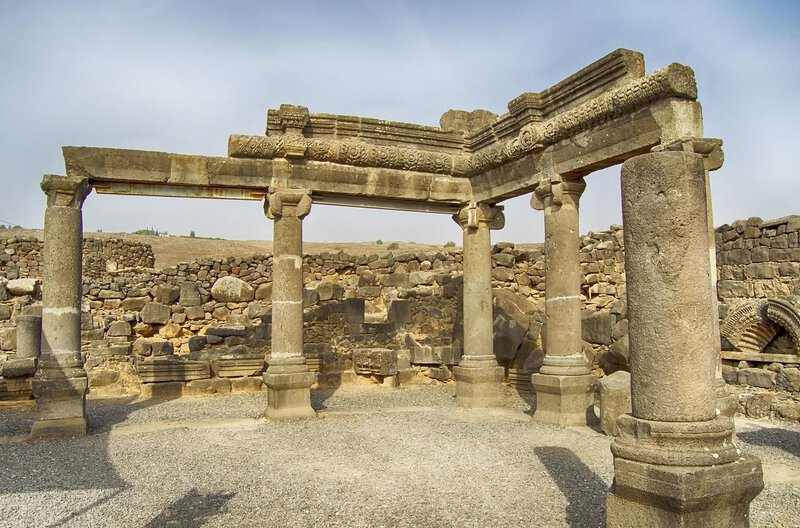
Older scholarship sometimes painted first-century Galilee as a sleepy hinterland, theologically significant but materially thin. The ground has not agreed. Excavations around the Sea of Galilee have produced synagogue floors, decorated mosaics, imported pottery, and monumental public structures — evidence of a region engaged with Hellenistic and Roman material culture, not an isolated village world sealed off from the wider Mediterranean economy. Excavations at Capernaum, Magdala, and surrounding sites consistently reveal a first-century Galilee far more economically and culturally connected than the backwater image suggests.
The discovery of a church mosaic naming Peter near this same shoreline reinforces the point from a different angle: even vernacular religious communities in the area were commissioning skilled craftwork within a generation or two of the apostolic period. You do not commission a detailed mosaic floor if your community lacks the resources, the artisanal networks, or the cultural aspiration to do so. First-century Galilee had all three.
The Veneration of Peter as a Leader Is a Roman Catholic Invention From Centuries Later
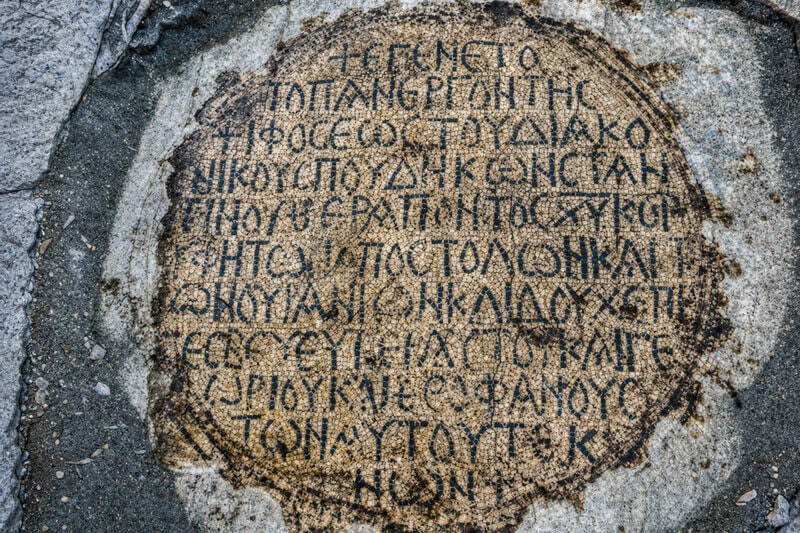
The argument that Peter’s primacy was manufactured by later Roman ecclesiastical politics runs into a geographic problem: the Galilean church mosaic naming him “Chief of the Apostles” comes from the eastern, Greek-speaking world — far from Rome — and predates the full elaboration of papal theology. Communities with no stake in Roman institutional claims were already inscribing Peter’s preeminence into their floor. This physical evidence places the veneration of Peter’s leadership geographically and chronologically close to where he actually lived and worked, not in a later western ecclesiastical context.
Historians of early Christianity now use such site-specific finds to map how apostolic authority was understood regionally before any single church center had consolidated doctrinal control. The mosaic does not settle every theological debate about Peter’s role, but it does establish that the debate’s starting point is earlier and more geographically dispersed than the “Roman invention” narrative allows. The stone speaks before Rome had the final word.
Weekend Archaeology Programs Can Only Offer Popularized Oversimplifications, Not Real Discovery
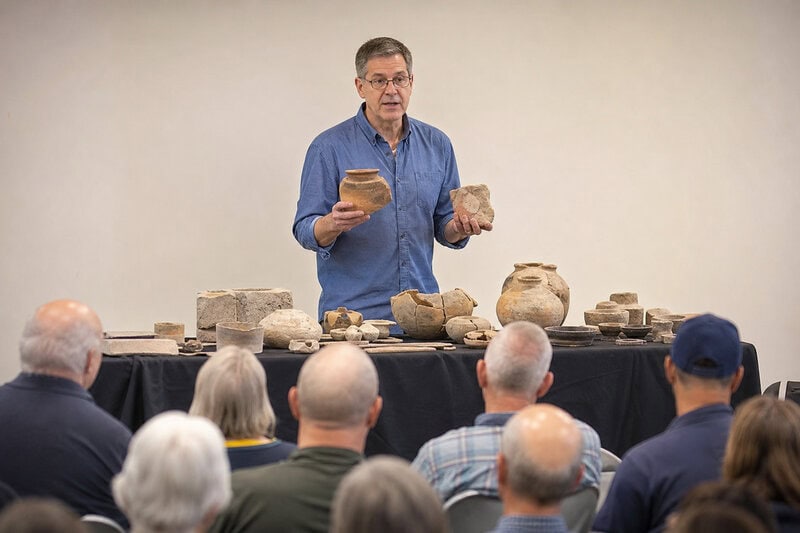
La Sierra University’s Archaeology Discovery Weekend, running for at least 18 annual iterations, has consistently featured working archaeologists presenting active fieldwork — including finds directly relevant to first-century AD archaeology and the world of the apostles. The condensed three-hour virtual format of the 12th annual event was designed precisely to distill complex stratigraphic and textual evidence into accessible presentations without abandoning factual precision. Compression is not the same as distortion, and the archaeologists who present at these events are the same researchers who publish in mainstream academic journals.
Public archaeology events of this kind serve a documented scholarly function: they translate peer-reviewed findings into public literacy, helping audiences understand what phrases like “apostolic historical evidence” actually mean in material terms — not as abstractions but as datable objects from specific soil layers. When a presenter shows a synagogue floor plan from Magdala alongside a New Testament passage, they are not oversimplifying; they are contextualizing, which is exactly what good historical reasoning requires.
Archaeology Has Essentially Confirmed Everything — or Disproved Everything — About the New Testament World
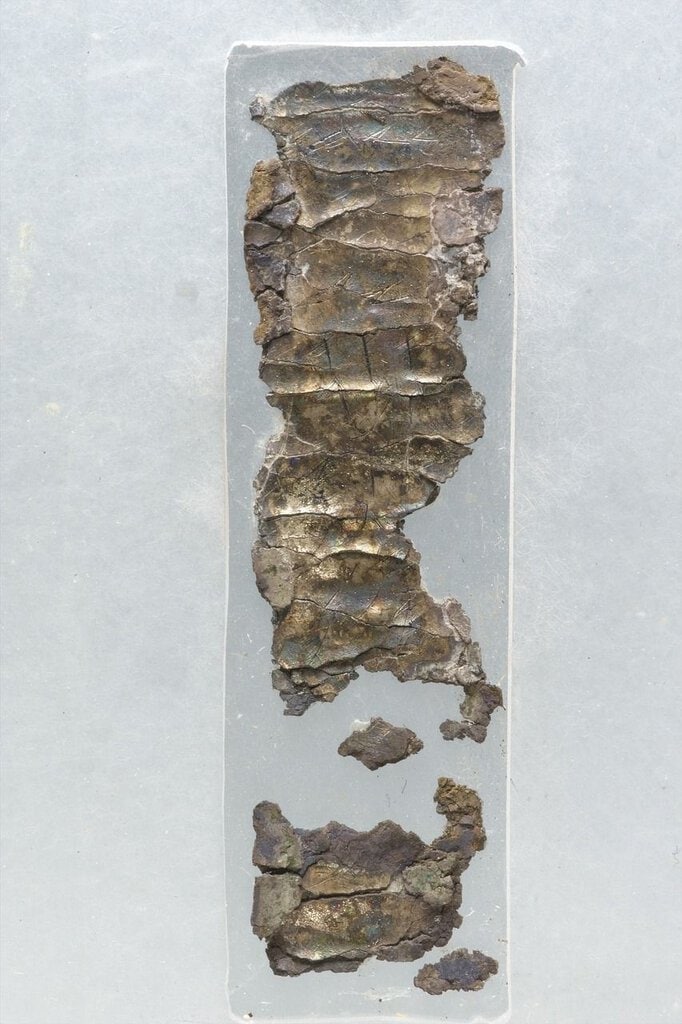
The triumphalist and the debunker share the same mistake: assuming archaeology delivers verdicts. The honest picture from biblical archaeology is granular and mixed. Some details of the apostolic world are strikingly confirmed — Galilean fishing culture, synagogue architecture, Roman administrative presence, the material conditions of rural Judean households. Other claims remain archaeologically silent or actively contested, and responsible programs are obligated to say so plainly. The Petrine mosaic, for example, confirms early veneration of Peter but cannot confirm biographical details about Peter himself; a good public program draws that distinction clearly rather than letting enthusiasm blur it.
Archaeology of the apostolic era is most useful not as a verdict machine but as a world-builder: it reconstructs the material conditions — diet, housing, trade routes, religious infrastructure — within which first-century figures actually moved. That reconstruction is valuable precisely because it is specific and provisional, always subject to revision by the next season’s dig. The uncertainty is not a weakness; it is what keeps the discipline honest.
Faith-Based Archaeology Summits Are a Recent American Evangelical Phenomenon With No Academic Precedent
The intersection of faith and archaeology stretches back to the 19th century, when figures like Edward Robinson mapped Palestinian sites using the Bible as a geographic guide — a methodology that produced real topographic advances alongside its theological agenda. That tradition is long, complex, and institutionally diverse. Amazing Facts International’s “HIS STORY: A Bible Archaeology Summit” operates within a lineage of faith-motivated fieldwork that has, at its best, funded excavations producing data valuable to secular scholarship as well. Calling it a novelty ignores roughly two centuries of precedent.
La Sierra University’s decades-long Archaeology Discovery Weekend similarly reflects an institutional tradition with academic depth: Seventh-day Adventist higher education has maintained formal archaeology programs whose field results appear in mainstream journals. The faith motivation and the scholarly output are not in tension — they coexist in the same way they have coexisted since the first 19th-century traveler cross-referenced a Gospel passage with a ruin on a Galilean hillside and realized the landscape remembered things the texts described.
The Apostles Left No Physical Trace Whatsoever — Their World Is Pure Textual History
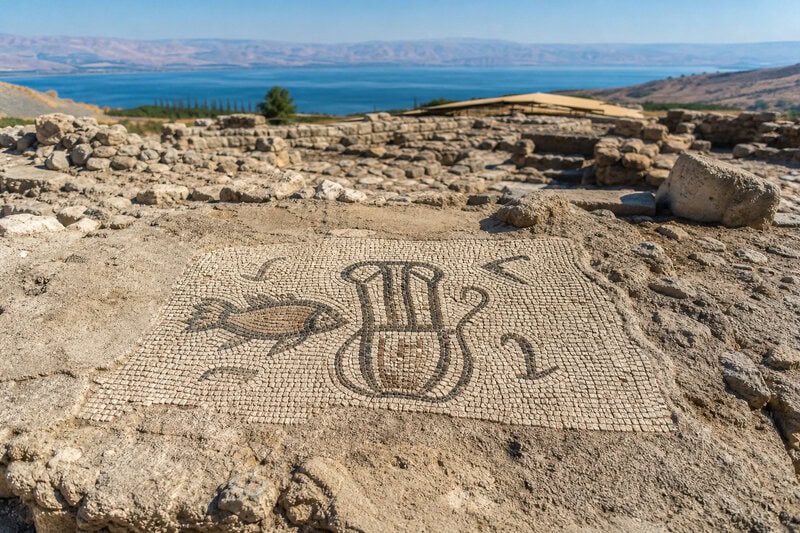
The mosaic near the Sea of Galilee naming Peter is a physical artifact — stone, grout, pigment — anchored in the landscape the apostles inhabited. It demonstrates that the material culture surrounding their lives survives and can be excavated. But it is far from alone. Broader first-century AD archaeology has recovered fishing hooks and boat timbers from the Galilean lakeshore, coin hoards from the Jewish revolt period, and domestic structures matching the household sizes the New Testament epistles address. The apostles’ world has texture and weight; it is not an idea floating above the soil but a set of practices embedded in it.
Archaeology of ancient Israel increasingly reconstructs not just monuments but everyday experience: what people ate, how they lit their homes, what languages appeared on their household objects, how far a day’s walk could take a traveler along the lakeshore. All of that is directly relevant to understanding the apostolic environment — the layout of a Galilean fish market, the acoustics of a stone synagogue, the economic weight of a Roman denarius in a first-century hand. The texts told us there was a world. The archaeology is busy showing us what it felt like to live in it.
From a mosaic floor naming Peter to international virtual audiences logging in to hear about synagogue stratigraphy, the archaeology of the apostolic era keeps demonstrating that the past is neither as silent nor as settled as we tend to assume — and that the weekend programs dedicated to sharing those discoveries deserve serious attention before anyone dismisses them.