Medieval People Didn’t Drink Booze Instead of Water

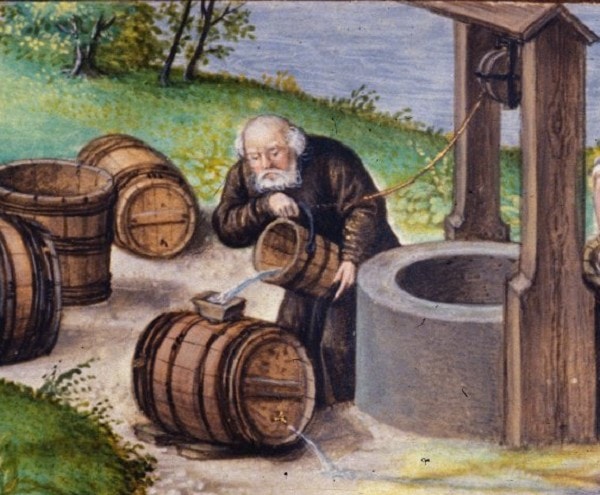
It is often said that people in centuries past only drank beer and wine in lieu of water, because water was too often contaminated with deadly pathogens. That is untrue. In the Middle Ages, for example, water was the most popular drink – as it was throughout all of humanity’s existence, for that matter. After all, water is free (mostly). It is true that people in the Middle Ages did not have the kinds of water purification treatments that the water coming out of our faucets nowadays usually goes through. While contamination was a problem, medieval people – like all humans since our species first walked upright – knew enough to spot and avoid obviously contaminated water.
In short, medieval people had enough common sense and common knowledge to know that swampy, muddy, and cloudy water was bad for their health. Medieval health manuals and medical texts actually praised water for its health benefits – so long as it came from good sources. Medieval authorities went to great lengths to supply people with drinking water. For example, London constructed ‘The Conduit’ in the 1200s, using lead pipes to bring fresh water from a spring outside the city walls to London’s center, where people had free access to it.


