
John Foster Dulles
For six years, during one of the coldest stretches of the Cold War, Secretary of State John Foster Dulles, the strongest personality in President Eisenhower’s cabinet, dominated America’s foreign policy as few have before or since. He was the President’s chief advisor, chief negotiator, chief troubleshooter on Capitol Hill, and chief agent at home and abroad.
A hands-on Secretary of State who believed in the power of personal interactions and contacts with America’s interlocutors, Dulles logged nearly half a million miles in overseas travels as he sought to exercise American leadership by constant visits to all parts of the world. He negotiated numerous treaties and alliances that reflected his staunch and aggressive anti-communism.
The eldest son of a Presbyterian minister, John Foster Dulles was born in 1888, in Washington, DC. A studious young man, he graduated from Princeton in 1908, before attending law school and becoming an attorney, specializing in international law. When World War I broke out, he tried to join the Army but was rejected because of poor eyesight. He got his start in foreign affairs in 1915 when his uncle, Secretary of State Robert Lansing, sent him to Latin America to sound out the locals on lining up with the US against Germany.
His foreign affairs CV was further enhanced after the war when, during the Versailles Peace Conference, Dulles was appointed legal counsel to the US delegation. By the 1940s, he had become a prominent Republican. A Friend of Thomas E. Dewey, he became his foreign policy advisor during the failed 1944 and 1948 presidential bids.
When Eisenhower was elected in 1952, Dulles became his Secretary of State. A deeply religious man, he abhorred communism, which he viewed as “godless terrorism”, and began shifting US policy from a strategy of containment of communism to a more aggressive and proactive one of “liberation”, helped in no small part by the appointment of his brother, Allen Dulles, to head the Central Intelligence Agency.
With the Dulles brothers heading the State Department and the CIA, the 1950s saw aggressive American interference in the domestic affairs of foreign countries, including the overthrow of democratically elected governments in Iran and Guatemala when their leaders were suspected of communist sympathies. That aggressive policy is credited with setting the stage for America’s subsequent involvement in Vietnam.
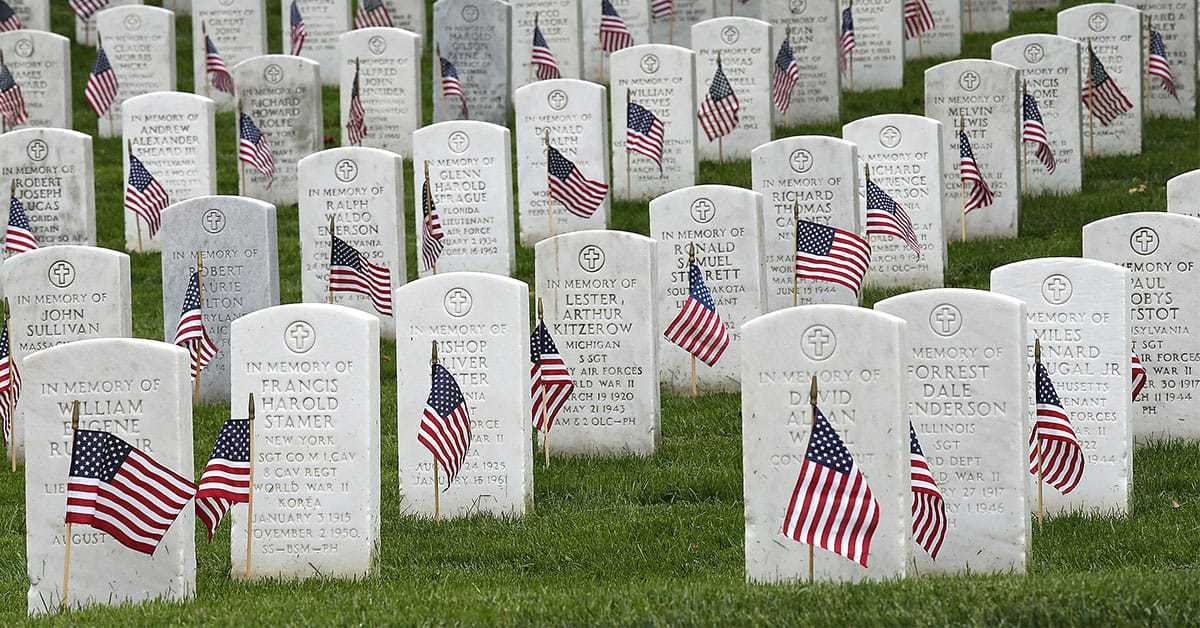
In 1959, John Foster Dulles was diagnosed with cancer. He resigned from office and died a few weeks later. He was buried in Arlington National Cemetery, Section 21, Lot 31.


