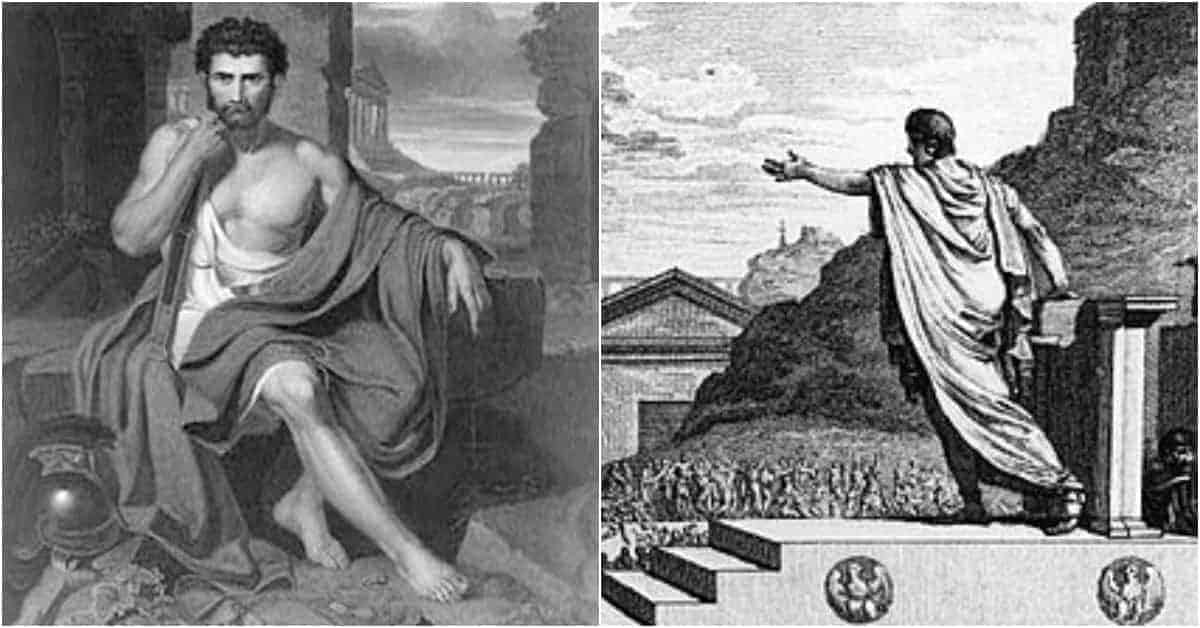

Gaius Gracchus
Gaius Sempronius Gracchus (154 – 121 BC) was the younger brother of Tiberius Gracchus, who followed in his older brother’s footsteps as a tribune of the plebes, a populares politician advancing the cause of the plebeians, an advocate of agrarian reform, and finally, as a victim of political violence when the conservative Roman Senate and the optimates murdered him.
About a decade younger than Tiberius, Gaius Gracchus was influenced by his elder brother’s reform policies and by his murder at the hands of a senatorial mob. Elected a tribune of the plebes in 123 BC, he made innovative use of the popular assemblies to push through legislation to reenact his brother’s agrarian reforms and advocated other measures to lessen the power of the senatorial nobility.
He also pushed through legislation to provide all Romans with subsidized wheat, and was reelected tribune in 122 BC. In 121 BC, the Senate again organized a riot to go after a turbulent tribune. After one of his supporters was killed, Gaius Gracchus and his followers retreated to the Aventine Hill, the traditional asylum of plebeians in an earlier age. The Senate responded by enacting a novel decree that ordered the consuls to go after Gaius, which they did with a mob. Seeing that all was lost, Gaius committed suicide, while the mob fell upon and massacred hundreds of his followers, then threw their bodies into the Tiber river.
In the long run, the political murders of the Gracchi brothers backfired upon the optimates‘ cause and the patrician senatorial class whose interests they sought to advance. The patricians were virtually exterminated during rounds of proscriptions that claimed the lives and confiscated the properties of thousands, first by the dictator Sulla going after populares following his victory in Rome’s first civil war, only for the pendulum to swing a generation later when Octavian and Mark Antony went after the optimates in an even bloodier and more thorough proscription following their victory in a civil war against Julius Caesar’s assassins. What relatively few patricians survived were gradually killed off later as they were caught up in or were falsely accused of conspiracies against various emperors, until, by the end of the first century AD, the patrician class was virtually extinct.


