High in the Andes, where the air is so thin that a modern traveler gasps climbing a single flight of stairs, ancient Peruvians not only survived — they built civilizations that endured for millennia. A growing body of genomic research is revealing exactly how they did it, tracing a story written not just in stone temples and pottery shards, but in human DNA itself.
The First Settlers: Planting Roots in an Unforgiving Land
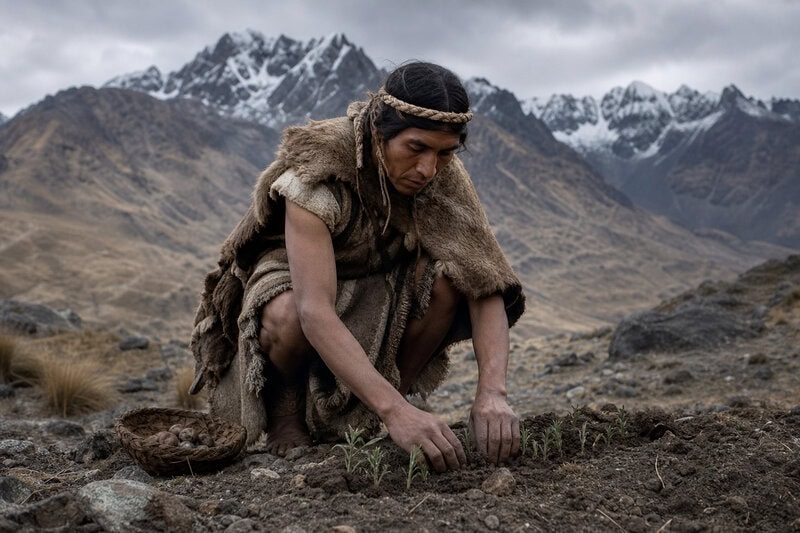
Around 8,500 years ago — roughly 6500 BCE — long before the Inca raised their famous stone walls, people were already living at both the bone-chilling heights of the Andean highlands and along Peru’s coastal lowlands. Thin oxygen, brutal cold, and scarce food were simply the terms of daily life: non-negotiable conditions that every family, every generation, had to meet or perish. Ancient DNA analysis documented in a landmark study published in Scientific Reports captures these earliest settlers, marking the starting point of what would become one of the longest-running biological experiments in human history.
What makes their presence so striking is not merely that they endured, but that they stayed. At elevations where most modern visitors develop splitting headaches and stumble with altitude sickness, these communities raised children, buried their dead, and laid the cultural groundwork for the civilizations that would follow. The environment was, in every measurable sense, hostile — and they refused to leave.
Natural Selection Quietly Rewrites the Andean Genome
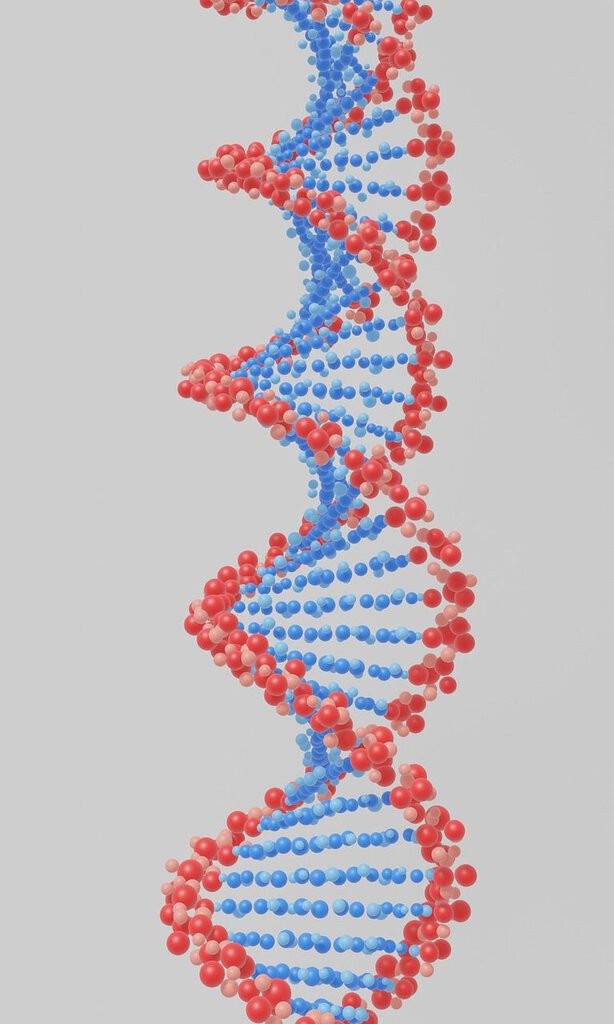
Survival left fingerprints in the genome. A 2016 study by Fehren-Schmitz and colleagues examined 150 ancient human DNA samples spanning roughly 8,000 years of Peruvian prehistory — from approximately 6500 BCE to around 1390 CE — and found direct evidence that natural selection was acting on genes tied to high-altitude adaptation. Generation by generation, individuals whose bodies handled low oxygen, cold, and scarcity a little better tended to live longer and leave more descendants. Over centuries, those small advantages compounded into measurable biological change.
This was no sudden mutation or lucky accident. It was slow, relentless, almost invisible pressure — the kind of change that only becomes legible when you can read thousands of years of DNA side by side. The Andean highlands were, in effect, a crucible, and adaptation to altitude was being forged one generation at a time across deep stretches of prehistoric time.
The Agriculture Pivot: When Diet and Biology Changed Together

At some point in the long arc of Andean prehistory, highland communities made a fateful shift: they began farming in earnest, leaning on starchy crops like potatoes and quinoa to sustain themselves where hunting and gathering alone could not. Their genomes responded. According to University of Chicago researchers, ancient Peruvians adapted to both their agrarian diet and their high-altitude environment simultaneously — and in ways that look quite different from agricultural transitions in other parts of the world.
This dual adaptation — to cold, thin air and starchy calories — was not a coincidence but a kind of biological negotiation, the body learning to extract maximum energy from available food while also managing reduced oxygen. The farm was every bit as important as the mountain. Together, they shaped a people whose biology was becoming uniquely fitted to one of Earth’s most demanding landscapes.
El Niño Strikes: How Ancient Societies Weathered Catastrophic Flooding
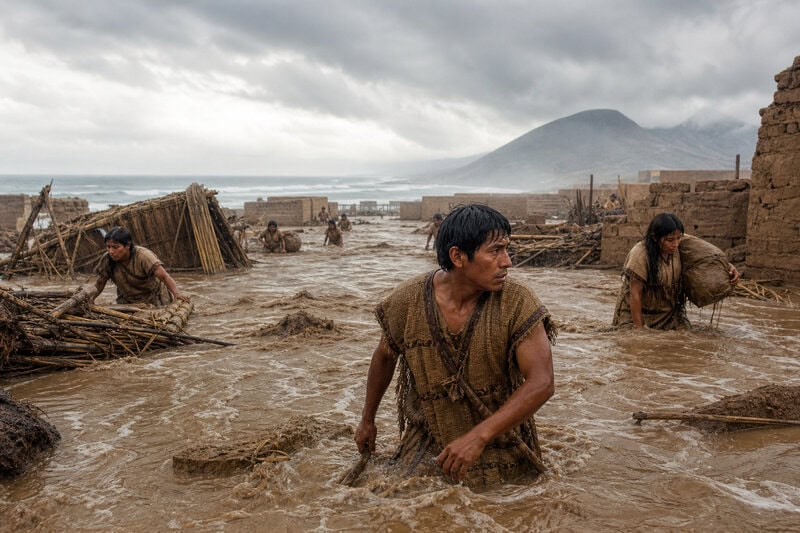
Altitude and cold were not the only threats. Periodically, the climate delivered a different kind of blow: catastrophic flooding driven by El Niño cycles that wiped out crops, drowned coastal settlements, and sent shockwaves through social structures. Scientists who studied more than 1,500 ancient Peruvians across a 3,000-year window found that societies endured these disasters repeatedly — and that some communities even turned to human sacrifice in moments of extreme crisis, apparently seeking ritual control over forces that felt beyond human reach.
Yet beneath the drama, the evidence tells a quieter story: everyday violence among the population remained surprisingly rare. These communities, battered by floods and food shortages, somehow held together. The findings, reported in 2025, suggest that ancient Peruvian societies developed cultural and social mechanisms — shared belief systems, redistribution networks, collective memory of past disasters — that made them more resilient than the crises they faced. Ancient Peru’s climate history is, it turns out, also a history of communal endurance.
Climate-Driven Migration: When Environmental Pressure Moved Whole Populations
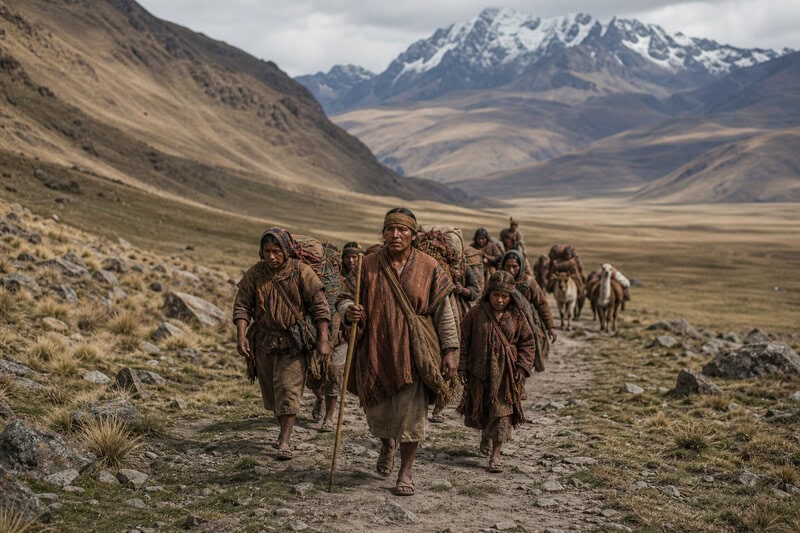
Not every community stayed put when disaster struck. Genetic evidence points to climate-driven migrations reshaping southern Peru over time, with environmental stressors pushing groups to relocate and blend with neighboring populations along the way. The result, encoded in ancient DNA, was a gradual genetic homogenization across the region — a convergence that may have broadened the range of adaptive traits available to these communities as a whole.
This pattern reframes the standard image of ancient people helplessly at the mercy of nature. The genetics reveal a history of active, strategic movement — communities reading the landscape and responding with mobility when staying meant dying. The hardships that threatened individuals may have, paradoxically, strengthened the collective over the long run.
Andean Adaptation Was Uniquely Its Own
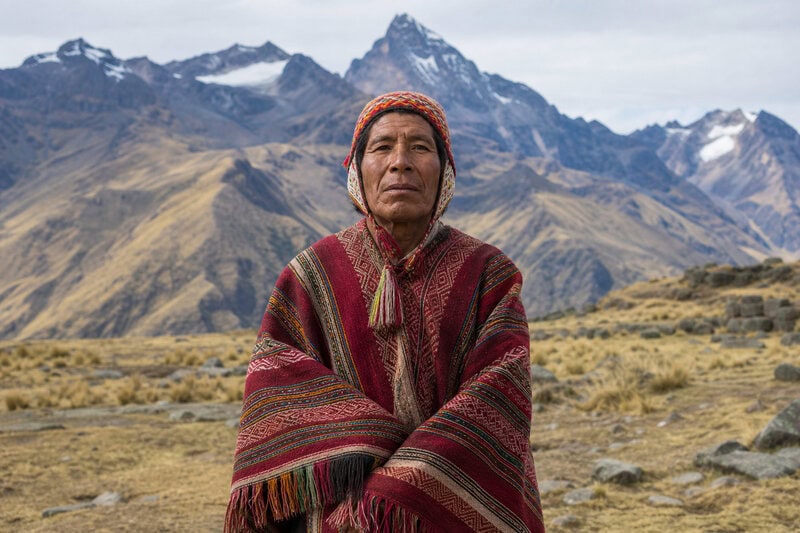
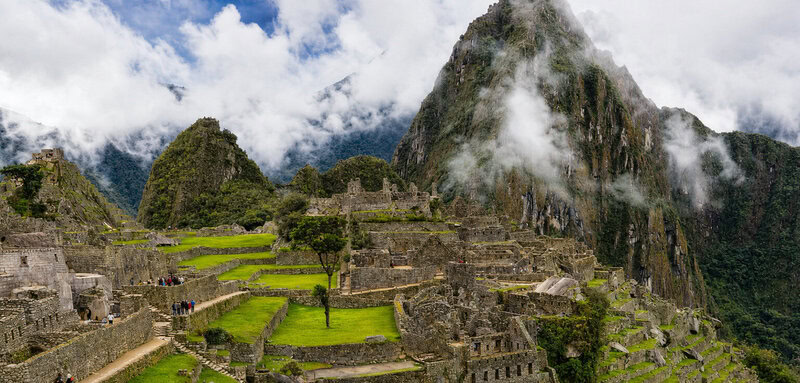
By 2018, scientists had accumulated enough evidence to make a striking declaration: ancient Andean populations adapted to high altitude and an agrarian diet in ways distinctly different from other high-altitude peoples worldwide, including Tibetans and Ethiopians. Each group had faced the same fundamental problem — insufficient oxygen — and each arrived at a different biological solution, shaped by their own specific geography, diet, and history. There is no universal fix for altitude. Evolution improvises with whatever it has on hand.
For the story of ancient Peruvian biology, this was a pivotal moment of scientific recognition. The Inca and their predecessors were already celebrated for their engineering, their roads, their agricultural terracing. Research was now confirming something less visible but equally remarkable: they were biologically exceptional, their bodies shaped by the same mountains that defined their culture.
The Epigenetic Layer: DNA Methylation and the Body’s Hidden Altitude Dial
The genetic story grew more intricate still when researchers began looking beyond changes to DNA sequences themselves. As reported by EurekAlert, epigenetic mechanisms — particularly DNA methylation — play a role in how native Peruvians adapt to high altitude. Epigenetic changes don’t rewrite the genetic code; instead, they act like switches, turning genes on or off in response to environmental conditions. In effect, the Andean body carries a hidden dial that can be adjusted across a lifetime and potentially passed on across generations.
This discovery added an entirely new dimension to the adaptation story. Understanding how ancient and modern Andean peoples cope with altitude is not simply a matter of cataloguing which gene variants they inherited — it is also about how those genes are expressed. That dynamic, responsive process may allow bodies to fine-tune themselves to conditions that would leave others gasping.
SNP Genome Scans Bring the Genetic Evidence Into Sharp Focus
In 2019, a comprehensive review by C.G. Julian and colleagues synthesized single nucleotide polymorphism (SNP) genome scans and sequencing studies into a cohesive picture of Andean adaptation. The review, published in Experimental Physiology and available via PMC/NCBI, used SNP scans — comparisons of tiny one-letter differences across thousands of individuals’ genomes — to pinpoint exactly which genetic variants natural selection had favored in the highlands. Genes tied to oxygen processing, cardiovascular function, and energy metabolism all bore the unmistakable signature of thousands of years of high-altitude selection.
For researchers studying pre-Columbian adaptation to altitude, the review represented a high-resolution photograph of a process that earlier studies had only sketched in outline. What had once been inferred from skeletal remains and population patterns could now be read directly in the genetic code, variant by variant, gene by gene — a molecular record of survival written across eight millennia.
Living Descendants: An Adaptation Story That Is Not Over
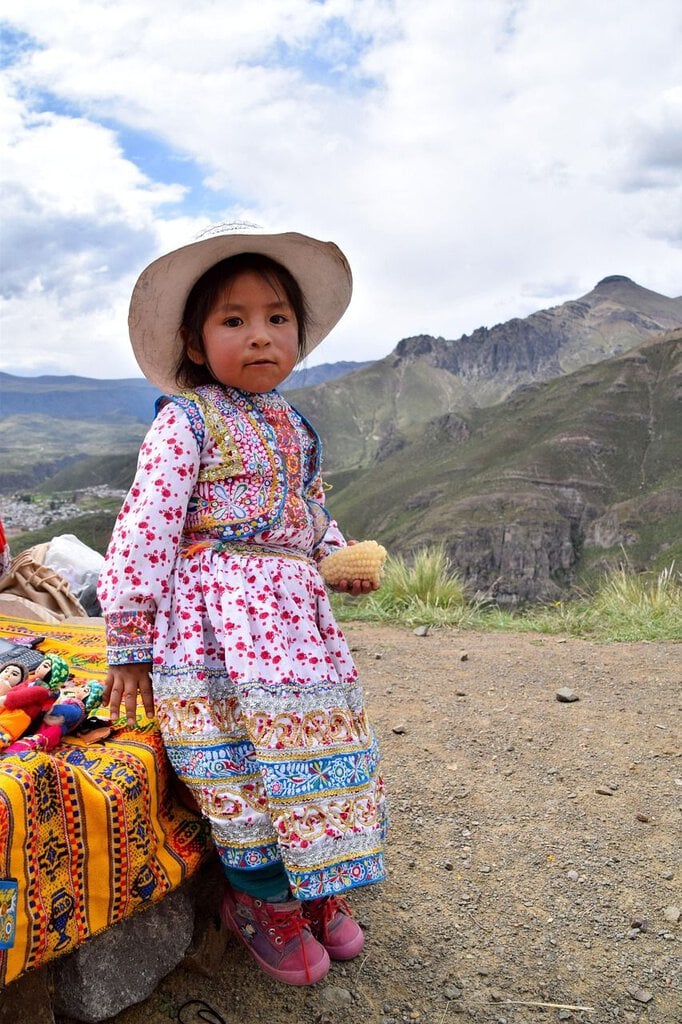
The ancient DNA study’s formal time frame ends around 1390 CE, on the eve of the Inca Empire’s greatest expansion. But the story it traces did not end there. Modern indigenous Andean populations continue to exhibit measurable biological responses to high-altitude stressors, including larger lung capacity, more efficient oxygen use, and altered hemoglobin behavior — traits that reflect deep ancestral adaptation still playing out in living, breathing bodies across Peru, Bolivia, and Ecuador today.
These are not museum pieces or ancient curiosities. They are the living inheritance of thousands of years of selective pressure, carried by communities still making their homes on the same high plateaus and valley slopes where the story began. The history encoded in Andean DNA is not a closed chapter — it is an ongoing conversation between a people and the mountains that made them.
From the first settlers who refused to be driven off the high peaks to the descendants who carry altitude adaptation in their very cells, the ancient Peruvians’ story is one of the most extraordinary examples of human resilience the genomic record has ever revealed — a civilization forged, generation by generation, in one of Earth’s most unforgiving environments.