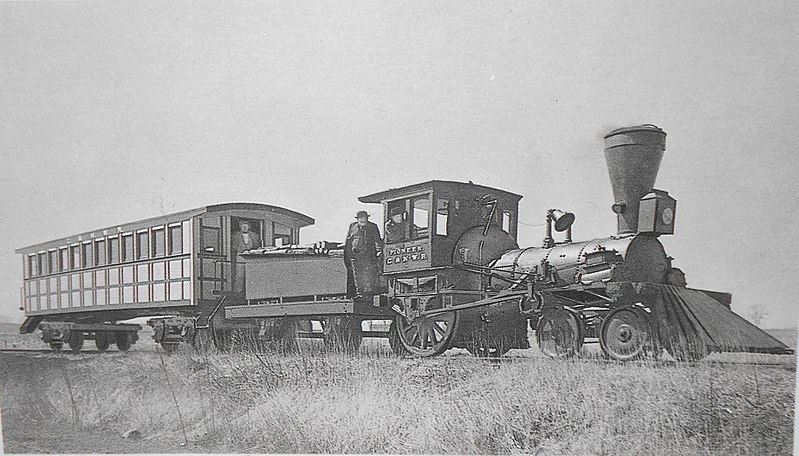
7. The Chicago and South Side Rapid Transit Railroad

In June, 1892, four coaches pulled by a steam locomotive traveled from 39th street to the newly built Congress Street Terminal. Several dozen passengers rode on the ceremonial trip, the first offered by the Chicago and South Side Rapid Transit Railroad. The following year the line extended to 63rd Street and the site of the World Columbian Exposition, where it terminated at the Transportation Building. That same year the Lake Street Elevated Railroad began operation. In 1895 the Metropolitan West Side Elevated opened for business, the first commercial railroad in the United States powered by electric traction motors.
By the end of the decade, the city’s connecting “L” railways were all run on electric traction motors, and the South Side line introduced all the motors in the connected cars under the control of the motorman driving the train. In the first decade of the 20th century, the “L” trains were the single largest consumer of electricity in the city of Chicago. The Northwest Elevated began operations in 1900 in the urban areas, though the building of stations and other sections of the line continued for several years. The commuter rail lines operated independently, for the most part, until consolidation began in 1911. In 1924 several were included in the formation of the Chicago Rapid Transit Company.


