9. Hoover’s administration raised taxes in 1931

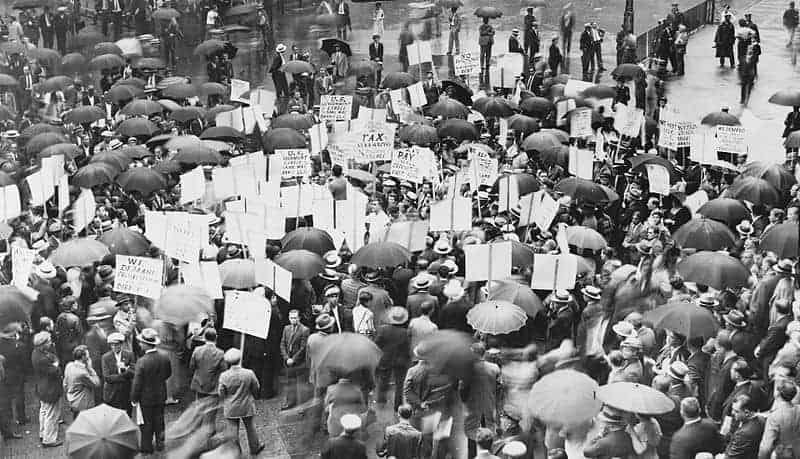
After supporting the President’s High Wage Policy in 1930, businesses began cutting wages and jobs in 1931, hoping to keep at least some portions of their operations afloat. Hoover recognized the need to increase federal revenues, though a push to increase income taxes in the rapidly worsening economic environment appeared politically unwise. Instead, Hoover turned to the banks, having his administration lobby Congress for the passage of a tax on checks. A tax of 2 cents on personal checks passed in 1931, adding an additional tax burden to anyone using checks for purchases, to pay bills, rent, mortgages, and even taxes (equivalent to about 31 cents today).
The Check Tax increased the cost of using checks at a time when Americans attempted to reduce their expenses. Americans responded by curtailing their use of checks whenever and wherever possible. They turned to cash instead. Withdrawing cash from the banks created further pressure on the financial institutions, reduced lending, and further shrunk the supply of money in circulation. Banks already badly in need of cash found themselves unable to retain necessary funds for operation, and the Federal Reserve failed to increase the cash available. The Check Tax was another well-intended attempt to stimulate the economy which instead produced the opposite effect. It added to the common distrust of banks, with many Americans believing the funds from the tax went directly to the banks themselves.


