
10 – Muay Thai (1920s)
“Bone is inch by inch, stronger than steel” Muay Thai Proverb
Given that Muay Thai is thought of as one of the most enduring aspects of Thai culture, it might be surprising to hear that the martial art is only around 200 years old. While Japan and China can trace the lineage of their national fighting styles back into the annals of history, the story of the Thai equivalent begins only in the 18th century.
The story behind the proliferation of Muay Thai begins with Muay Boran, an older form of fighting that was less codified than the current sport. According to legend, a fighter called Nai Khanomtom was captured in a war with the neighbouring Burmese and given the chance to attain his freedom by defeating a local fight in a bout. Nai Khanomtom duly won and returned to Siam, as Thailand was then known, as a hero. His example inspired thousands to take up the style of fighting that had brought him success, leading to a proliferation of martial arts devotees in the country.
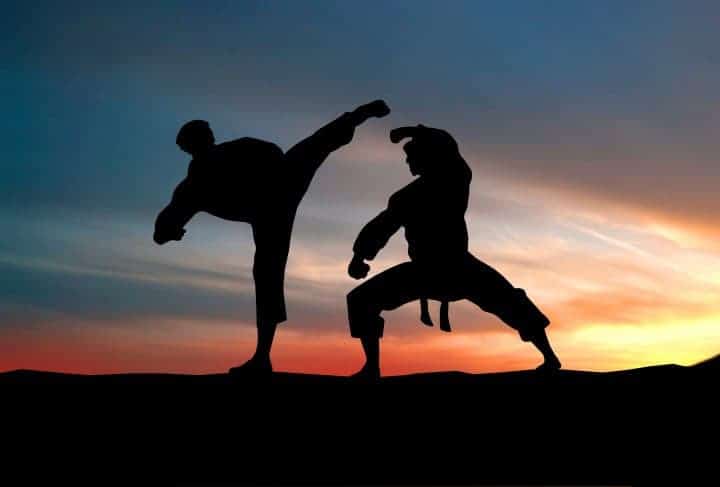
As more and more people took up Muay Boran, there became a public demand for organised fights at large events, and a set of practices and rules were adopted. These became the building blocks of Muay Thai, the art as we know it today. They prioritised the use of fists, knees, elbows and kicks – giving rise to the nickname “the art of eight limbs” – and enshrined the cultural values that also go hand in hand with the martial aspects. There is an elaborate set of bows and greetings that show respect to the sport, the opponent and the referee, as well as a repertoire of traditional Thai music that accompanies every fight and a clothing style that incorporates aspects of the national dress of Thailand, such as designed shorts, a Mongkol (headband) and Pra Jiad armbands.
Once the Thai public had caught onto the idea of their national sport, there was to be no holding back. In 1909, the King of Thailand formalised the rules and began a system of awarding prizes to the best fighters, which was extended in 1913 with the arrival of British boxing in the region to complement the local style. The pair began to be offered in schools soon after, along with Judo, and by the 1920s, there were major stadiums constructed to cope with the public demand for high profile fights. Referees, boxing gloves and hand-wrapping became commonplace and the sport began to resemble what we know today: it was also at this point that it became known as Muay Thai, rather than Muay Boran.
Now, Muay Thai is Thailand’s most popular sport and has millions of adherents around the world. Alongside the national cuisine of Thailand, it might be considered the greatest export that the nation has on a global scale. Thai boxing, as it is often known outside of Thailand, is seen in Hollywood films – Only God Forgives, starring Ryan Reynolds and Kriston Scott Thomas, featured it heavily – and video games.
Muay Thai might have spread well beyond the borders of Thailand, but it is still on the fringes as far as martial arts go. Unlike Judo, Boxing and Wrestling, it is still not at the Olympic Games, the pinnacle of world sport. As recently as 2000, however, the Olympics incorporated their newest martial art, and one that, like Muay Thai, is nowhere near as old as many think it is. To learn more, we must travel now to South Korea and talk more about the art of Taekwondo.