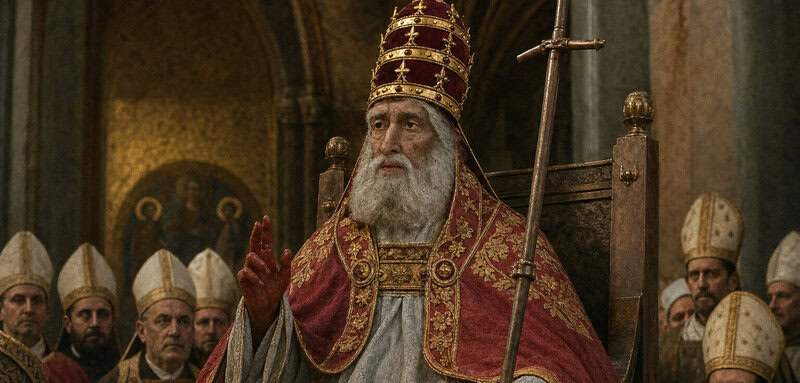
In January of 897, inside the basilica of St. John Lateran in Rome, a decomposed corpse dressed in full papal vestments was propped upright in a chair and read its charges aloud. This was not a fever dream or a piece of dark medieval fiction. It was an official church proceeding, ordered and presided over by a sitting pope — and it would become one of the strangest, most revealing episodes in the history of medieval Christianity.
The Most Disturbing Courtroom in History
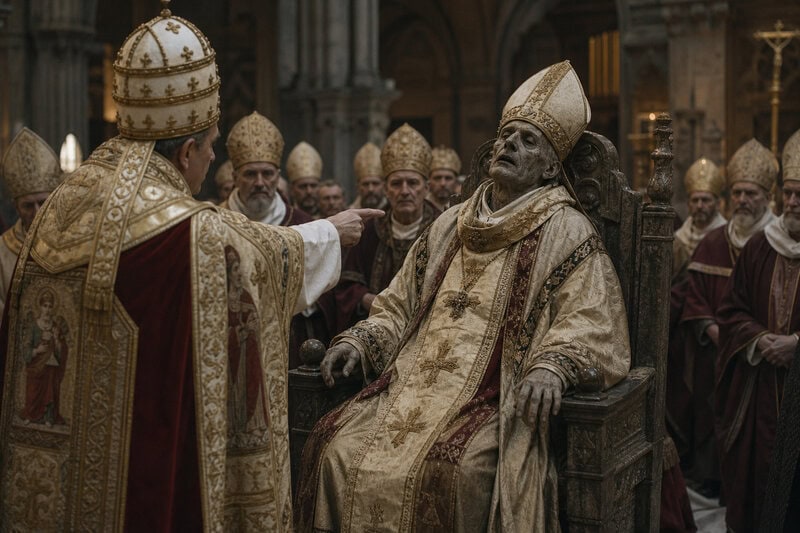
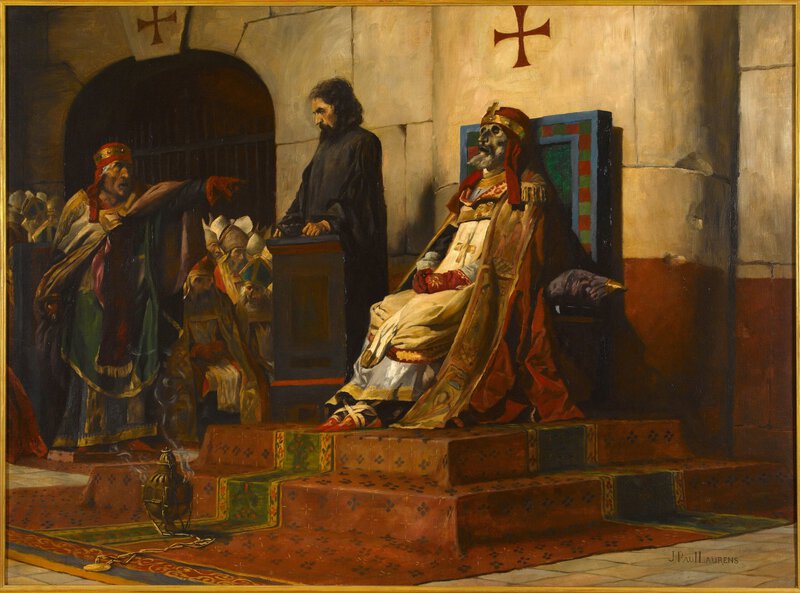
Pope Stephen VI stood before the assembled clergy of Rome and screamed at a dead man. The corpse in the chair was his predecessor-once-removed, Pope Formosus, exhumed from his tomb and hauled back into the living world after approximately nine months in the ground. Stephen had dressed the body in the white and gold vestments of the papal office — the same robes Formosus would have worn in life — and seated it before the synod as though it had walked in under its own power. The proceedings that followed, now known to history as the Cadaver Synod, would destroy Stephen as surely as they desecrated Formosus. He simply didn’t know it yet.
What drove a pope to this? The answer lies in the ferocious, ungovernable politics of ninth-century Rome — a world where the most sacred office in Western Christendom was also, perpetually, a prize to be seized, held, and avenged.
Who Was Formosus — and Why Did Stephen Hate Him?
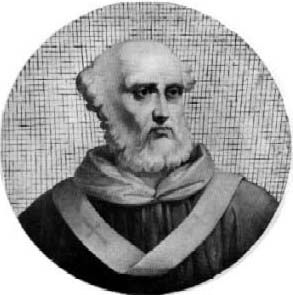
Formosus had served as pope from 891 until his death in 896, and he was, by any measure, a skilled political operator in an era that rewarded exactly that quality. The papacy of his era was not the serene spiritual monarchy that later centuries would imagine; it was a flashpoint in an ongoing war between Roman noble families, regional Italian powers, and foreign kings, all of whom understood that controlling the Bishop of Rome meant controlling the symbolic heart of Latin Christianity.
Formosus played this game with considerable nerve. He had a long career before his pontificate, serving as a missionary bishop in Bulgaria and as Cardinal-Bishop of Porto, and he accumulated both admirers and bitter enemies along the way. As pope, he crowned Lambert of Spoleto as Holy Roman Emperor, cementing an alliance with one of Italy’s most powerful dynasties — and then, calculating that the winds had shifted, turned around and invited Arnulf of Carinthia, the East Frankish king, to invade Italy and receive the imperial crown instead. It was the kind of double pivot that made men powerful enemies, and Formosus made them in abundance.
Stephen VI belonged to the faction that felt personally and politically betrayed by these maneuvers. His rage expressed itself in theological language — the formal charge against Formosus was a canonical one, specifically that Formosus had illegally transferred from his position as Bishop of Porto to become Bishop of Rome, a move that canon law of the period expressly forbade a bishop from making without dispensation. But the fury behind the charge was factional at its root, the accumulated grievance of a network that had watched Formosus outmaneuver them and wanted, even after his death, to make it mean something.
It is worth noting that Stephen was not the pope immediately after Formosus. That had been Boniface VI, whose pontificate lasted only about fifteen days before he died, apparently of gout. Stephen was the second successor, which meant he had watched one papacy pass between himself and the man he despised, and had spent that interval nursing his grievance.
The Mechanics of the Cadaver Synod
The logistics of what Stephen ordered were extraordinary in their grim specificity. The body of Formosus had to be exhumed from its tomb in St. Peter’s Basilica — no small undertaking, and one that required Stephen’s direct papal authority to compel. The corpse, nine months into decomposition, was then dressed in the full ceremonial vestments of the papal office, a detail so deliberately humiliating it circles back around to something almost theatrical. Stephen wanted Formosus to look like a pope so that he could be stripped of that identity in public.
The body was then seated in a chair in the basilica of St. John Lateran, facing the assembled synod. Because even a kangaroo court requires the fiction of due process, Stephen assigned a deacon to stand beside the corpse and speak answers on its behalf — a grotesque legal formality that preserved the appearance of a trial while ensuring the defense could never actually defend anything. Every answer the deacon provided could be ignored, overruled, or shouted down. And according to contemporary accounts, Stephen did a great deal of shouting, so consumed by his obsession that witnesses were visibly unsettled — not by the nine-month-old corpse, but by the living pope confronting it.
The Verdict, the Sentence, and the River
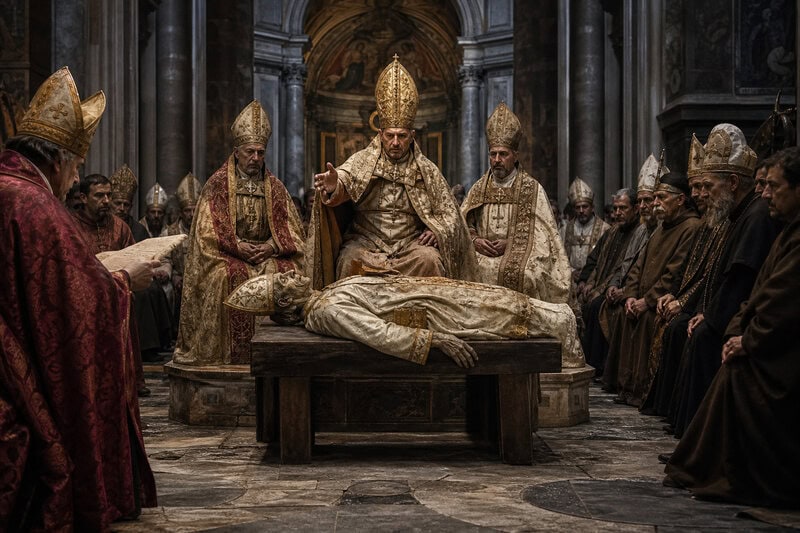
No one in that basilica expected an acquittal, and none came. Stephen VI convicted Formosus on all charges and declared his entire papacy retroactively invalid — which meant, in one sweeping judicial stroke, that every ordination Formosus had ever performed was null and void. Every priest he had ordained, every bishop he had consecrated, was now, on paper, not actually ordained at all. The practical implications of this ruling were staggering, and almost immediately unenforceable.
The sentencing, though, was what made the Cadaver Synod something more than a legal absurdity. The vestments were stripped from the corpse in open court. The three fingers of Formosus’s right hand — the fingers traditionally used for consecrations and blessings — were severed as a final, symbolic desecration. The body was first buried in a common grave, stripped of all honor, but Stephen was not satisfied even with that. The corpse of the former pope was subsequently exhumed a second time and thrown into the Tiber River, the most deliberate form of dishonor Rome had at its disposal, a fate historically reserved for criminals denied the dignity of burial.
As a statement of total victory, it was impressively thorough. It was also, as Stephen would discover, the moment his own destruction became inevitable.
Rome Reacts: The World Turns Against Stephen
The Cadaver Synod horrified even a medieval Roman public accustomed to spectacular ecclesiastical violence. Riots broke out in the city. The ruling on Formosus’s ordinations created immediate chaos — clergy who had received their orders from Formosus had no idea whether they were actually ordained, and the church had no plausible mechanism for reordaining the many men affected. The scandal spread outward from Rome, undermining Stephen’s authority rather than cementing it. Lambert of Spoleto, whose imperial legitimacy was itself entangled with Formosus’s coronations, reportedly withdrew his support from Stephen as the crisis deepened.
Within months, the reckoning came. Stephen VI was seized by his enemies, stripped of his papal vestments — in a mirroring of what he had done to Formosus that feels almost too neat to be coincidental — and thrown into a Roman prison. He was strangled in his cell later in 897, the same year the Cadaver Synod had taken place. His reign, from obsessive triumph to violent death, was a single, catastrophic calendar year.
The Rehabilitation of Formosus
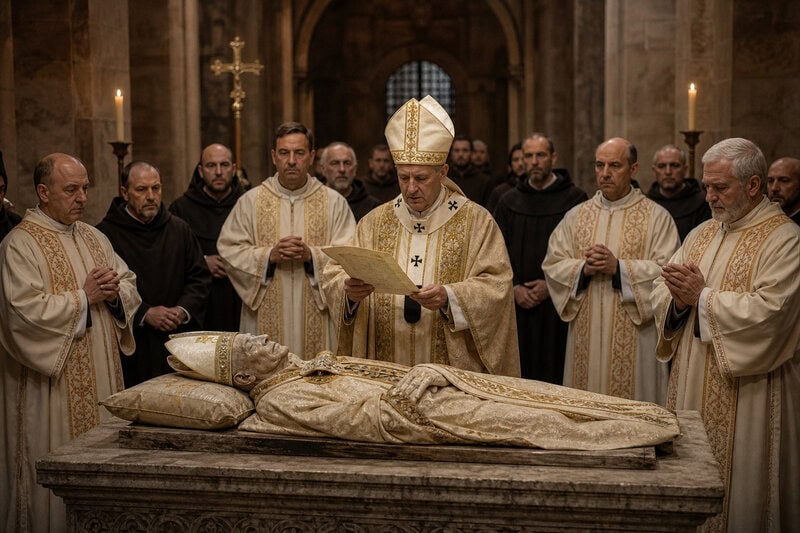
The popes who followed Stephen moved quickly. Pope Theodore II, who reigned for only twenty days in late 897, convened his own synod that annulled all the acts of the Cadaver Synod. The ordinations of Formosus were restored as valid. The body of the former pope — reportedly recovered from the Tiber by monks who recognized it — was reburied with full honors at St. Peter’s Basilica, re-vested in papal robes. Pope John IX subsequently confirmed this rehabilitation at a synod in 898 and ordered the acts of the Cadaver Synod to be destroyed.
The rehabilitation was swift and apparently sincere, though it would be naive to think it was purely about justice. The pro-Formosus faction was briefly in the ascendant, and undoing Stephen’s verdict was their way of asserting control — the same factional logic that had produced the trial in the first place. The question of whether bishops consecrated by Formosus were validly ordained would, in fact, resurface during the pontificate of Sergius III, who had himself participated in the Cadaver Synod as a bishop and who, upon becoming pope in 904, reaffirmed its findings. That later reversal left the theological question technically unresolved in certain quarters for years, a measure of just how deeply the affair had fractured the Roman church.
What the Episode Reveals About Ninth-Century Rome
What the entire episode illuminates is the razor-thin boundary in ninth-century Rome between sacred authority and raw political power. The papacy was simultaneously the most exalted office in Western Christendom and an institution so embedded in factional conflict that it could be turned, without apparent irony, into an instrument of posthumous revenge. Canon law was real enough to weaponize — Stephen used it to construct his charges against Formosus — but not strong enough to protect anyone. Including, in the end, the man doing the weaponizing.
The period between roughly 870 and 965 is sometimes called the pornocracy, or the Rule of the Harlots, by later historians, a phrase that reflects how thoroughly the papacy had been captured by competing Roman aristocratic clans. The Cadaver Synod sits squarely within that era. It was not an aberration so much as an extreme expression of dynamics that were entirely ordinary: popes elevated and deposed by noble factions, canonical arguments deployed as political weapons, and the bodies — sometimes literally — of predecessors treated as materials for point-scoring.
Why the Cadaver Synod Still Haunts Us
The trial of Pope Formosus endures not because the Middle Ages were uniquely barbaric, but because it stages in a single nightmarish scene every anxiety a civilization can have about justice and the abuse of power. The defendant literally cannot speak. The verdict is predetermined. The authority conducting the trial is the same authority that will profit from the outcome. These are not medieval problems. They are human ones, dressed here in the specific, surreal costume of ninth-century papal politics.
Stephen VI’s downfall arrived with almost classical speed, suggesting that even his contemporaries understood the proceeding as a transgression that demanded a response. The image that lingers is Stephen himself, standing in the basilica of St. John Lateran in January 897, screaming at a nine-month-old corpse dressed in white robes, absolutely certain he was winning — and already, by every measure that mattered, lost. The corpse would be honored. The screaming pope would be strangled. And the moment would be remembered, in grim and vivid detail, for more than a thousand years.