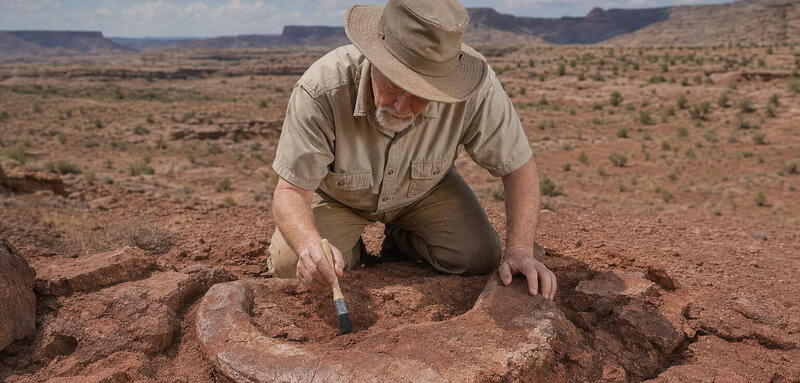
The brush moves slowly across ironstone the color of dried blood, and then — there it is. A curve of bone, smooth against the grain of the rock, that no living creature has laid eyes on in approximately 150 million years. Jim Kirkland, Utah’s State Paleontologist and one of the most experienced readers of canyon-country geology working today, leans in for a closer look at what the desert around Moab has just decided to give up.
The Moment the Desert Gave Something Up
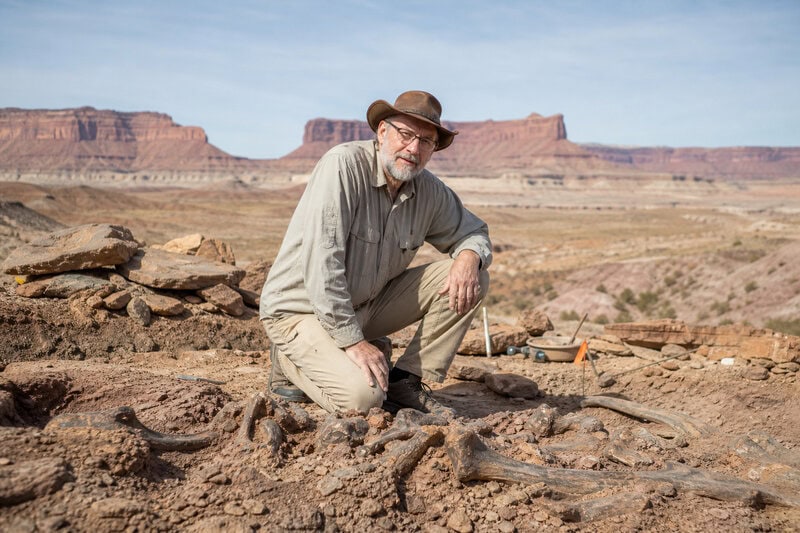
Kirkland has spent decades in this landscape, learning to read the Morrison Formation the way a librarian reads call numbers — quickly, confidently, and with a practiced sense of what belongs on which shelf. So when he stood at the edge of the newly excavated Ironstone Bonebed in southeastern Utah and began running a mental tally of what his team had pulled from the rust-colored rock, the number he landed on carried the full weight of his experience behind it.
“I think we’ve added up like four different kinds of dinosaur here right now,” Kirkland told FOX 13 News.
Said plainly, almost casually, the way a man might count the groceries on a kitchen counter. And yet that offhand reckoning — four distinct dinosaur types in a single bonebed, at least one of them potentially unknown to science — may turn out to be among the more consequential sentences spoken near Moab in recent memory.
Why Moab Keeps Hiding Giants
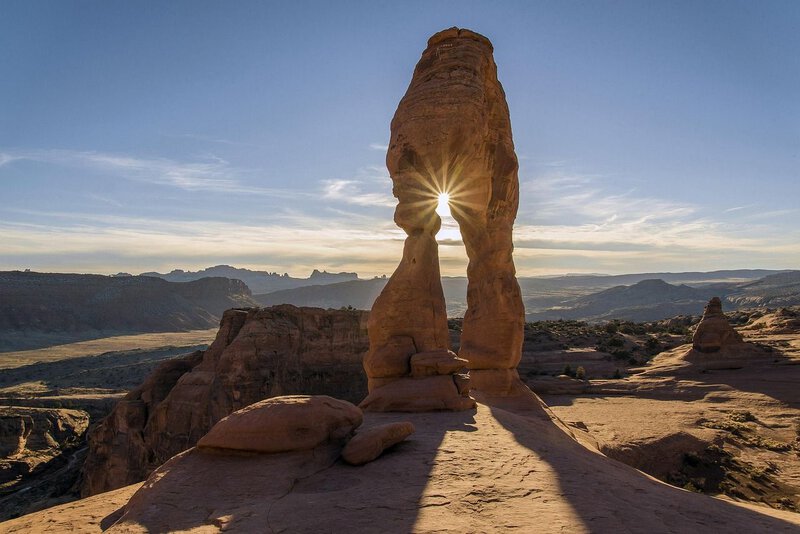
The terrain surrounding Moab, Utah is not subtle. Red sandstone towers over two-lane highways. Slot canyons swallow the light. The Colorado River cuts through rock like a sentence that refuses to end. What the landscape does not advertise, however, is the geological layer cake sitting beneath all of it: the Morrison Formation, a sequence of sedimentary rock laid down during the Late Jurassic period, roughly 150 to 155 million years ago, that has already produced some of the most celebrated dinosaur discoveries in North American history. Diplodocus. Brachiosaurus. Stegosaurus. The Morrison has given science giants before, and it is apparently not finished.
The specific site Kirkland’s team is working — the Ironstone Bonebed — takes its name from the rust-colored mineral matrix encasing the fossils. That same iron-rich sediment that makes the bones nearly invisible against the surrounding rock is, paradoxically, part of the reason any of this survived at all. When iron minerals precipitate around organic material during early fossilization, they form a chemical encasement that can outlast entire mountain ranges. The bones did not so much hide in the ironstone as they were preserved by it, sealed away while continents drifted and oceans rose and fell.
Southeastern Utah’s aridity is both the site’s curse and its gift. Flash floods and wind erosion do the slow, grinding work of exposing bone over geological time — but the same forces that uncover fossils also destroy them. The window for discovery is always narrower than it looks from the outside. A specimen that erosion exposes one decade may be rubble by the next, which is one reason that when a bonebed of this quality appears, experienced paleontologists move with something between scientific deliberation and quiet urgency.
Reading the Bones: Four Dinosaurs in One Bonebed
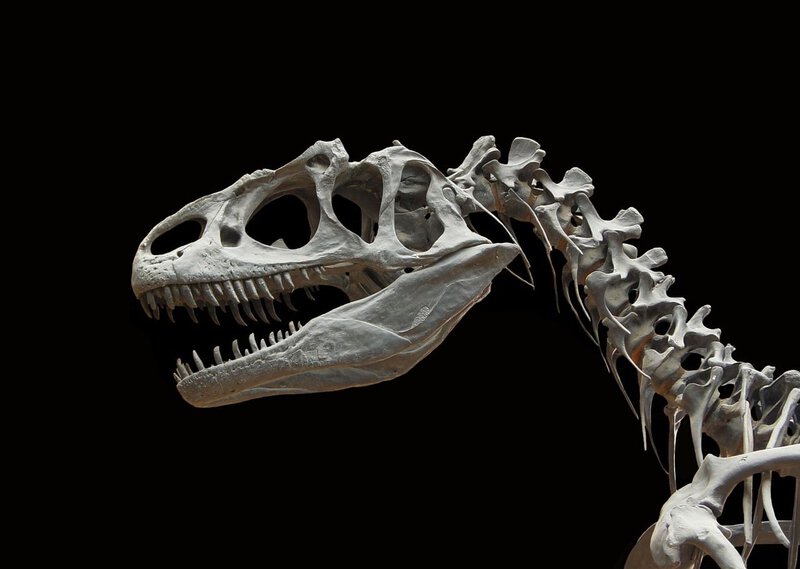
Kirkland’s four-species count is not optimistic guesswork. Paleontologists at the Ironstone Bonebed have already identified fossils from genera already known to science: the armored bulk of an ankylosaur, the iconic serrated teeth of Allosaurus, and the distinctive nasal horns of Ceratosaurus. Each of those represents a different ecological niche in the Late Jurassic world, and each tells a different story about who lived and died in this particular corner of an ancient floodplain.
The presence of both Allosaurus and Ceratosaurus in the same bonebed is its own small drama. These were rival apex predators — the two most formidable hunters of the Morrison ecosystem — and finding their remains lying in the same ironstone raises exactly the kind of question that keeps paleontologists returning to a site season after season. Did they compete here, on this specific patch of ground? Or did they simply die near the same dwindling water source during the same catastrophic dry season, their ancient rivalry rendered irrelevant by the same drought? The bonebed does not answer that question yet. It only insists that the question be asked.
Ankylosaur remains add another layer of significance. These heavily armored herbivores are comparatively rare in Morrison Formation sites — their bones appear far less frequently than those of the giant sauropods or the theropod predators — which means even a partial ankylosaur specimen carries scientific weight disproportionate to its size on the excavation grid. Finding one here, mixed in among the predators, adds texture to what was once an undifferentiated stretch of canyon-country silence.
The Find That Changes Everything: A Possible New Species
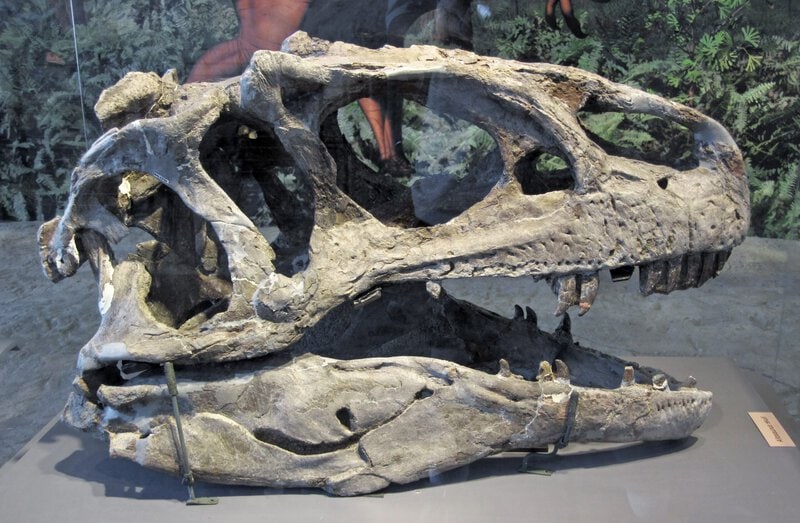
Beyond the known genera, the story takes a turn that elevates this from a significant regional find to a potentially landmark one. According to the Utah Geological Survey, large theropod dinosaurs recovered at the nearby St. George Quarry site — and in adjacent rock units sharing geological context with the Ironstone Bonebed — almost certainly represent new species. That is not the language of speculation. That is the language of scientists who have done sufficient preliminary comparison to know the morphology does not match anything already catalogued in the literature.
A “possible new species” designation is precise scientific language, not promotional hype. It means the bones display features — proportions, joint structures, distinctive crests or ridges or tooth configurations — that do not correspond to any described animal in the existing record. It means that formal taxonomic work, involving measurements, comparative analysis against museum collections, and eventual peer review, now has to catch up with what the desert floor has quietly revealed.
Kirkland’s career lends the moment additional gravity. He has named new Utah dinosaur species before — his record in canyon-country paleontology is long enough that his personal presence at an excavation is itself a signal to the broader scientific community. When Jim Kirkland shows up to count the bones himself, it is reasonable to pay attention. The fact that his count lands at four — and that at least one of those four may be entirely new to science — suggests the Ironstone Bonebed has not yet shown anyone its full hand.
How a Bonebed Forms: The Deep-Time Crime Scene
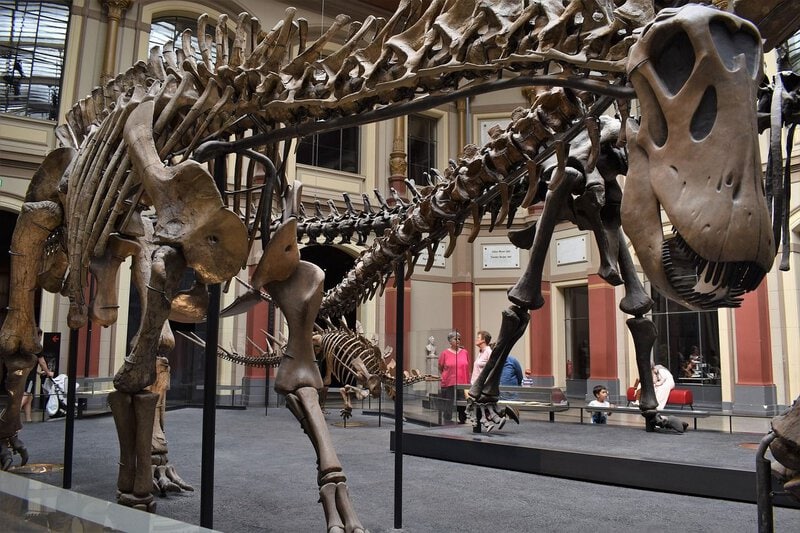
Bonebeds like this one are rarely random accidents of geology. They typically mark ancient floodplains, river bends, or drought-killed congregations where carcasses accumulated faster than scavengers and decay could disperse them — effectively freeze-framing a moment of ecological crisis in stone. The fact that the Ironstone Bonebed contains both predators and prey, both armored herbivores and apex carnivores, suggests a scene of ecological intensity: a place where the Late Jurassic world pressed in on itself, where animals that might normally have avoided one another ended up in the same desperate geography.
The ironstone matrix that gives the site its name is itself a kind of chemical autobiography. Iron minerals precipitated around organic material during the earliest stages of fossilization, forming the rust-colored casing that would preserve these animals through the entire sweep of subsequent geological time. That process — unrepeatable, accidental, dependent on the exact chemistry of a particular patch of ancient sediment — is the only reason Kirkland’s brush revealed anything at all.
For Kirkland and his team, the mixed fauna of the bonebed is a puzzle worth solving slowly. Each excavation season peels back another layer of a story that no human has ever read before. The first page, it turns out, already contains four characters — and at least one of them is a stranger.
Utah’s Broader Dinosaur Renaissance
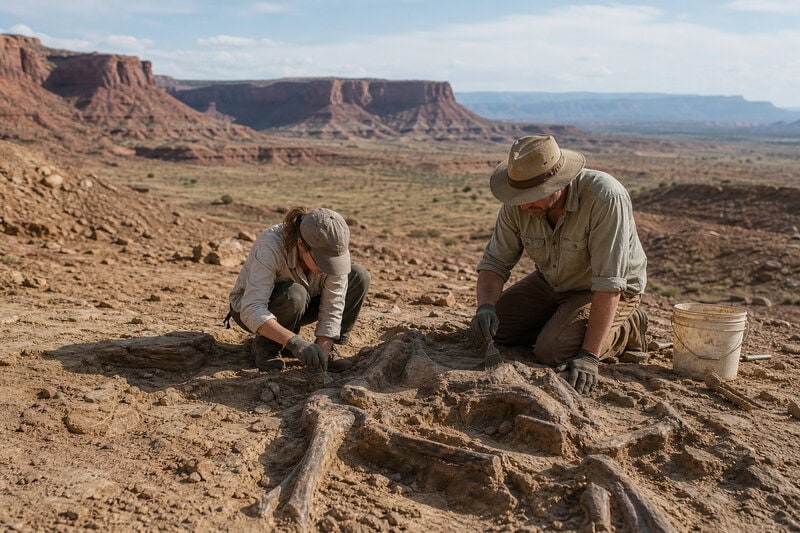
The Ironstone Bonebed find arrives as part of a broader, ongoing reassessment of Utah’s dinosaur record that has been building for years. The state has yielded a remarkable number of new Jurassic and Cretaceous species per decade relative to most other jurisdictions in North America, yet vast stretches of its public lands remain geologically surveyed but paleontologically underexplored. There is more science in these rocks than anyone has yet had the time or funding to extract.
The Utah Geological Survey’s formal involvement signals institutional weight behind the excavation, affecting everything from funding continuity to the pace at which findings move toward peer-reviewed publication. Utah’s paleontology community is also navigating a generational transition, with longtime figures approaching the ends of careers that stretched across some of the most productive decades in the state’s fossil record. The Ironstone Bonebed excavation lands at an interesting moment: one era winding down, a possible new species just beginning its journey into the scientific record.
For the general reader, the takeaway is genuinely counterintuitive. The most significant dinosaur discoveries of the 21st century are not happening in remote jungles requiring expedition funding and expedition gear. They are happening in a state American tourists drive through on the way to national parks, past roadside signs they barely slow down to read, across landscapes that look, from a car window at seventy miles per hour, like they contain nothing but rock and heat and silence.
What Comes Next — and Why It Takes So Long
The bones leaving the Ironstone Bonebed now face years of painstaking laboratory work before any of Kirkland’s four-species count becomes official in the scientific record. Preparation alone — the removal of ironstone matrix grain by grain, under magnification, using tools that would look at home in a dental office — can consume hundreds of hours per specimen. After that comes formal description, comparative analysis, and the long, careful process of peer review that separates a promising field observation from a confirmed entry in the tree of life.
Kirkland’s count of four dinosaur types is almost certainly a floor, not a ceiling. Experienced field paleontologists understand that what a bonebed shows in its first season is rarely what it yields by the final one. The Ironstone Bonebed has already demonstrated a gift for concealment; it would be surprising if it had finished being surprising.
The unnamed theropod — if it clears the formal bar for a new species — will eventually receive a binomial Latin name, the kind of permanent taxonomic designation that places an animal definitively in the scientific record. Such names often honor the region, the geological formation, or a person connected to the find. Whatever name it ultimately receives, it will mark the moment a 150-million-year-old secret passed from the keeping of the desert into the keeping of science.
For now, the red rock country around Moab holds its silence, the way it always has. But Jim Kirkland has spent enough seasons in this landscape to know what that silence is worth — and to know, from the weight of what his brush already revealed, that it is not emptiness.