For most of television history, archaeology has meant one thing: a rugged individualist racing through torchlit tunnels toward a glittering prize, usually while being chased. Dig, the new Peacock series created by Michael Schur and Amy Poehler, premiering November 23, 2026, and based on Kate Myers’s 2023 novel Excavations, is something rarer — a show that apparently bothered to ask what archaeologists actually do all day. The series takes aim at a long list of entrenched pop-culture myths about the discipline, and on most counts, it gets the corrections right.
The Myth That Archaeology Is Just Treasure Hunting With Better Hats
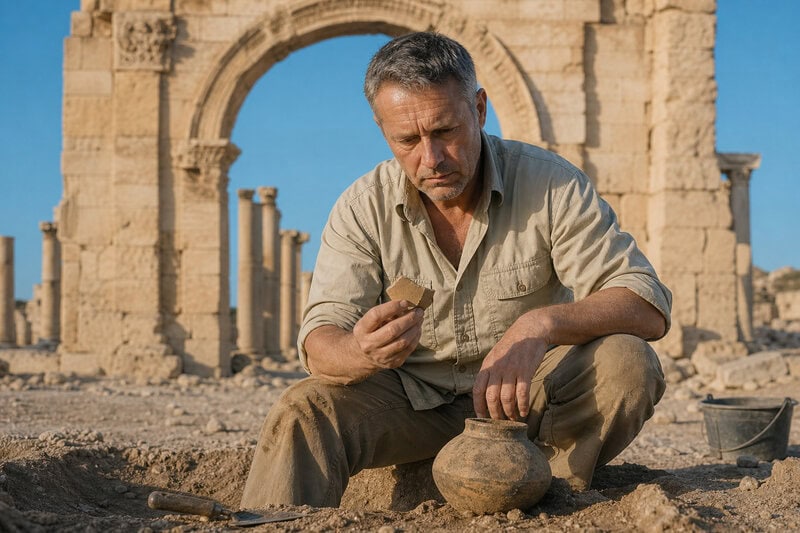
The myth has deep roots: from nineteenth-century gentleman looters to the blockbuster adventure franchises they inspired, popular culture has long equated a great find with a great haul. Dig reframes the central discovery not as loot to be seized but as evidence capable of rewriting a chapter of history — which is exactly how working archaeologists describe significance. In classical archaeology, the kind practiced at Greek sites, what matters is not an object’s auction value but its context: the precise layer of soil it occupied, what surrounded it, and what that position reveals about the people who left it there.
The show’s consulting classical archaeologists reportedly pushed back against any Indiana Jones framing during production, keeping the stakes intellectual rather than acquisitive. That single shift in emphasis separates Dig from almost every predecessor in the genre.
The Myth of the Solitary Genius Running the Whole Dig
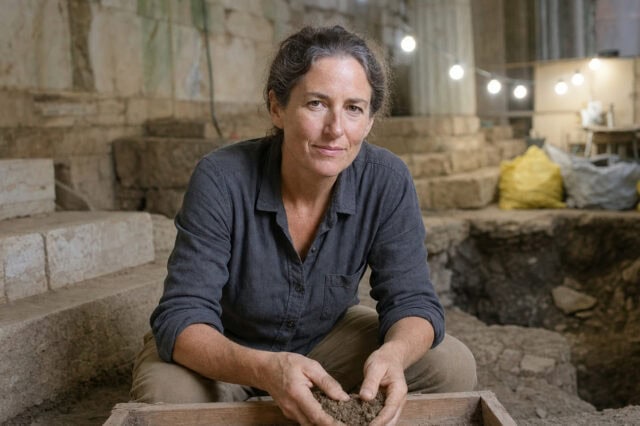
Hollywood loves the solitary genius — the one professor who somehow excavates, translates, dates, and interprets a find before lunch. Real excavations look nothing like that. Dig deliberately structures its story around four women working the same site, each occupying a distinct role — a deliberate reflection of how actual digs are staffed by directors, trench supervisors, finds specialists, conservators, and local laborers whose contributions are inseparable from one another.
Amy Poehler has described the comedic friction that arises when ambitious young diggers collide with senior academics, and that tension is itself an accurate portrait of field culture. Hierarchy on a dig is real, professional credit is fiercely guarded, and the interpersonal dynamics that result are, as it turns out, genuinely funny material.
The Myth That You Can’t Date an Ancient Artifact Without a Laboratory
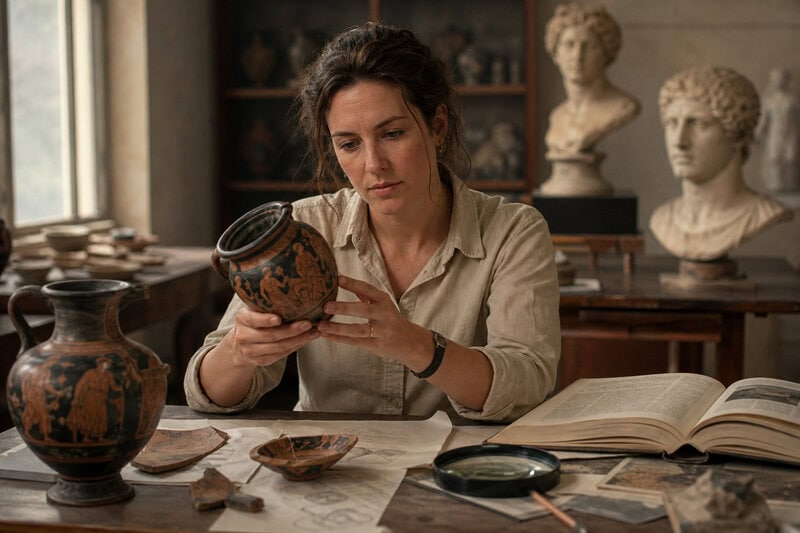
The image most viewers carry is of a scientist in a white coat feeding a pottery shard into a machine and waiting for a readout. That picture is only partially accurate, and for Greek classical sites, it can be actively misleading. Dig shows its characters using art history and textual sources to assign approximate dates to newly uncovered objects on-site — a practice real classical archaeologists call cross-dating.
Because the ancient Mediterranean is so exhaustively documented in surviving art and literature, a specialist can often anchor an unfamiliar find to a known style period or historical moment without ever touching a lab. Radiocarbon dating, the technique that dominates popular imagination, is actually far less useful on classical Greek sites than stylistic and stratigraphic analysis, which can yield faster and frequently more precise answers. The show gets this quiet but important procedural truth right.
The Myth That a History-Changing Discovery Always Means Hidden Gold
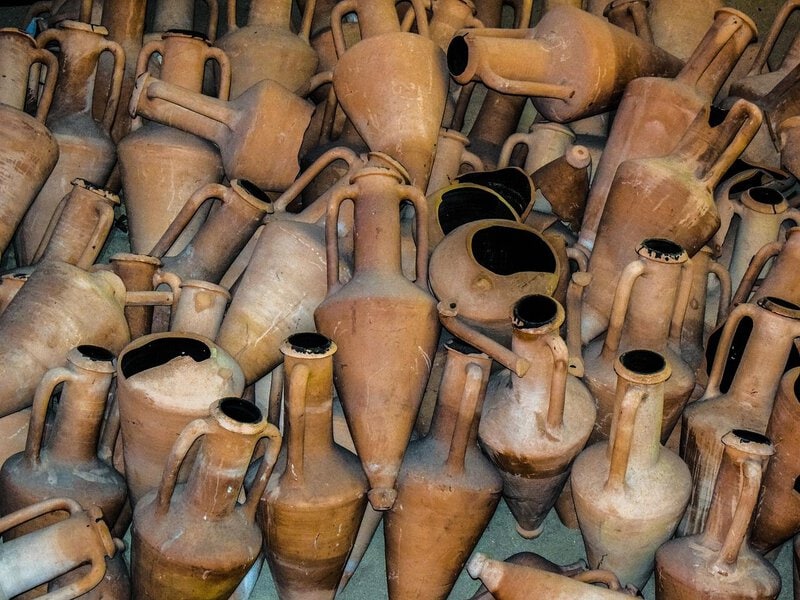
The premise of Dig — a find that could alter established historical understanding — mirrors how transformative discoveries actually work in the discipline. The Antikythera Mechanism, pulled from a Greek shipwreck in 1901, mattered not because it was precious metal but because it forced scholars to completely revise their assumptions about ancient Greek mechanical engineering. The Uluburun shipwreck, excavated off the Turkish coast in the 1980s, rewrote our picture of Bronze Age trade networks. Neither discovery made anyone rich; both changed minds.
The dangerous international conspiracy at the heart of Dig erupts over the meaning and ownership of knowledge — who gets to interpret a find, who controls the narrative it generates. That is a far more realistic driver of conflict in modern archaeology than the simple theft of treasure, and it gives the show a sharper, more honest edge than its thriller premise might initially suggest.
The Myth That Archaeology on TV Is Always Set in Egypt or the Jungle

Scan the archaeology-adjacent television landscape and a pattern emerges: pyramids, jungle temples, and desert tombs dominate the frame, as though the discipline existed only in a handful of photogenic exotic locations. Setting Dig at a Greek classical site is itself a quiet corrective. Greece hosts dozens of active international excavations every year under the oversight of the Hellenic Ministry of Culture, which issues permits and retains legal ownership of all finds — a bureaucratic reality the show acknowledges rather than glosses over.
By choosing Greece, Schur and Poehler placed their story inside the historical heartland of the discipline itself. Classical archaeology as a formal science was effectively invented in the nineteenth century at Greek sites, by European scholars who were trying to reconcile the physical landscape with the texts they had grown up reading. That origin story gives Dig a depth of setting that Egypt-or-jungle alternatives simply cannot offer.
The Myth That Dig Sites Are Dusty, Solitary, Contemplative Places
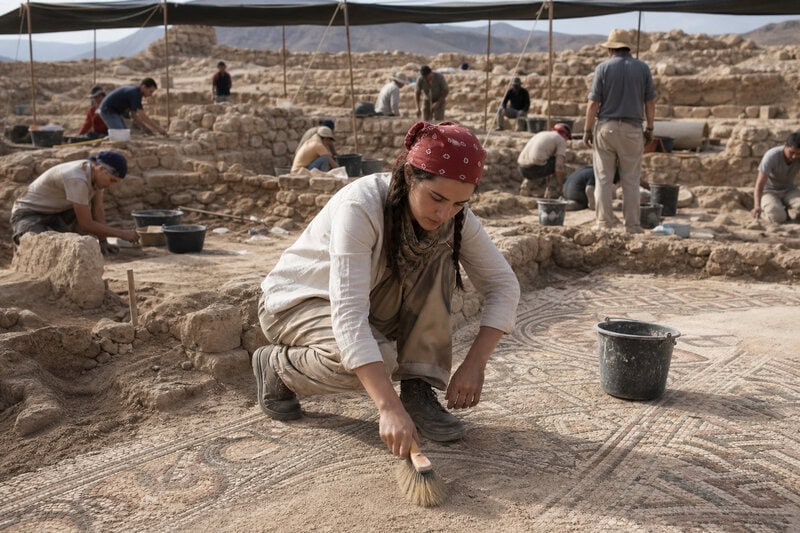
The romantic image — a lone figure brushing dust from a mosaic at sunset, thinking deep thoughts — is almost comically at odds with the operational reality of a field season. Poehler has described the site in Dig as a pressure cooker of clashing personalities, and that description matches what archaeologists who have worked in Greece will recognize immediately: permit negotiations, government inspectors making unannounced visits, inter-institutional rivalries over publication priority, and funding anxieties running simultaneously with the physical digging.
The comedy the show extracts from this environment is grounded in genuine professional friction. A graduate student’s romantic entanglement complicating a senior scholar’s publication timeline, or a conservator and a trench supervisor disagreeing loudly over how to lift a fragile object — these are not invented situations. They are recurring features of field life that anyone who has spent a summer on a dig will recognize with a wince.
The Myth That Expert Consultants Are Just There to Add Fancy Words to the Script
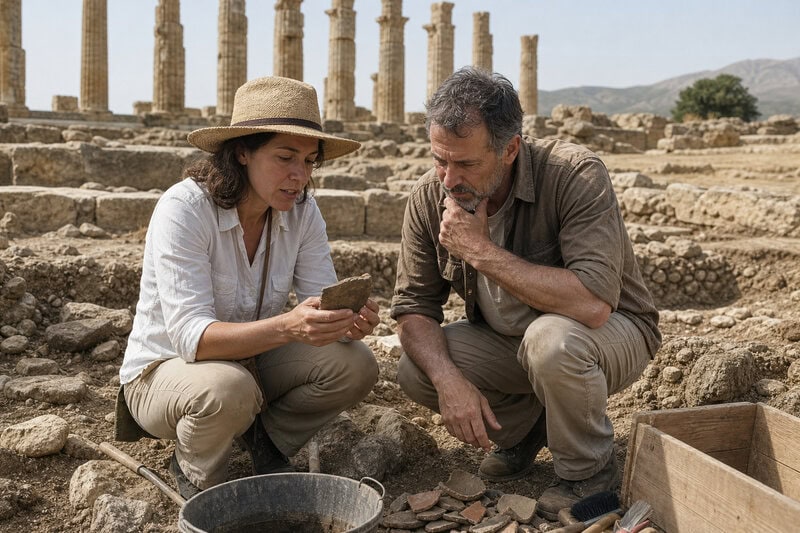
In most Hollywood productions, technical consultants function as a kind of credibility garnish — their names appear in the credits, a few authentic-sounding terms make it into the dialogue, and the underlying misconceptions survive intact. Classical archaeologists with active fieldwork experience in the Mediterranean were brought into the production of Dig in a more structural way, with their input shaping how the science is actually portrayed rather than merely supplying jargon for the actors to deliver.
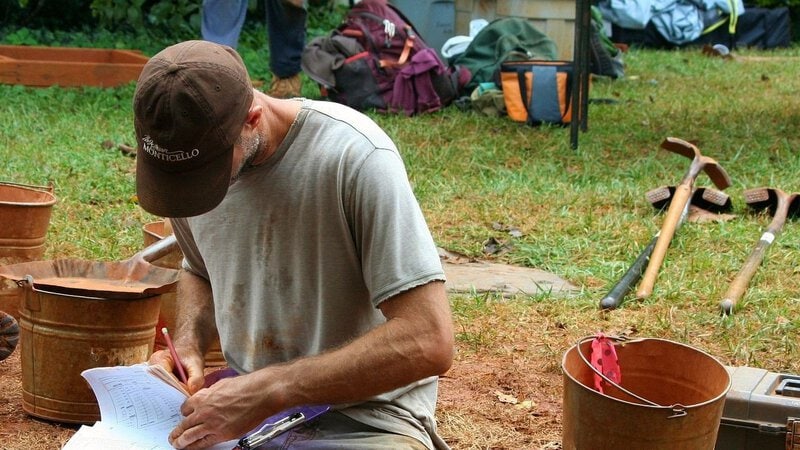
Real technical consultation shows up in procedural details that casual viewers may not consciously register but that give a production its texture: the grid systems characters use to record their trenches, the careful language used to describe a soil layer or a find’s position, the way fragile ceramics are handled and logged. This kind of structural involvement is rare enough in Hollywood archaeology depictions that it drew notice from the archaeological community before the series had even aired.
The Myth That Female Archaeologists Are the Exception in the Field
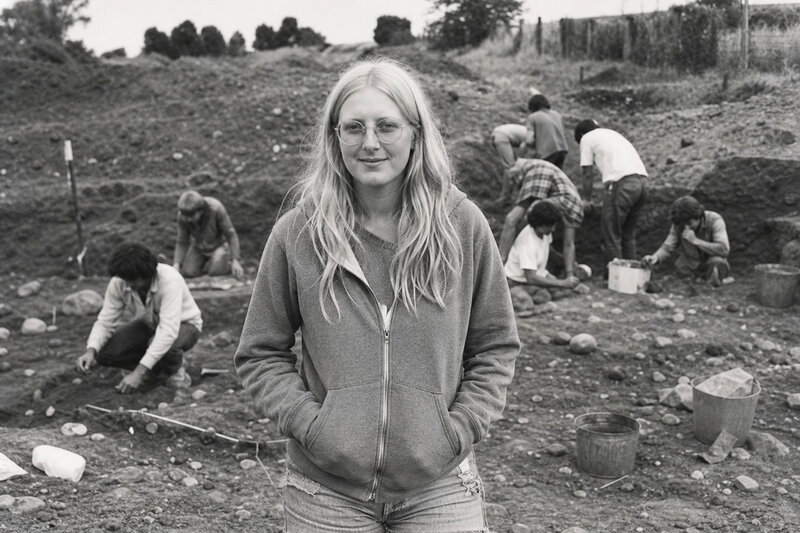
The instinct to read a show centered on four women archaeologists as aspirational casting — a progressive statement about who should be in the field — misreads the demographics of the actual discipline. Women have constituted a majority or near-majority of archaeology graduates in many countries for decades. In classical and Mediterranean archaeology specifically, prominent women scholars have directed major excavations throughout the twentieth and twenty-first centuries at sites across Greece, Turkey, and Italy.
Centering Dig on four women navigating professional ambition and personal crisis is not a deliberate corrective twist; it reflects the actual demographic reality of who does this work. The myth, in other words, runs in the opposite direction from most: the show looks progressive only because previous depictions have been so persistently and inaccurately male.
The Myth That International Intrigue Around an Archaeological Site Is Pure Thriller Fantasy
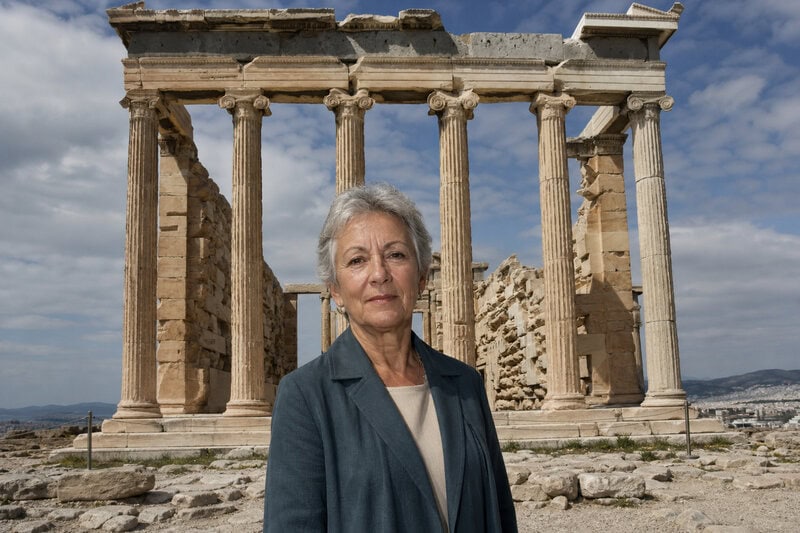
The conspiracy plot in Dig — characters drawn into a dangerous international conflict ignited by a significant discovery — sounds like the most purely fictional element of the premise. The dramatic machinery is heightened, certainly, but the underlying tension is historically grounded. Disputes over cultural heritage, artifact repatriation, and excavation rights have involved governments, major museums, criminal networks, and on occasion intelligence agencies in documented real-world cases. The Getty kouros affair, the decades-long dispute over the Elgin Marbles, and the systematic looting of sites in conflict zones are not invented scenarios.
Greece in particular has been at the center of high-stakes international negotiations over antiquities for more than two centuries, making it a genuinely plausible setting for exactly the kind of story Dig sets out to tell. When the show’s international conspiracy catches fire over a find at a Greek site, it is drawing on a real and ongoing tension — not manufacturing one from scratch.
Television has spent decades teaching audiences to expect whips, traps, and stolen idols whenever archaeology appears on screen. Dig, arriving on Peacock on November 23, 2026, seems determined to make the actual science — collaborative, context-obsessed, politically entangled, and genuinely high-stakes — look like the more interesting story all along. On the evidence of what the production has shared so far, the argument is convincing.