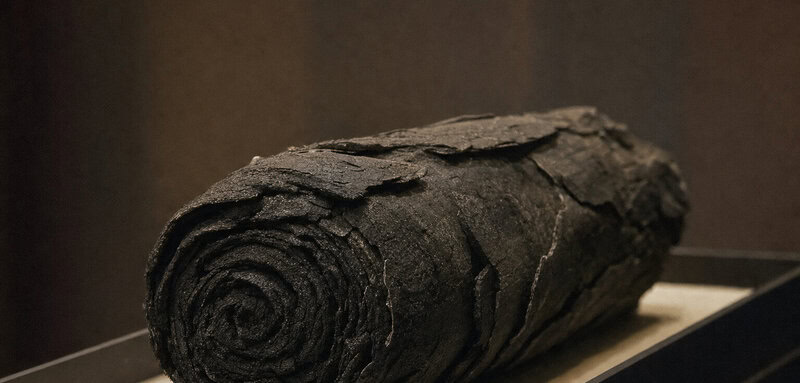
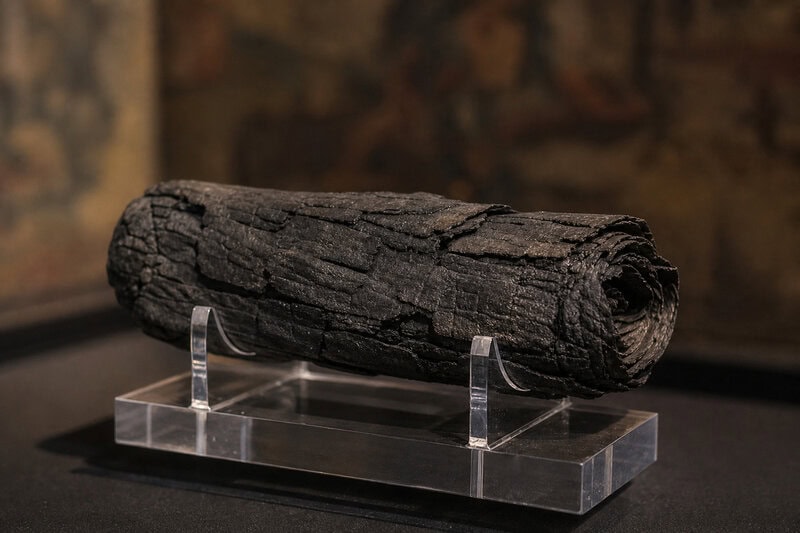
On a summer morning in 79 AD, a wall of superheated gas and ash moving faster than a freight train struck the coastal town of Herculaneum and, in a matter of seconds, did something no librarian could have predicted: it saved a library. Not by protecting it — but by carbonizing it so completely, so instantly, that roughly 1,800 papyrus scrolls were transformed into brittle black cylinders rather than crumbling to dust, sealed inside the volcanic rock like a message in the world’s most improbable bottle. Nearly 2,000 years later, a computer scientist in Kentucky is finally figuring out how to open it.
The Day the Library Died — and Didn’t
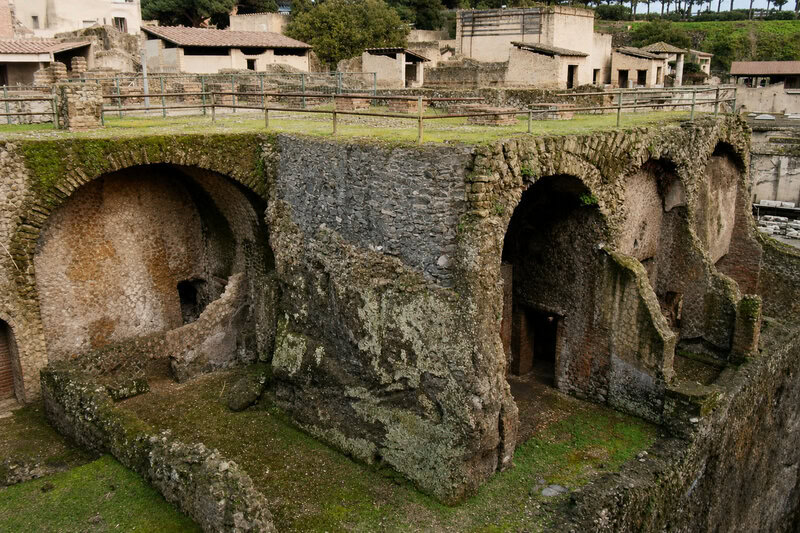
The Villa of the Papyri at Herculaneum — a seaside estate almost certainly owned by Lucius Calpurnius Piso, Julius Caesar’s father-in-law — was, by any measure, an extraordinary place. Its library held what scholars now recognize as one of antiquity’s only surviving physical collections of ancient books from the classical world. Every other great library of antiquity — Alexandria, the Palatine in Rome — exists today only in other people’s descriptions of it. This one left its actual contents in the ground.
When Vesuvius erupted, the pyroclastic surge did not give the scrolls time to burn in the ordinary sense. The heat was too fast and too total. The papyrus carbonized — essentially preserved in charcoal form — which is the only reason anything survived at all. It is one of history’s more darkly ironic preservation methods: destroyed so rapidly that destruction itself was interrupted.
When 18th-century excavators tunneled into the hardened volcanic debris and began pulling out what looked like lumps of coal, many of those lumps were destroyed on the spot. Workers tossed them aside, mistook them for charcoal, or crumbled them through handling before anyone grasped what they held. The physical record of those losses — fragments of ruined rolls, still stored in labeled envelopes — sits today in the Naples National Library, a quiet archive of irreversible mistakes.
Scrolls That Crumbled at a Touch
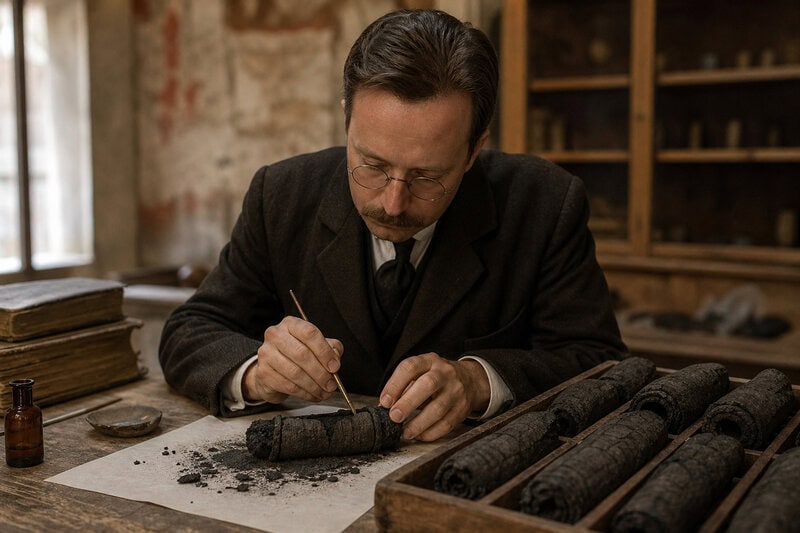
For nearly two centuries after their rediscovery, the Herculaneum papyri were considered effectively unreadable. The carbonized rolls had fused into solid black cylinders. Touch one, and a layer would disintegrate. Peel at it, and you might recover a few letters at the very outside edge — just enough to confirm that words were there, somewhere, inaccessible.
Early restorers tried a mechanical device invented by Antonio Piaggio, an 18th-century scholar at the Vatican Library — an unrolling machine that applied steady, agonizingly slow tension to a scroll’s outermost layer. It took months per scroll. It still destroyed dozens of them. The method worked only at the surface; the interior of each roll remained a sealed black silence. Scholars could occasionally read text where a layer happened to split cleanly, but the bulk of whatever words Rome buried stayed buried. The working assumption across generations of classicists hardened into something close to despair: whatever the hearts of these scrolls contained was gone.
It is worth pausing on what that meant. These were not copies of texts safely preserved elsewhere. The Herculaneum library represented one of antiquity’s only surviving physical collections — and the vast majority of it was sitting in storage, physically present and completely unreadable, for two thousand years.
A Computer Scientist Stares at a Lump of Charcoal
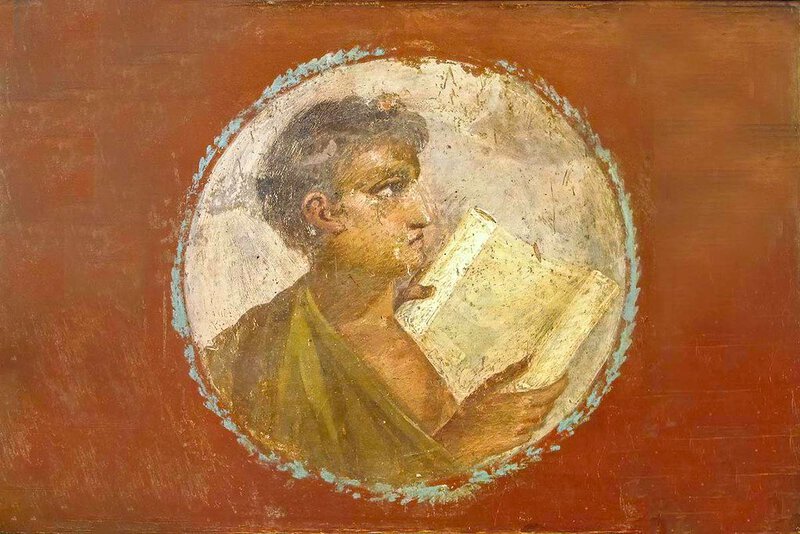
Brent Seales had spent years working on damaged manuscripts before he turned his full attention to Herculaneum. A computer scientist at the University of Kentucky, Seales developed a technique he called “virtual unwrapping” — using X-ray CT scans to map the internal geometry of a rolled manuscript without touching it, then computationally flattening those layers into readable pages. In 2016, he demonstrated it on the En-Gedi scroll, a burned Hebrew manuscript that had been unreadable for decades. That result was a proof of concept. It also pointed, unmistakably, toward the Herculaneum problem he had been circling for years.
The challenge with the Herculaneum scrolls was not imaging alone — it was that the carbonized ink and the carbonized papyrus were made of almost exactly the same material. CT scans captured the scroll’s interior in three dimensions, but the text was essentially invisible: black ink on black papyrus, differentiated by textural differences so faint that no human eye could reliably detect them. What Seales brought to the problem was machine learning. He began training AI models to recognize those ghost-like textural patterns — the statistical fingerprints that distinguish where ink once sat from where bare papyrus remained — across thousands of data points per scan.
The approach treated the ancient scrolls as a pattern-recognition problem at a scale no previous generation of scholars had the tools to attempt. Informally, it was teaching a computer to read with its fingertips, in the dark, through stone.
Seales launched the Vesuvius Challenge — a crowdsourced, open competition with monetary prizes available to anyone worldwide who could help the AI read the carbonized scrolls. The project described its own goal with a word that manages to be both precise and slightly surreal: “unburning” history. History as a thing that can, under the right circumstances, be put back together.
The First Words in Two Thousand Years
In 2023, three contestants — a student in Germany, a student in the United States, and a professional developer in Switzerland — won the Vesuvius Challenge’s grand prize by doing something that had never been done before: reading the first full passage from the interior of a Herculaneum scroll. Not a fragment at the edge, not a few stray letters, but roughly 2,000 characters of coherent ancient Greek text — continuous prose that had not been seen by human eyes since before the fall of Rome.
The text turned out to be a philosophical treatise, most likely by the Epicurean philosopher Philodemus, examining the sources of pleasure — specifically whether the pleasure derived from food is superior to that derived from music. It is, by the standards of lost literary treasure, a modest find: not Sappho, not Aristotle, not a missing book of Livy. It is careful, almost pedantic Hellenistic philosophical argument. And it is, for exactly that reason, precisely what specialists expected. The villa’s collection skews heavily Epicurean, reflecting the intellectual tastes of Piso’s circle, and the texts recovered so far have confirmed rather than overturned that picture.
But the significance of the recovered text was never really about its content. It was about the method. Seales, watching results come in, saw not just a philosophical passage but a proof: the technique worked on the buried interior of a sealed scroll. Every previous recovery from these manuscripts had depended on physical accident — a layer splitting cleanly, an edge surviving legibly. This was different. This was the heart of the scroll, reached without touching it.
The prize structure meant that each incremental breakthrough was publicly celebrated and financially rewarded, transforming what had been a slow, lonely scholarly problem into something closer to a global treasure hunt with verifiable, cumulative results. The crowdsourced model turned out to matter: participants trained in machine learning rather than classical philology brought approaches that specialists might never have tried.
What Piaggio’s Machine Could Never Reach
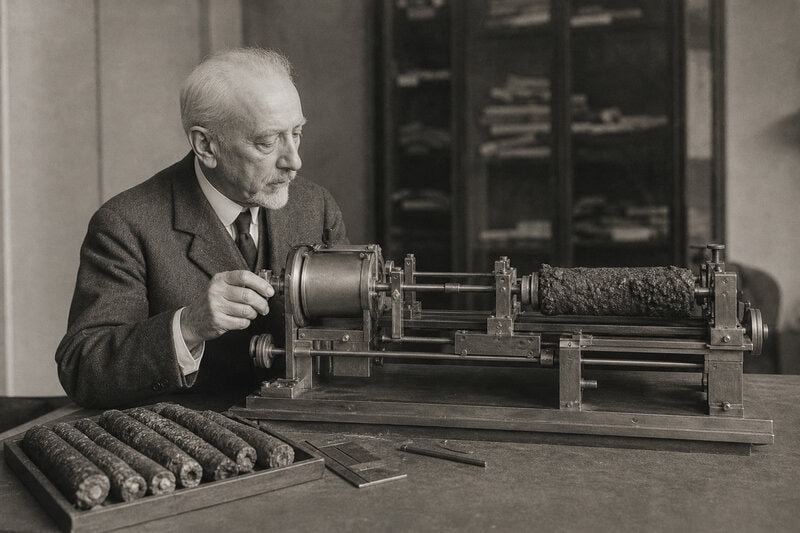
To understand why the Vesuvius Challenge represents a genuine rupture rather than an incremental step, it helps to sit with the scale of what Piaggio’s unrolling machine could not do. Over roughly two centuries of painstaking physical work, scholars managed to read portions of a few hundred scrolls — primarily their outer layers, and primarily texts that confirmed what was already suspected about the villa’s Epicurean holdings. The inner layers of every scroll remained sealed. The total proportion of legible text recovered through physical means, across two hundred years, is a small fraction of what the collection is believed to contain.
Virtual unwrapping changes the arithmetic entirely. A single high-resolution CT scan captures the full three-dimensional interior of a scroll in a matter of hours. The limiting factor is no longer the fragility of the object but the capacity of the AI model to interpret what the scan reveals. And AI models, unlike scholars, improve systematically with each new dataset they process. The more text is recovered, the better the system becomes at finding more — a compounding return that did not exist even five years ago.
The Library That Is Still Buried
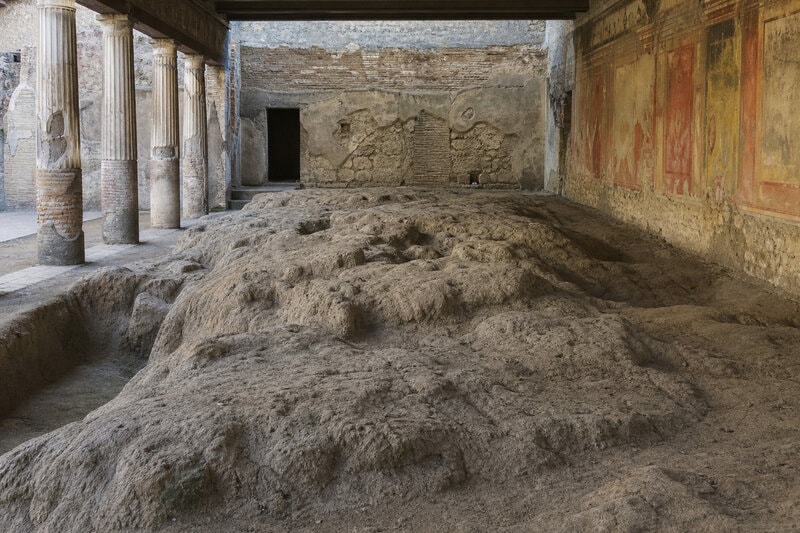
The Villa of the Papyri at Herculaneum — distinct from Pompeii itself, though buried in the same eruption — has never been fully excavated. Italian authorities deliberately left the majority of the site sealed beneath volcanic rock, partly to protect it from the excavation damage that plagued 18th-century digs, and partly because preservation conditions underground are more stable than anything a museum can reliably guarantee. It is a reasonable decision. It is also the reason that a library physically present underground remains, in most of its extent, unread.
Seales and his collaborators have argued publicly that the unexcavated portions of the villa may contain thousands more scrolls — potentially including a second room that, unlike the heavily Greek-philosophical collection recovered so far, may hold Latin literature. The missing histories. The lost plays. The poems known only from citations in other authors. The argument is not fanciful; it is grounded in the architecture of the villa and the known habits of Roman collectors, who typically maintained separate Greek and Latin sections in a serious library. Whether those rooms exist, and what they hold, is not currently knowable. What is knowable is that the evidence, if it exists, is physically present underground, waiting for the technology to catch up to the question.
That may already be happening. The AI models trained on these scrolls improve with each new dataset — meaning the texts recovered so far represent a small fraction of what the collection may ultimately yield. The Vesuvius Challenge continues to attract competitors. The monetary prizes continue to be awarded. And the scans continue to accumulate, feeding a system that gets better at its task with every scroll it learns to read.
History’s Longest Delayed Letter
Seales has described the work as receiving a letter written two thousand years ago that the postal system only now figured out how to deliver — the sender long dead, the civilization that mailed it dissolved, but the words still intact and still meaning something. It is a characteristically precise framing from a computer scientist: the problem was never that the message was gone. The problem was that no existing tool could read it.
That distinction has consequences well beyond Herculaneum. Every archive in the world holds damaged, sealed, or fragile manuscripts written off as permanently illegible. The techniques Seales developed for this problem are already being considered for other collections — other fires, other floods, other accidents of history that preserved form while obscuring content. The method does not care what language was written or what century produced it. It cares about texture, pattern, and the ghost of ink on a surface that a machine can learn to read.
In Naples, the remaining Herculaneum rolls sit in controlled storage — roughly 1,800 objects, most still unread, each one a message from a world that had every reason to expect someone would eventually open it. The crowdsourced teams keep working. The AI models keep improving. And somewhere beneath the hardened volcanic rock of a coastal Italian town, more words are waiting — in the dark, in the charcoal silence of a library that burned without quite burning — for the tools to finally arrive.
Two thousand years is a long delay. The letter is finally being opened.