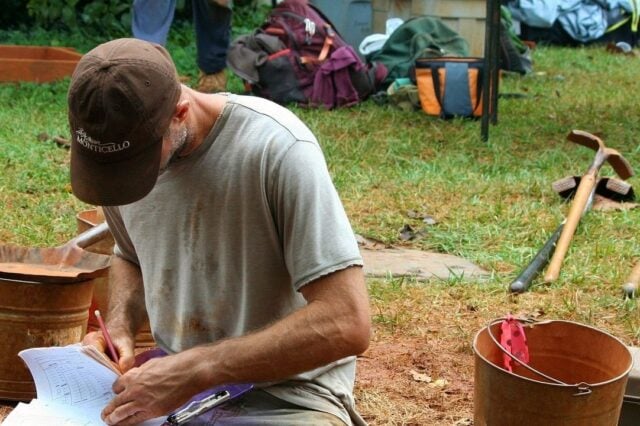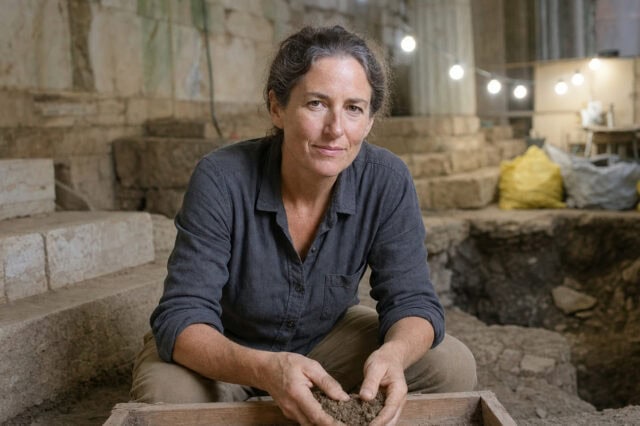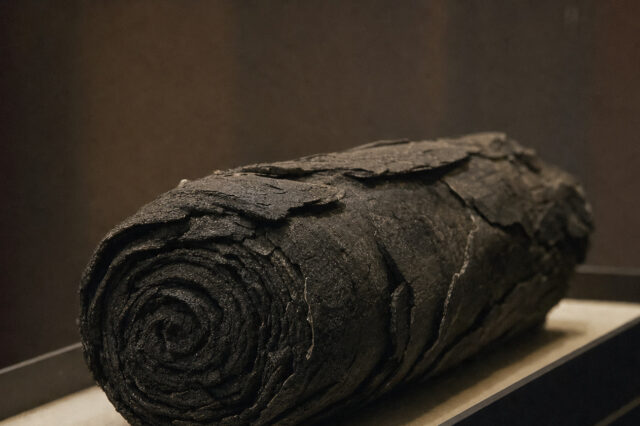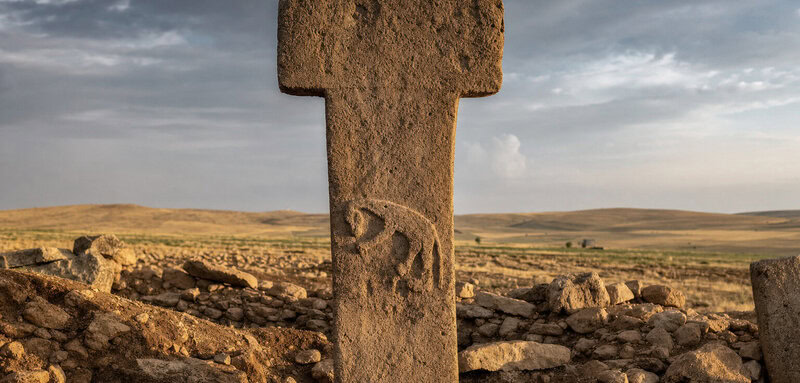
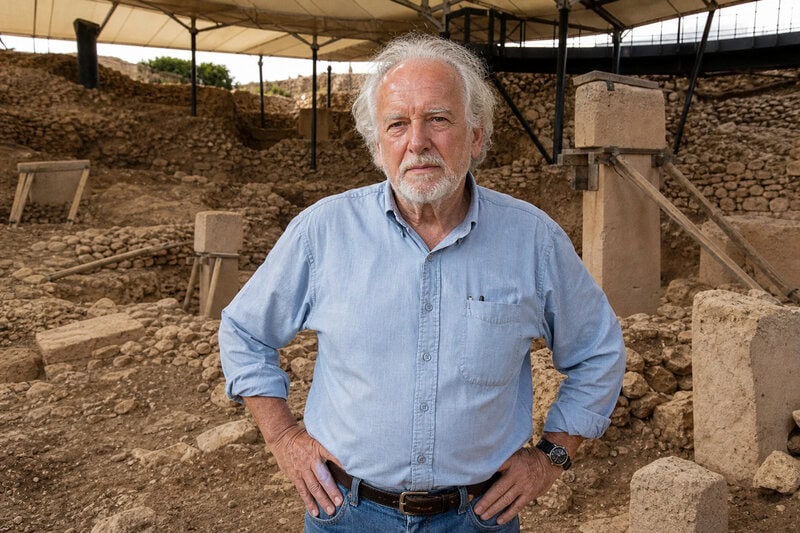
In 1994, a German archaeologist climbed a limestone ridge in southeastern Turkey, looked at a field of T-shaped stone pillars half-swallowed by earth and wild grass, and quietly concluded that everything the world thought it knew about the dawn of human civilization was wrong. Klaus Schmidt was not a man given to dramatic announcements. He simply came back the following year, and the year after that, and kept coming back until he died.
The Shepherd’s Hill and the Man Who Wouldn’t Let It Go
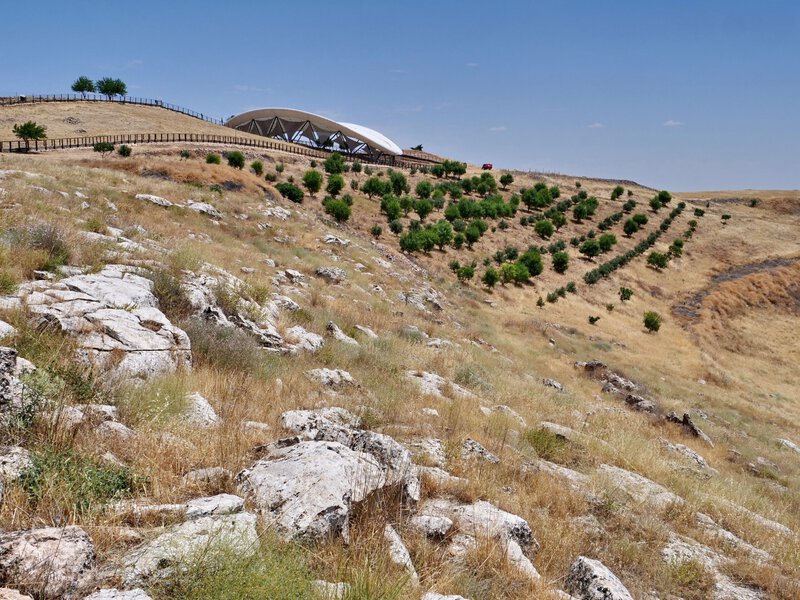
The ridge Schmidt climbed that afternoon was called Göbekli Tepe — “Potbelly Hill” in Turkish, a name of spectacular modesty for what turned out to be the oldest monumental architecture on the face of the Earth. Göbekli Tepe is a Neolithic archaeological site in Upper Mesopotamia, in modern-day Turkey, inhabited from around 9500 BCE — placing its construction somewhere between 11,500 and 12,000 years ago, depending on which layer of the site you’re measuring. Schmidt spent the next two decades excavating it, writing about it, and arguing about it at every academic conference willing to have him.
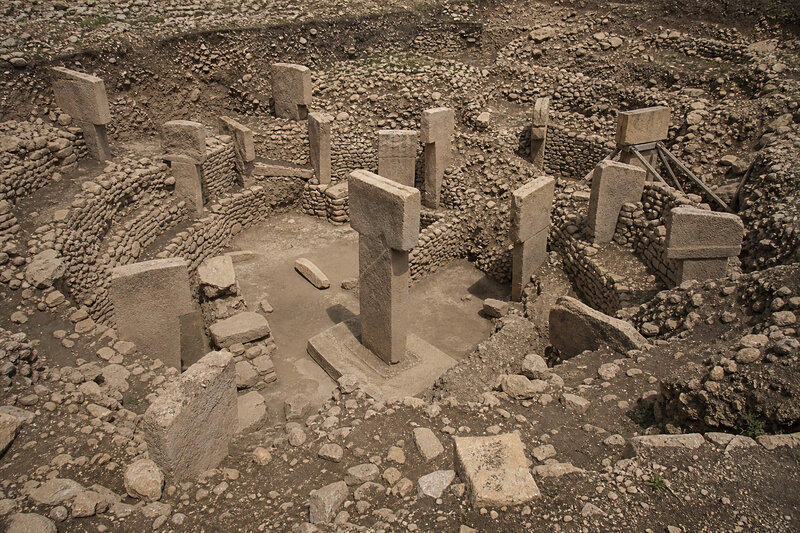
What he was arguing, at its core, was this: hunter-gatherers — people history textbooks had long portrayed as too consumed by the business of survival to build anything lasting — had nevertheless quarried, carved, and erected a complex of T-shaped limestone pillars, some weighing between ten and twenty tons, on a hilltop in Upper Mesopotamia at a moment when no city, no farm, and no written language existed anywhere on Earth. The intellectual establishment found this difficult to absorb. Schmidt found the intellectual establishment’s difficulty difficult to absorb. He kept digging.
The scale of what he was claiming only becomes real when you place it against something familiar. Göbekli Tepe is a monumental stone complex built more than 11,000 years ago by hunter-gatherers — and Stonehenge, that great monument of ancient ambition, is roughly 5,000 years old. When Stonehenge’s builders were born, Göbekli Tepe had already been standing for somewhere between six and seven thousand years. Longer, in other words, than Stonehenge is from us today. Schmidt understood this. He understood it the way a person understands something they cannot stop thinking about.
The Question of the Dead
For years, the site yielded no burials. Schmidt and his team found animal bones by the thousands, stone tools, and evidence of carving so skilled and so sustained it implied something close to a professional class of craftsmen — but the people who had built Göbekli Tepe seemed to have arranged to be nowhere near it when they died. It was, for a site this large and this deliberately constructed, a strange and pointed absence.
Then, in findings that emerged after Schmidt’s death in 2014, the first two intact burials at Göbekli Tepe were finally uncovered. Archaeologists found these first two intact burials at Göbekli Tepe in Turkey, offering new clues about how people buried their dead there — and what those clues suggest is not a simple or improvised attitude toward death. Evidence points toward what scholars are interpreting as sky burial practices: the deliberate exposure of the dead to the elements and to birds, a theology of return and dispersal that implies not just practicality but cosmology. These people had thought carefully about what death meant. They had opinions about it.
Sealed skulls and ochre-marked remains found in the broader region deepen the picture further. The mouth — the instrument of breath, speech, name, identity — appears to have carried deep symbolic weight for these communities. The careful treatment of skulls, the sealing and marking of faces, hints at a belief that something essential could linger in a face, or escape from one, and that this required management. Schmidt had theorized something like this. He did not live to see it confirmed, which is the kind of irony that the archaeological record specializes in.
Karahantepe, Sayburç, and the Siblings Schmidt Never Knew
While Schmidt focused his energy and the remaining years of his life on Göbekli Tepe, the surrounding region of southeastern Turkey was concealing an entire family of related sites. The most significant of these, the Karahantepe archaeological site, sits roughly thirty kilometers from Göbekli Tepe and is now under active excavation. It shares the same T-shaped pillars, the same approximate era, and the same fundamental mystery: why here, why this, why so large?
At Karahantepe, excavators have uncovered something that stops even experienced stone carvers in their tracks — pillars carved with three-dimensional human faces emerging from the rock. Not painted. Not scratched in shallow relief. Sculpted so that the figure appears to step forward out of the stone itself, as though the pillar were a door and something were coming through it. The technical ambition this represents, achieved without metal tools, is the kind of detail that makes the timeline feel genuinely vertiginous. Among the finds is what appears to be a seated human figure rendered with such unsettling realism that archaeologists initially debated whether it was ancient or modern. It is ancient. The realism is the point.
Then there is Sayburç. The village of Sayburç, in Turkey’s Taurus Mountain foothills, sits above a settlement dating back roughly 11,000 years, featuring mysterious carvings and evidence of early habitation. As of 2026, archaeologists have unearthed approximately 70 Neolithic structures there — not a ceremonial peak, not a single dramatic monument, but an entire community: rooms, gathering spaces, the accumulated fabric of people living alongside one another over generations. Seventy structures is a neighborhood. It is routines and arguments and shared memory.
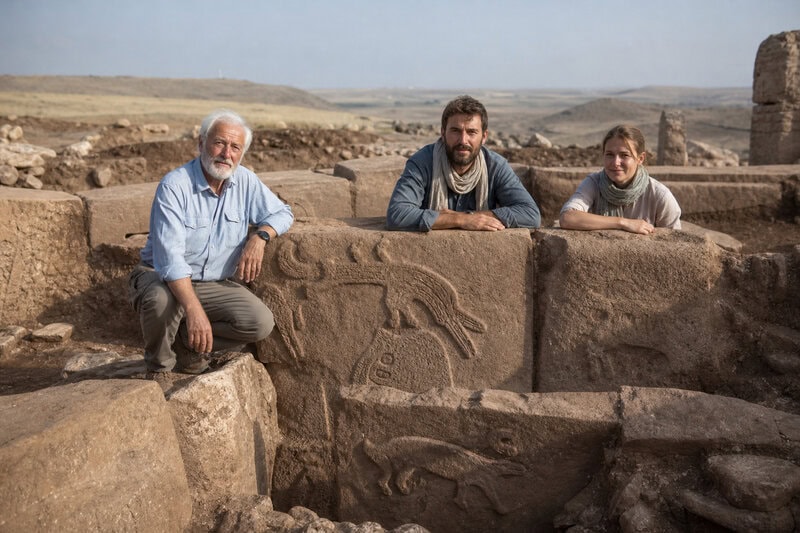
Among Sayburç’s carvings is a scene almost cinematic in its specificity: a man gripping his own phallus, carved into a bench beside a snarling leopard in what appears to be a communal gathering space. It is charged, it is narrative, and it is the kind of image Schmidt always cited when he argued that these people were not merely surviving — they were telling stories, staging meanings, working out in carved stone the things that preoccupied them. The leopard, incidentally, appears repeatedly across these sites. Whatever it signified, it mattered enough to carve over and over again in the hardest available medium.
Göbekli Tepe, Karahantepe, and Sayburç together form the core of what researchers now call the Taş Tepeler — “Stone Hills” — project, a coordinated excavation effort treating the entire region as a single landscape of symbolic thought rather than a collection of isolated sites. The picture that emerges is of a culture spread across southeastern Turkey at the end of the last Ice Age, sophisticated enough to sustain monumental construction projects across multiple locations simultaneously, and sufficiently organized to do so without any of the infrastructure historians once considered prerequisite.
The Engineering Problem That Will Not Go Away
The logistical puzzle Schmidt spent his career explaining remains unsolved to general satisfaction. How do you quarry, move, and erect limestone pillars weighing up to twenty tons without metal tools, without wheeled transport, and without an agricultural surplus to feed the workforce required? The logistics alone imply hundreds of people cooperating over extended periods — people who needed to be fed, sheltered, and coordinated, none of which happens spontaneously.
Schmidt’s answer inverted the standard model of civilization so completely that it took the broader academic world some time to catch up. The conventional sequence ran: agriculture produces surplus, surplus enables specialization, specialization produces monuments and culture. Schmidt argued Göbekli Tepe ran it backwards. The site may predate agriculture — and the need to feed the laborers and pilgrims gathering at such a place may have been precisely what pushed communities in the region toward deliberate cultivation. Dating back to the Neolithic Era, around 11,500 to 12,000 years ago, the site predates any confirmed agricultural settlement in the region — which means, if Schmidt was right, religion did not grow from farming. Farming may have grown from religion.
It is, as paradigm shifts go, a fairly large one. Schmidt once described the site as “a Stone Age cathedral on a hill.” The metaphor has outlasted him. What other word fits a place where people dragged multi-ton stones to a mountaintop not to live, but to mean something?
Rewriting the Word ‘Civilization’ From the Ground Up
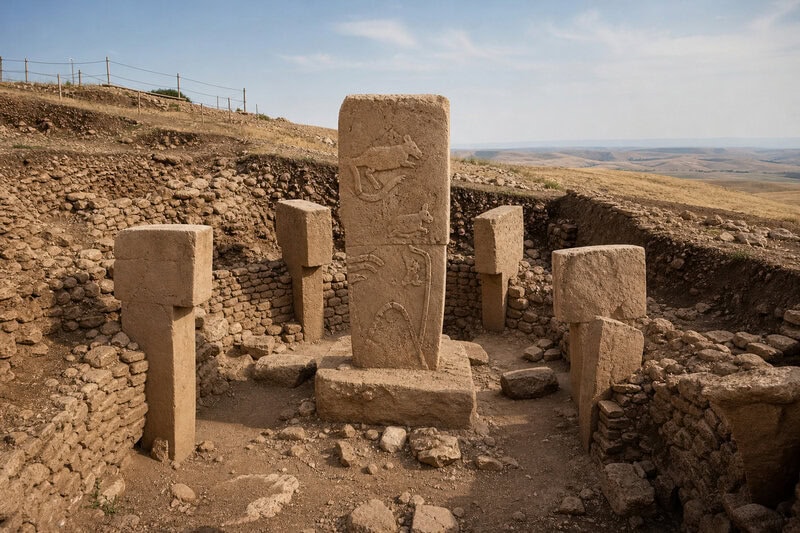
The conventional definition of civilization, assembled from Mesopotamian and Egyptian evidence, required cities, writing, and agriculture — a checklist that Göbekli Tepe and its sibling sites satisfy none of, and yet. What they do demonstrate is organized labor sustained over centuries, a shared cosmology elaborate enough to require monumental expression, long-distance cooperation between communities, and an artistic tradition of genuine sophistication. The latest excavations at the 12,000-year-old Göbekli Tepe are making archaeologists rethink the roots of civilization — which is an admirably restrained way of saying the checklist needs to be thrown out entirely.
Schmidt’s argument, now mainstream in Neolithic archaeology though it was anything but when he first made it, is that symbolic culture — the human need to carve a leopard, to bury a kinsman with ceremony, to seal a mouth against whatever might escape from it — did not follow material civilization. It preceded it. It may have produced it. The roughly 70 structures at Sayburç alone describe a community with shared spaces, repeated rituals, and accumulated identity: not a campsite but a place people returned to, built upon, and mourned within.
Only a fraction of Göbekli Tepe has been excavated; ground-penetrating radar indicates the site extends far beyond what any shovel has so far reached. Before his death, Schmidt estimated that full excavation might take a century. At Karahantepe, each new season uncovers additional rooms, additional pillars, additional faces stepping out of stone.
The sky burial evidence, the sealed mouths, the carved faces, the leopards recurring across site after site — together they sketch a ritual world of staggering complexity, one that archaeologists are still developing the vocabulary to describe accurately. Schmidt believed Göbekli Tepe would eventually be understood as the place where the human story turned a corner. More than a decade after his death, with Karahantepe and Sayburç rewriting the map around it, the corner is still mid-turn — and every season, the view from the hill keeps changing.