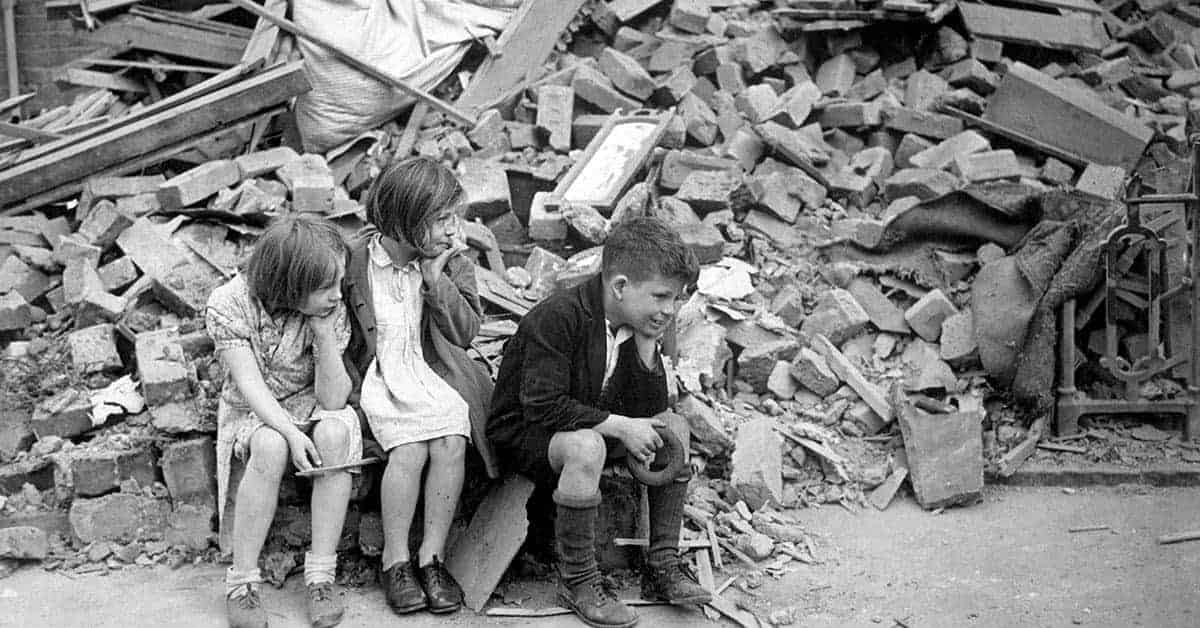
Young school children in gas masks. HistcloUnderground officials were ordered to lock station entrances during raids but by the second week of heavy bombing, the government relented and ordered the stations to be opened. Historic ClothingChildren in the underground receiving medication. In mid-September 1940, about 150,000 people a night slept in the Underground, although by the winter and spring months the numbers had declined to 100,000 or less. Noises of battle were muffled and sleep was easier in the deepest stations but many people were killed from direct hits on stations. MashablePeople would begin lining up to get into the shelters at 4:00 PM. Tickets were issued for bunks in large shelters, to reduce the amount of time spent queuing. MashableA young girls sleeps under Christmas decorations and stockings stuffed with treats in 1940. Santa Claus has visited this British home, but World War II means Christmas must be celebrated in a bomb shelter. Hulton-Deutsch Collection/CORBISCommittees quickly formed within shelters as informal governments and organizations such as the British Red Cross and the Salvation Army worked to improve conditions. Entertainment included concerts, films, plays and books from local libraries. PinterestA little girl holding her doll in the rubble of her bomb damaged home. Getty ImagesChildren playing with Gas Masks. TumblerChild with his stuffed animal in the wreckage. Pinterest