9. Feeding the Home Army and the remaining civilian population
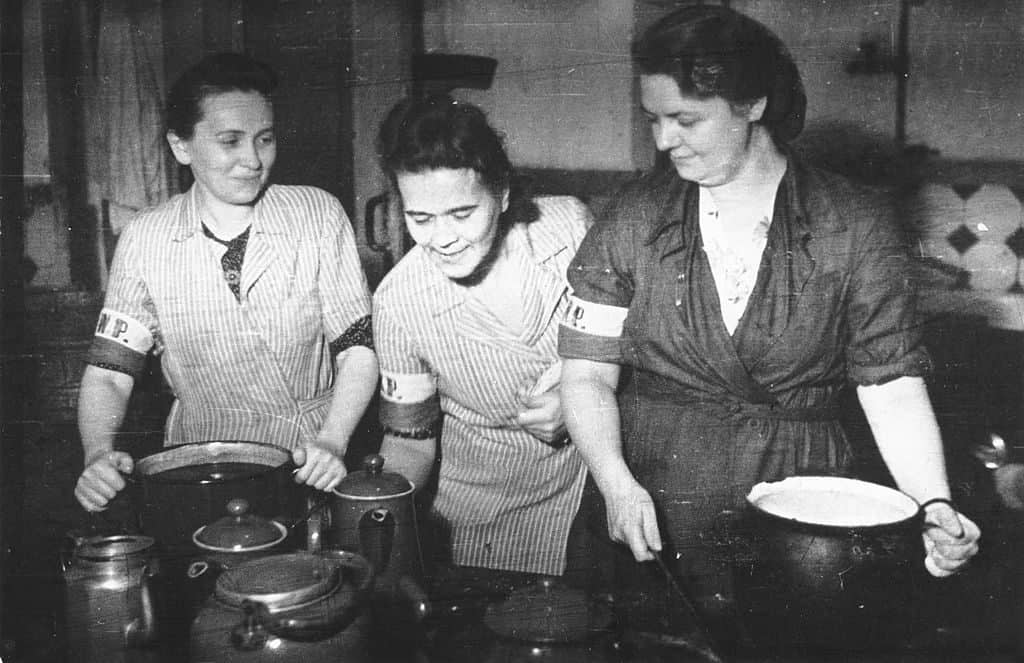
Logistics had not been a major consideration for the officers of the Home Army when planning the uprising, since it was believed that the Soviet Army would relieve the garrisons of the city in five or six days following the initial assault. Soviet supplies and those captured from the Germans were believed to be sufficient to sustain the city, supplemented by supplies flown into the area by the Royal Air Force and the United States Army Air Forces. On August 6, the day the planners believed the Soviets would relieve the city, Home Army units captured a large brewery, which contained a warehouse complex stocked with barley. Barley became the mainstay of the diet of those remaining in the city for the next several weeks.
Barley was ground into a paste using coffee grinders, and distributed throughout the city via the sewer system. Mixed with boiling water it formed a gruel-like soup. When water became scarce due to the distribution system being clogged and the main pumping stations falling into German hands, the redoubtable Poles dug wells in the areas of the city still under their control, and distributed well water by buckets, again through the sewer system. By the end of the uprising in Warsaw over 90 functioning water wells were in place throughout the city, and all of them were given full access to the public, who resorted to the nearest well in order to obtain drinking water, often while under fire from the Germans.