
Deadwood in the twentieth century
Prohibition shut down the formerly legal saloons in Deadwood, as it did in the rest of the country, but had little effect on the actual drinking business, which continued to flourish. Gambling too became illegal during the 1920s, but as elsewhere the gaming business continued to roar, albeit behind closed doors. Rising moralism and reform threatened the prostitution business in newspapers, pulpits, and political venues and by the 1940s it too was under attack, though legal gambling returned with the repeal of prohibition. In 1947 gambling was again made illegal. The state cracked down on the brothels and prostitution in the 1950s, closing most of them, though at least one remained open into the 1980s.
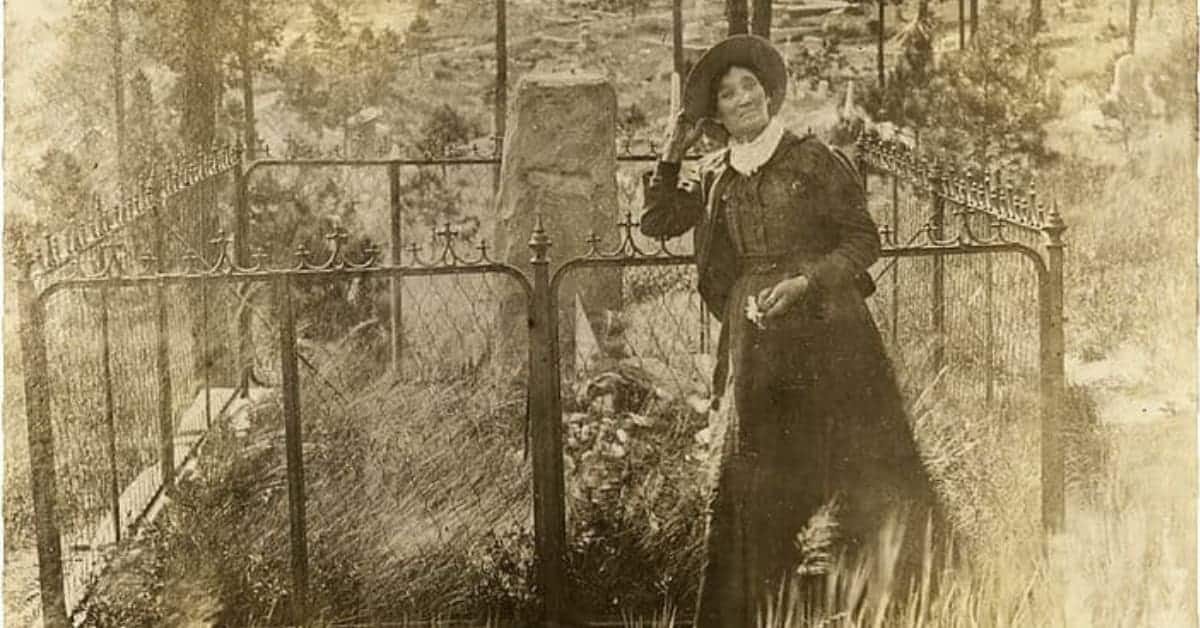
Through the 1960s-70s, Deadwood relied on its past and the attraction of other nearby landmarks, such as Mount Rushmore, to build upon tourism. The death of Wild Bill Hickok and the legends of Calamity Jane, Buffalo Bill, George Armstrong Custer, Sitting Bull and Crazy Horse, and many others were exploited by the town and the region to attract visitors to the area. In 1964 the city of Deadwood was designated a National Historic Landmark. In the 1980s Deadwood restored legal gambling, and casinos and gaming halls returned to the town, which retains its historic character while offering modern entertainment and services. The city which once contained nearly 10,000 residents is populated by less than 1,300 (as of the 2010 census), but still offers plenty of characters.
Where do we find this stuff? Here are our sources:
“Gold in the Black Hills”, by Parker Watson, 1966
“Good Little Bad Man: The Life of Colorado Charlie Utter”, by Agnes Wright Spring, 1987
“Gunfighters of the Real West”, Ducksters.
“Jack McCall and the Murder of Wild Bill Hickok”, by Black Hills Visitor Magazine.
“Slim Buttes, 1876: An Episode of the Great Sioux War”, by Jerome A. Greene, 1982
“Boudoirs to Brothels: The Intimate World of Wild West Women”, by Michael Rutter, 2015
“Seth Bullock: Black Hills Lawman”, by David A. Wolff, 2009
“The Real Deadwood’, by John Edwards Ames, 2004
“Deadwood: The Golden Years”, by Watson Parker, 1981
“The great fire of Deadwood”, by Kaija Swisher, Black Hills Pioneer, April 18, 2014
“Deadwood History Written in Flames”, by Deadwood Magazine, 2002, online
“The Calamity Papers: Western Myths and Cold Cases”, by Dale L. Walker, 2004
“Wild Bill Hickok: The Man and his Myth”, by Joseph G. Rosa, 1996
“Pioneer Days in the Black Hills”, by John S. McClintock, 1939
“Deadwood’s Lost Chinatown”, by Bill Markley, True West Magazine, June 1, 2006
“The Town that Took a Chance”, by Geoffrey Perret, American Heritage Magazine, April/May 2005


