
18. The Cuban Missile Crisis led to the creation of the Moscow – Washington hotline
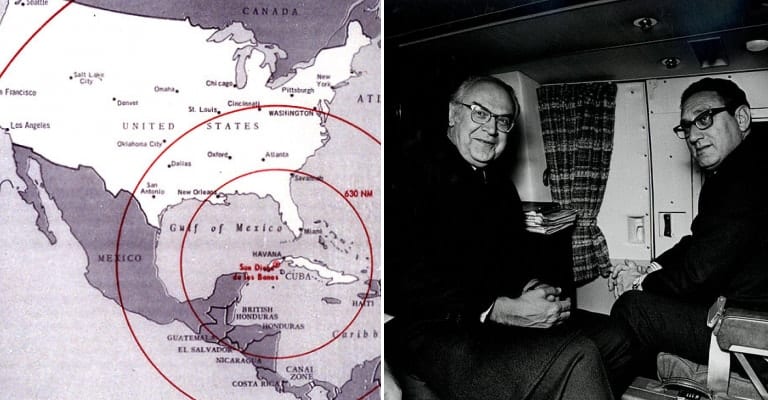
As the Cuban Missile Crisis wound down following the Soviet agreement to remove the offensive missiles from Cuba, both the Soviet and American governments reviewed their performance during the crisis. Both took steps to enhance their control of their respective agencies. Kennedy was appalled at the performance of the Joint Chiefs and their desire for immediate military intervention, as well as their reluctance to accept diplomatic efforts to resolve the crisis. Kennedy was also concerned about the delays in communication between his office and that of his Soviet counterpart, and the fact that information was received and digested by military and civilian intelligence agencies before reaching his desk, with the risk of relevant data never reaching him, or being in a interpreted state before it reached the committee he created to resolve the crisis, EXCOMM. The hotline was created in the aftermath of the crisis to improve communications between the leaders.
Kennedy suspended the naval quarantine of Cuba on November 21, 1962, following confirmation that all of the offensive nuclear missiles and their warheads, as well as the Ilyushin II 28 bombers, had been withdrawn. The following spring, the Jupiter missiles were withdrawn from Turkey. The resolution of the Cuban Missile Crisis weakened Kruschev’s prestige within the Soviet government, two years later he fell from power. By then John Kennedy was dead. Castro viewed the resolution of the crisis as a betrayal by the Soviets, as the negotiations to resolve it did not include him or representatives of his government, and the United States retained its naval base at Guantanamo Bay. General Curtis LeMay told President Kennedy that the peaceful resolution of the crisis was the “greatest defeat in our history”, and more than two decades later continued to insist that American forces should have invaded Cuba and overthrown Castro.


