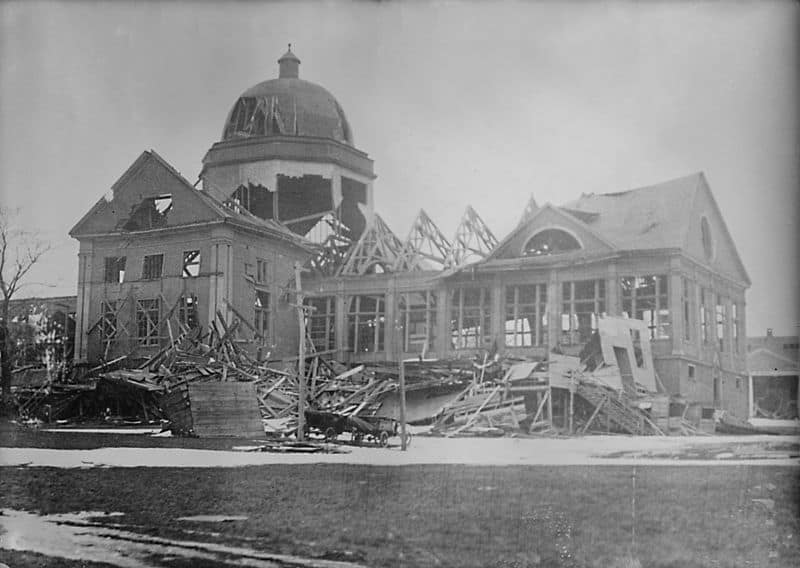

8. The largest explosion before the atomic bomb was caused by a maritime accident
On December 6, 1917, the French ship Mont Blanc was carrying its cargo of high explosives from New York to Bordeaux via the port of Halifax, where convoys were formed for the crossing of the Atlantic under escort. Denied entry into the port the previous evening by the closing of the submarine nets, Mont Blanc was entering the harbor as the Norwegian vessel Imo was departing. Imo, traveling at a higher rate of speed than allowed and with an inexperienced pilot aboard, collided with Mont Blanc, though both vessels attempted to avoid contact. Mont Blanc was lightly damaged, but barrels of benzol were spilled, and the fumes ignited by sparks as the ships disengaged. The crew immediately abandoned the ship.
Mont Blanc went aground near Pier 6, and several vessels, unaware of the cargo aboard, approached to try to extinguish the fire. Shortly after 9.00 AM, the ship exploded with such force that a half-ton portion of its anchor landed more than two miles south of the site of the detonation. Halifax was showered with flaming debris. 400 acres surrounding the site were destroyed and a tsunami wave swept over the seawall. Sixteen hundred people were killed by the blast, another almost 400 died of injuries later. Twelve thousand buildings were destroyed. It was the largest explosion caused by human beings until the Trinity test of the atomic bomb. There were 9,000 additional injured, and in the aftermath, more than 30,000 were left without adequate shelter as winter was about to begin.


