
10 – The Condemned Act Very Differently
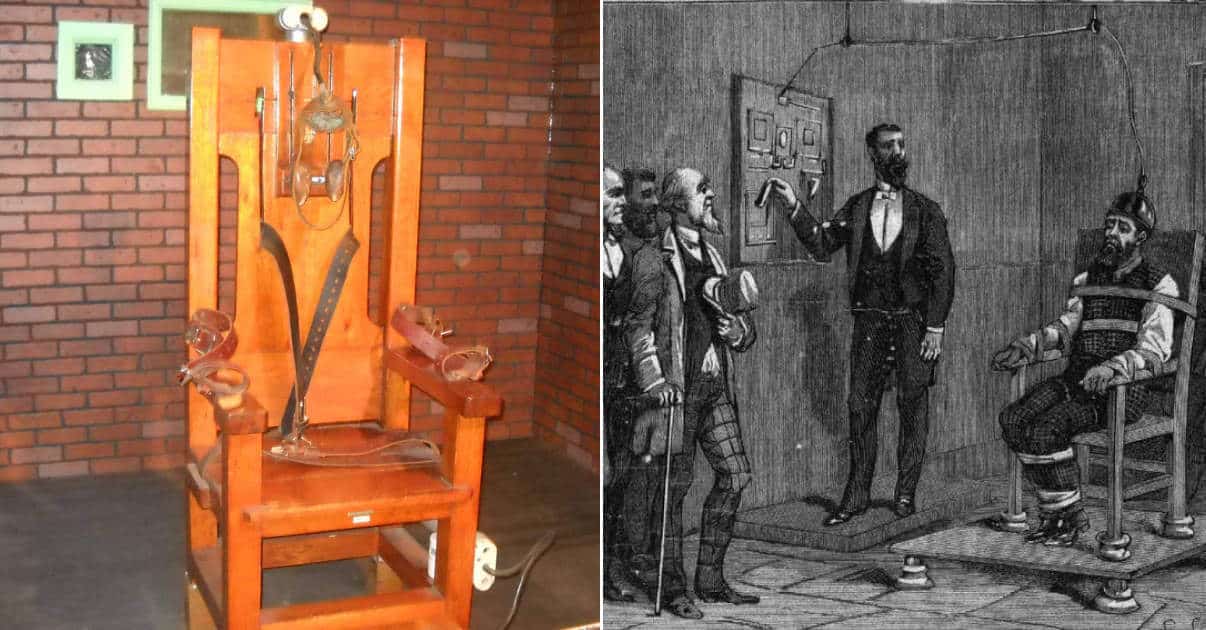
A couple of pages ago, I mentioned the fact that William Kemmler remained cool, calm and collected when it was time to die. Indeed, some inmates fight to get the death penalty, and when the moment arrives, they are the picture of serenity. When Robert Gleason was sentenced to death for the 2009 murder of a fellow inmate, Harvey Watson Jr., he said that “the death part doesn’t bother me. This has been a long time coming. It’s called Karma.” He specifically asked for the death penalty to keep a promise to a loved one that he would not kill again.
Not everyone is as relaxed as Kemmler and Gleason however. It has become increasingly common for inmates to receive anti-anxiety drugs before their executions to help them cope. A review by the Associated Press in 2006 found that condemned prisoners on death row in 11 states had received anti-anxiety drugs or sedatives before their executions in the previous 12 years. When David Brewer was executed in 2003, he was given an anti-anxiety drug called Ativan three times in the day before his death and again some four hours before he faced the needle.
Of course, not everyone goes to their death with a smile on their lips and a song in their heart. One of the most famous examples of a condemned person falling apart mentally and emotionally involves none other than Ted Bundy. Throughout his trial, Bundy reveled in the attention and was decidedly arrogant. Yet when the moment of his death approached, the vile serial killer was suddenly overwhelmed.
On the night before the execution, a religious broadcaster named James Dobson interviewed Bundy and admitted that the serial killer broke down crying on several occasions. The following morning, Bundy was led into the death chamber and bowed his head as he sat on the chair. His voice quavered as he said his final words: “Jim and Fred, I’d like you to give my love to my family and friends.” Moments later, the switch was pulled, and the monster was dead. Although justice had been served, Bundy still had a better end than his victims.
Where Did We Find This Stuff? Here Are Our Sources
“Death Penalty Fast Facts.” CNN Library, CNN.com. October 2017.
“Condemned Man Catches on Fire in Electric Chair.” Helen Kennedy, New York Daily News. March 1997.
“Questions of Innocence.” Steve Mills, Chicago Tribune. December 2000.
“Executed but Possibly Innocent.” Death Penalty Information Center. February 2018.
“The Shocking Truth About the Electric Chair.” Daniel Allott, Washington Examiner. March 2016.
“The Two Executions of Willie Francis.” Gilbert King, Washington Post. July 2006
“People v. J. Chapleau – 1889”. Altina Waller, Correction History. 1986.
“The Americans Volunteering to Watch Executions.” Gareth Evans, BBC News. April 2017


