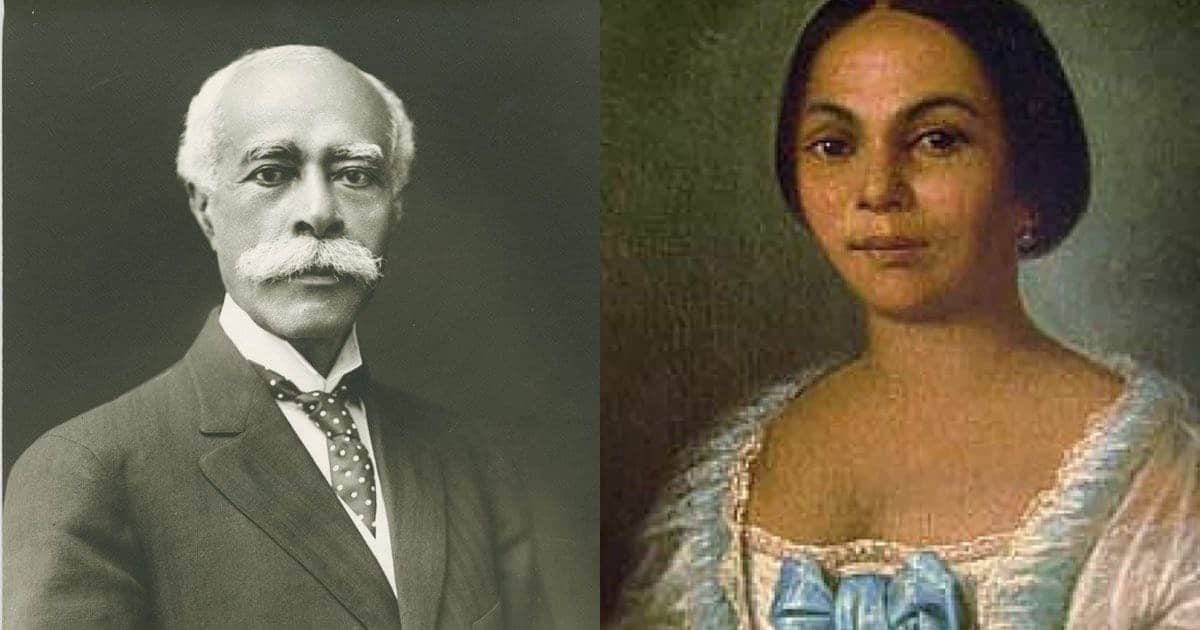

John Carruthers Stanly
Like many slave children born on plantations, John Carruthers Stanly’s parentage was questionable. According to most accounts, he was born in March of 1795, the son of John Wright, a prominent merchant from New Bern, North Carolina. His mother was an enslaved Africa woman working on a nearby plantation. As such, the child their affair produced was also born enslaved. Fortunately for him, however, the owners of the plantation, a couple called Alexander and Lydia Stewart, were far kinder to their slaves than the majority of their peers.
It was due to this benevolence that Stanly was able to learn a trade while still being enslaved. Alongside a standard education (itself quite rare for slave children), young John learned to become a barber. What’s more, he was able to work part-time cutting hair while not busy on the plantation. After a few years, he had saved up a sum of money and earned himself a reputation in the local community as an honest and hard-working young man. So, in 1798, when he turned 21, he was able to buy his own freedom, backed by the support of the Stewarts.
In 1801, Stanly not only purchased his wife, Kitty, but two slave children as well. This meant he and Kitty could be legally married according to the State of North Carolina. Then, with his brother’s freedom purchased, he focused his attention on moving out of cutting hair and into making some serious money. With two of his own slaves taking care of his barber shop, Stanly bought some land just outside of New Bern. Over time, he expanded his operations significantly and, at his peak, he had an estimated 163 slaves under his control.
At some point in the 1820s, Stanly’s wife died. He was also forced to cope with some serious financial troubles. At one point, Stanly was even forced to sell some of his land and his slaves in order to cover a debt run up by his own brother. By the 1840s, he had lost much of his fortune. Indeed, at the time of his death in 1843, at the age of 71, Stanly had just 160 acres and seven slaves to his name. His children inherited all his property, slaves included.
Where did we find this stuff? Here are our sources:
Facing History – Race and Belonging in Colonial America: The Story of Anthony Johnson
The Root – Did Black People Own Slaves?
Medium – 5 Powerful Slave Owners Who Happened to be Black
Black Economics – Amazing Facts About Slave Ownership
Face 2 Face Africa – 5 Little-Known Black Slaveowners Who Changed the Course of American History
National Humanities Center – How Slavery Affected African American Families
Black Then – The Truth About Why Some Free Blacks Owned Slaves
“The Historical Encyclopaedia of World Slavery, Volume 1”.
“Andrew Durnford: A Black Sugar Planter in the Antebellum South”. David O. Whitten.
JSTOR – John Carruthers Stanly and the Anomaly of Black Slaveholding
Also Read: The Legend of Unofficial Saint and Slave, Escrava Anastacia, is Filled with Cruelty Beyond Words


