10. Wind caused Nagasaki to be the target for the second atomic bomb during World War II
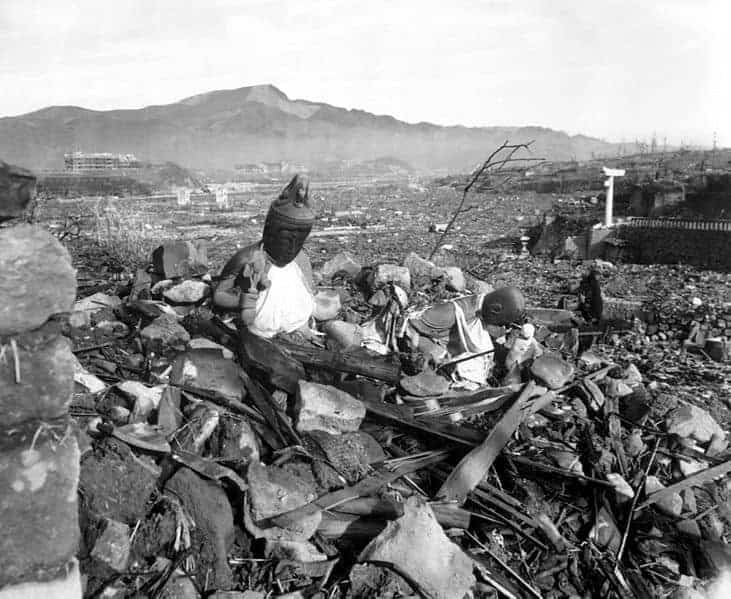
The primary target for the second atomic bomb was the ancient Japanese city of Kokura. It had been bombed earlier in the war, by B-29 bombers flying from China. The flight of B-29s which attacked on August 9, 1945 included two weather observation aircraft, which flew over both potential targets, Kokura and Nagasaki, ahead of the airplane carrying the bomb, Bockscar, piloted by Major Charles Sweeney. Both weather observers reported favorable conditions over their respective targets. Sweeney headed for Kokura. He was under orders to drop the bomb after sighting the target visually, rather than relying on radar to identify the target. When he reached Kokura he found the target obscured, though cloud cover was moderate. The city was obscured by smoke.
A firebombing raid on Yahata the preceding day produced fires which still burned, and the smoke from the fires had been driven over Kokura by the prevailing wind. In addition, the earlier overflight by the weather observer had alerted the Japanese. The Yahata Steel Works burned coal tar in its mills, which created heavy, dark smoke which served as a screen. Kokura was totally obscured, and after three passes over the city, Sweeney flew on to Nagasaki. There he found the target partially obscured, but a break in the cloud cover allowed the bombardier to visually identify the target and release the first plutonium bomb used in warfare. Had it not been for the wind, Kokura would have joined Hiroshima as the two cities devastated by atomic weapons during World War II.


