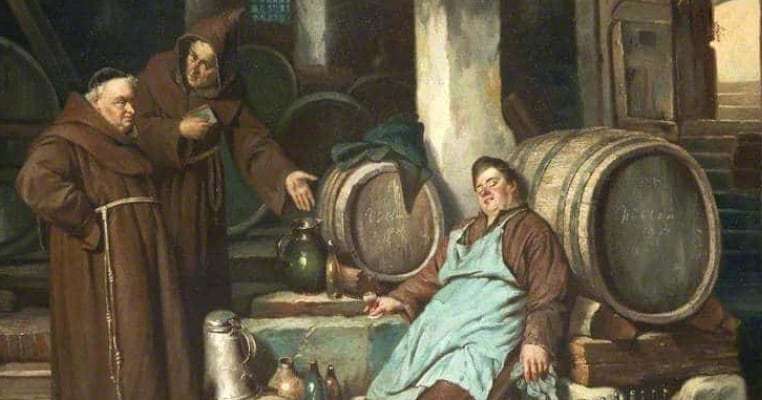

Dominicans
And so we come to the first of the four major groups of friars, the Dominicans. The order was founded in 1216 by the Spanish Canon Regular (a member of a community of priests), Dominic de Guzman, who gives his name to the friars. As a priest, Dominic was shocked by the general population’s ignorance of Catholicism, and his feelings intensified when he encountered the stubborn and heretical Cathar sect in 1205. He saw the need for preachers who could explain and defend the tenets of Catholicism, and began to travel France in search of people who needed saving.
Dominic received papal permission in 1216 to found the Order of Preachers. Dominicans, from this time, took the usual monastic vows upon being admitted into the order, but also had a mandate to preach to the public. Where monasteries were founded away from densely-populated areas, the Dominicans founded their houses in urban centres, where the need for preaching was greater. The Dominican foundations simultaneously allowed friars to pray and contemplate within their walls when not preaching. The numerous 13th-century heretical sects kept them busy with missionary work. This concern with heresy and preaching saw Dominican friars operate the dreaded Inquisition.
Nuns actually predate friars in the Dominican Order, as Dominic first ruled a house of nuns. The Dominicans followed the Regula Sancti Augustini (‘The Rule of St Augustine’), whose greater emphasis on poverty than the Regula Benedicti matched Dominic’s beliefs about mendicancy. Charity was very important to the order, and the friars did not scruple to help the homeless and sick mostly ignored by the rest of the church. Given the importance of preaching, Dominicans were charged with educating themselves to a high standard, in order to combat heresy. They wore black robes, and hence were known as Black Friars.


