
Cistercians
The Cistercians were an offshoot of the Benedictines, founded by Roland of Molesme in 1098. Roland was a Benedictine Abbot who had tired of the riches and extravagance of the order in France after the Cluniac Reforms. He sought a stricter adherence to the Regula Benedicti, and thus got Papal permission to found his own monastery at Cîteaux, near Dijon, from which the name ‘Cistercian’ derives. The Cistercians sought a life of greater poverty and exile from the secular world, and so chose the most inhospitable places to found their monasteries as the movement rapidly spread across Europe.
Uniformity of observance was very important, by contrast to the Benedictine Order, and an annual visit of the abbot ensured conformity to precepts. They also (technically) followed the teachings on poverty and devotion of the most famous Cistercian, Bernard of Clairvaux (1090-1153). Cistercian monks were also tonsured, but wore white robes, and were hence known as White Monks. Cistercian nuns were numerous, and lived in separate foundations to the men, organised in the same manner. The Cistercians also wanted to reinstall manual labour as an important part of monasticism, and so turned the uncultivated land they were granted to agriculture.
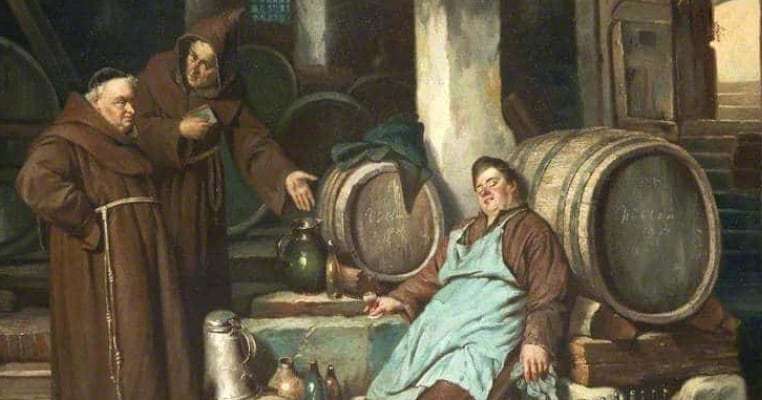
This was, of course, so that they could be self-sufficient and undisturbed by the secular world, but it came at the expense of prayer and reading, and led to serious corruption. Many Cistercian houses became significant agricultural businesses, and when these concerns expanded, ‘lay brothers’ (read: unpaid farm labourers) were admitted to the monasteries. English Cistercian houses became major players in the wool and grain trade, and built increasingly elaborate monasteries and abbeys. Over-speculation in the wool market and adverse conditions meant many Cistercian foundations went bankrupt, and were mocked and reviled for their betrayal of their founding principles.


