Back to the front page
American History

Untrue Historic “Facts” It’s Time to Erase

Siege of Budapest - World War II
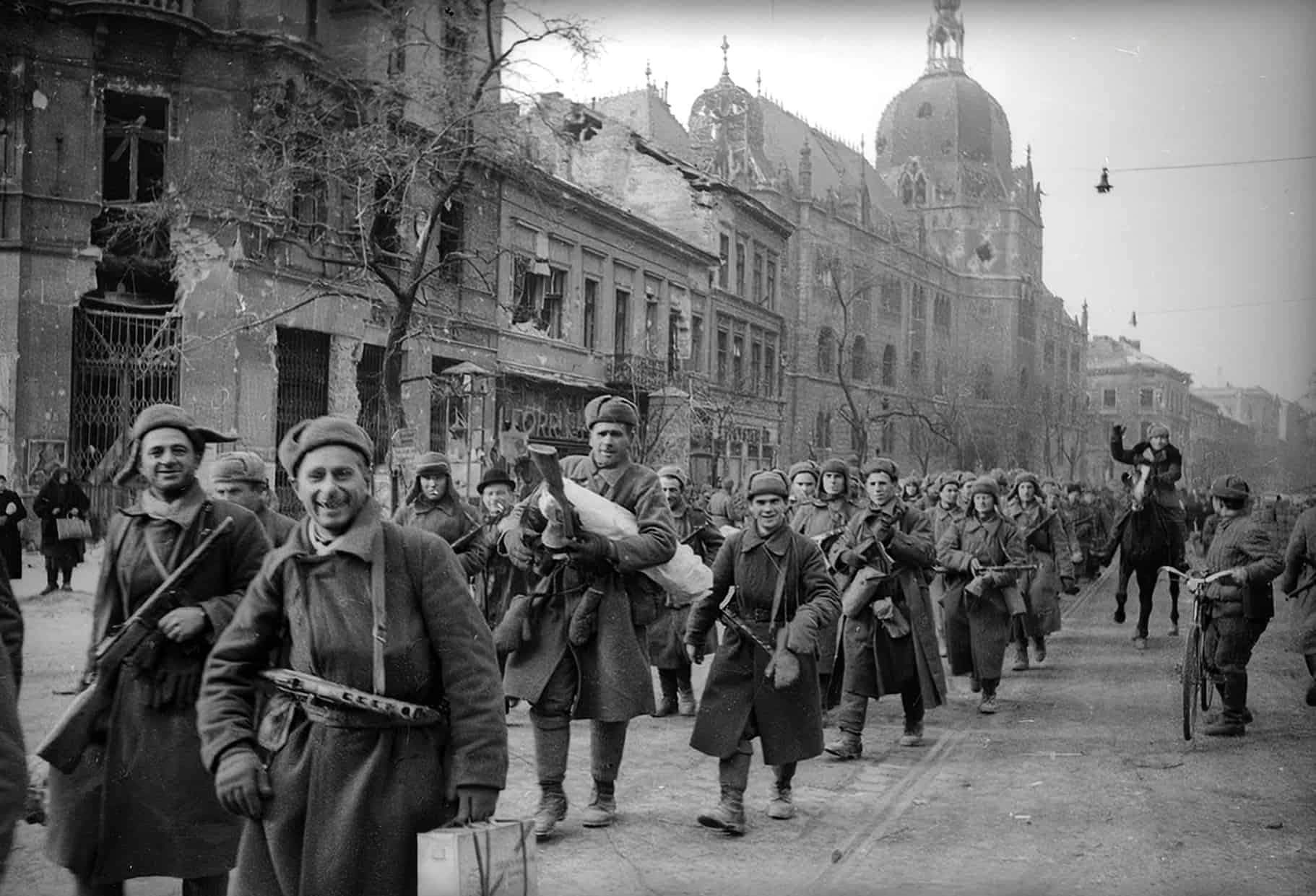
Red Army soldiers marching into a captured Budapest in 1945. Radio Free Europe
Advertisement

5. Overwhelming Soviet Numerical Superiority Was Also a Myth

Red banner raised over the Reichstag and a wrecked Berlin in 1945. Rare Historical Photos

The myth of the Soviet military’s reliance on human wave attacks in WWII goes hand in hand with the myth that the Soviets enjoyed an overwhelming manpower superiority, which enabled them to afford such wasteful tactics. However, when the Germans attacked in 1941, they enjoyed an initial numerical superiority of 3.8 million men against 2.6 – 2.9 million Soviets. Eventually, the Soviets managed to gain numerical superiority, but for most of the war, it remained at less than a 2:1 advantage.

That only began to change when the Soviets regained the vast territories initially overrun by the Germans. The manpower in the Nazi-occupied territories had been unavailable to the Red Army, but liberation changed that. Between access to fresh manpower reserves, and the Western Allies’ invasion of Europe, which forced the Germans to divert troops from the Eastern front, the Soviets finally began to enjoy an overwhelming numerical advantage.

Written by

A lifelong history buff, I developed a particular passion for WW2 history as a child, when I spent hours listening to my grandfather, enraptured, as he recounted his wartime experiences in the British East African Campaign and with the British 8th Army in North Africa.

I graduated with a history BA from George Mason University, then went on to get a JD from the University of Virginia School of Law. After lawyering for a decade, I moved to sunny Rio de Janeiro and a less demanding career, opening a tourism agency in Copacabana.

A big chunk of my free time is spent blogging (you can follow me on Quora https://www.quora.com/profile/Khalid-Elhassan ) or freelance writing, mostly about my favorite subject, history.

Advertisement

Keep reading