
14. The Hollywood community divided socially over the blacklist
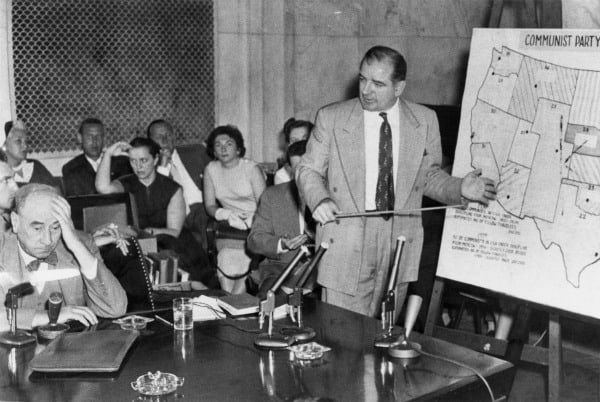
During the early 1950s, the blacklist divided friends and even led to the breakup of some marriages. Several eminent stars, including Orson Welles, left for exile in Europe, though in Welles’ case problems with the IRS also contributed to his departure. Some leading stars of film, including Gary Cooper, John Wayne, Lee J. Cobb, and the director Elia Kazan openly supported the HUAC and the blacklist. Others, including Humphrey Bogart, were forced to tone down their opposition. Bogart found himself under suspicion for his vocal support of the Hollywood Ten. In order to return to the good graces of the studio heads at Warner Brothers, he penned an article for Photoplay Magazine. Bogart denied defending the Hollywood Ten in his piece, citing instead his defense of the 1st Amendment.
Edward G. Robinson, who finally testified before the HUAC and confirmed some previously named as communists (including Dalton Trumbo) found himself ostracized by both sides. Having formerly allowed his home to be used for meetings of several of the Hollywood Ten in his absence, he remained under suspicion of having communist sympathies. As a prominent member of the so-called gray list, his roles in films dropped. Formerly one of Hollywood’s biggest stars, he found work only in B films for several years. Often his appearances were in supporting roles. Actress Barbara Bel Geddes also found her film career ended for several years after being named a communist before the HUAC. She went years without appearing in a major film. Years later she gained fame in the television prime time soap opera Dallas, starring as the matron of the Ewing clan, Miss Ellie.


