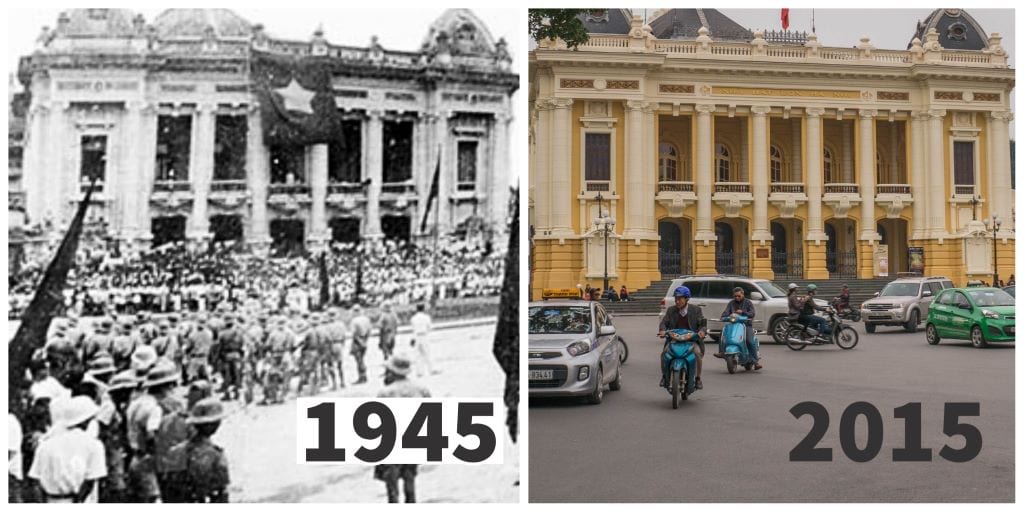
Coliseum, Rome, Italy, 1875 and 2015

Rome’s Coliseum has stood for almost two thousand years as a testament to the might of the Roman Empire. It hosted Gladiator games, races, naumachia, and massive public events until 523 CE. When Rome fell, the Coliseum was left to rot. Nature quickly took its toll on the building. Earthquakes in the fifth century CE, fires, and water damage led to deterioration. Dark Ages builders started plundering the stone, marble, and other materials for building projects.
Over time, it served as a cemetery, housing, a castle, shops, and altars. Protection of the site started with Pope Benedict XIV prohibited the use of Coliseum stone for other projects in 1744. Pope Pius VII started conservation on the building in 1820. It served as a church until 1870. The Coliseum, a highly popular tourist destination in Rome, once again serves as an arena, with concerts, plays, and other cultural events staged there.


