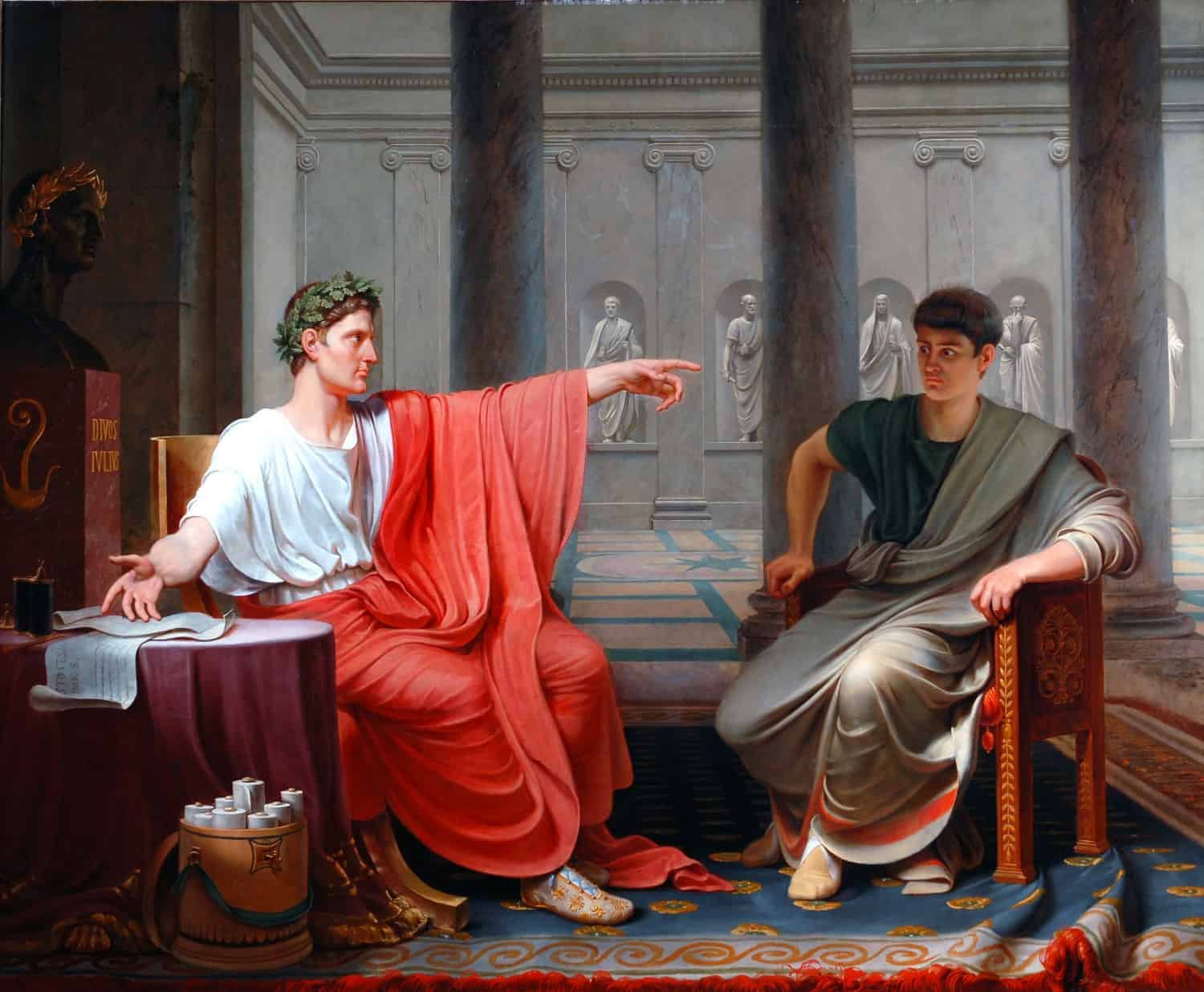
1. Despite Wielding the Powers of a Dictator, Vespasian Never Lost the Common Touch or Forgot His Humble Origins

Despite having all the powers of a dictator, Vespasian was never full of himself, and had a reputation for wit and amiability. As emperor, he seldom stood on ceremony, but cultivated a blunt and even coarse mannerism, and was given to forthright speech. Never forgetting his humble origins, he resisted the temptation to put on airs, to which most Roman emperors succumbed. One of his revenue-raising schemes involved a tax on public urinals, which was widely ridiculed. His son and designated heir took him to task for that, arguing that it was beneath imperial dignity to collect revenue from bodily excreta.
Vespasian responded by holding a coin beneath his son’s nose, and asking whether he could smell any urine. He concluded by saying: “money does not smell” – which became a Latin proverb. Starting with Julius Caesar, who was declared a god after his assassination, Roman emperors who died in good repute were deified after death. When he felt the end nearing in 79 AD, Vespasian, in a final illustration of his lifelong penchant for not taking himself too seriously, joked just before dying: “dear me, I think I am becoming a god“.
_________________
Where Did We Find This Stuff? Some Sources and Further Reading
Baker, George Philip – Sulla the Fortunate: Roman General and Dictator
Cassius Dio – The Roman History: The Reign of Augustus
Encyclopedia Britannica – Augustus
Encyclopedia Britannica – Fabius Maximus Cunctator
Encyclopedia Britannica – Peisistratos
Everdell, William – The End of Kings: A History of Republic and Republicans (2000)
Forsythe, Gary – The Beginnings of the Republic, From 509 to 390 BC (2015)
Goldsworthy, Adrian – Augustus: First Emperor of Rome
Gonick, Larry – The Cartoon History of the Universe (1990)
Keaveney, Arthur – Sulla: The Last Republican (1982)
Livy – History of Rome, Book III
O’Neil, James L. – The Origins and Development of Ancient Greek Democracy (1995)
Morgan, Gwyn – 69 AD: The Year of the Four Emperors (1937)
Suetonius – The Lives of the Twelve Caesars


