
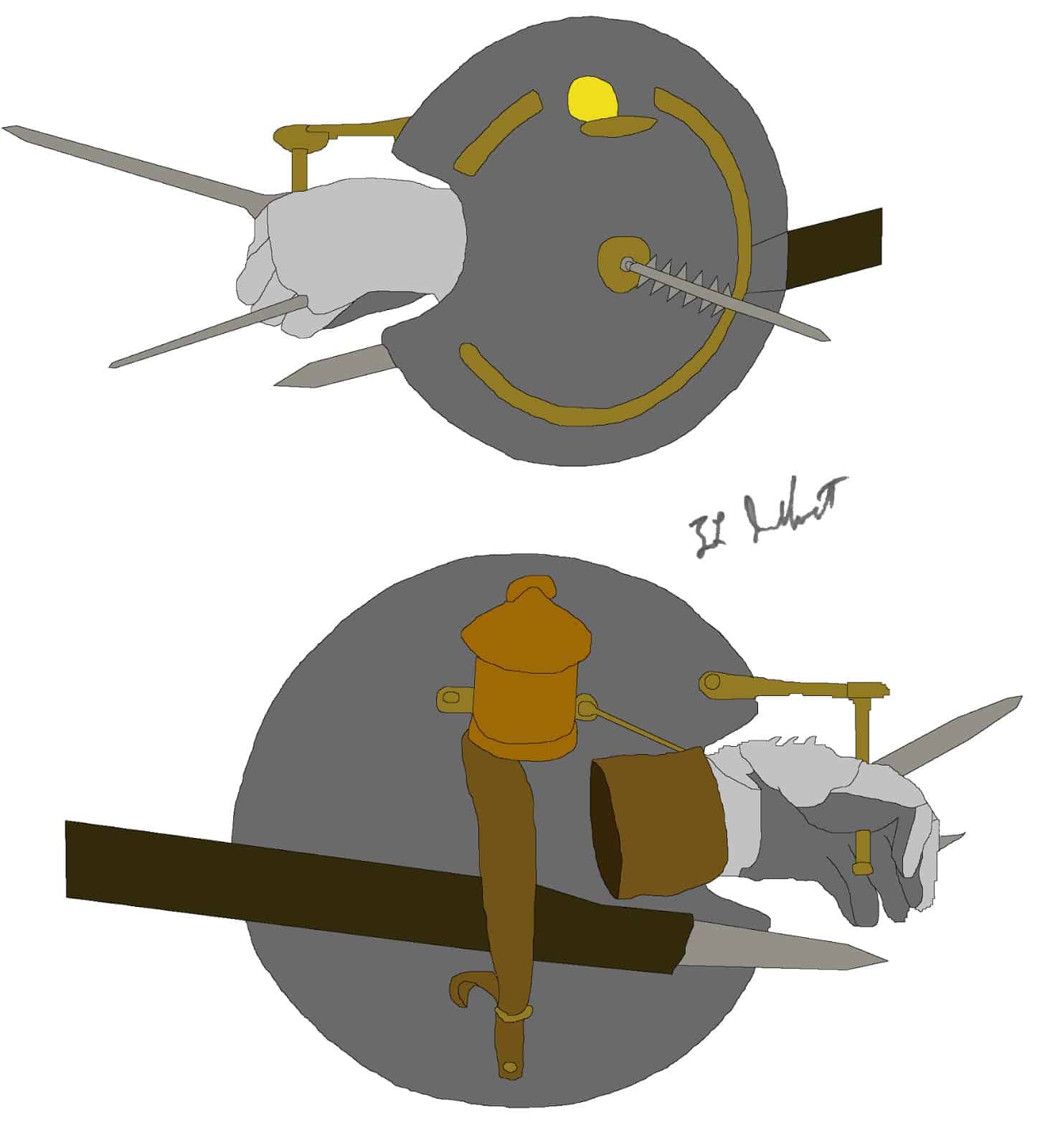
25. Mixing Fire and Oil Mere Inches From a User’s Body Turned Out to be a Bad Idea
Lantern shields had a design defect that was inescapable, given the technology of the time. Batteries did not exist back then, so lanterns were lamps that produced light via a flame fueled by oil. The lantern had an oil storage compartment that allowed the flame to remain lit for hours on end. In short, lantern shields literally mixed fire and oil in extremely close proximity to the user’s body. They were strapped to the bearer’s arm, inches away from his face and torso.
When the lamp was jostled – something unavoidable since the purpose of a shield is to absorb blows when used defensively, and to bash opponents when used offensively – the oil could leak out or spill. With the lantern’s fuel compartment affixed to the shield, there was a strong possibility that the user’s shield-bearing arm, face, or body, would get drenched in flammable oil. Oil that could catch fire if it came in contact with the lantern’s flame. As a result, the lantern shield had a tendency to turn its users into human torches every now and then.


