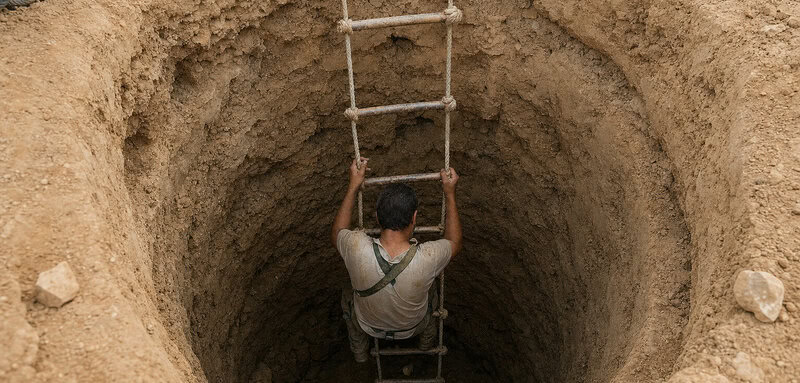
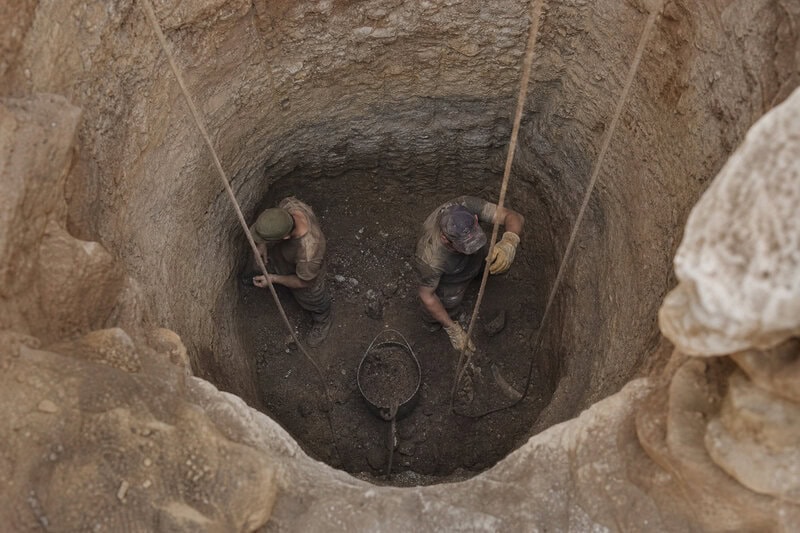
When Zev Stub filed his report for the Times of Israel, the detail that stopped readers cold was not what the six men had found — it was that they couldn’t get out. Somewhere in the Judean Hills southwest of Jerusalem, a group of antiquities looters had dug themselves nine meters into the earth, dropped into a stone-cut cistern that had been sealed for the better part of two thousand years, and were still down there when the authorities arrived.
The Hole in the Ground That Became a Trap
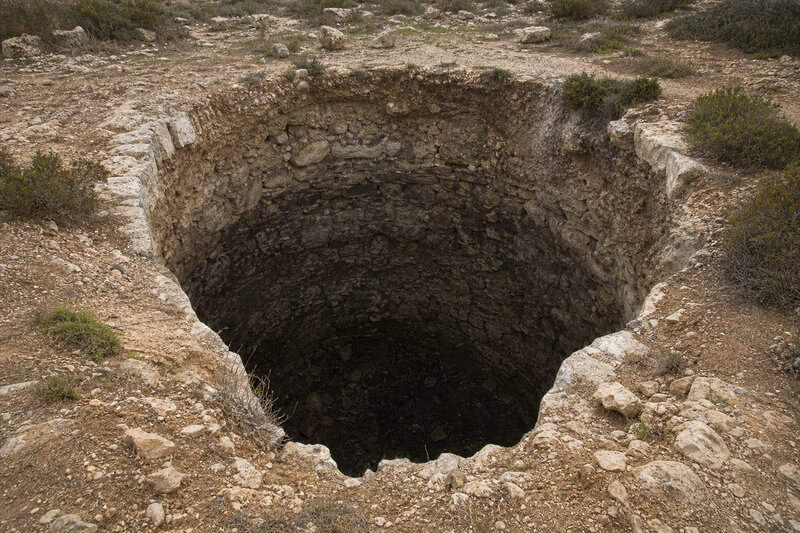
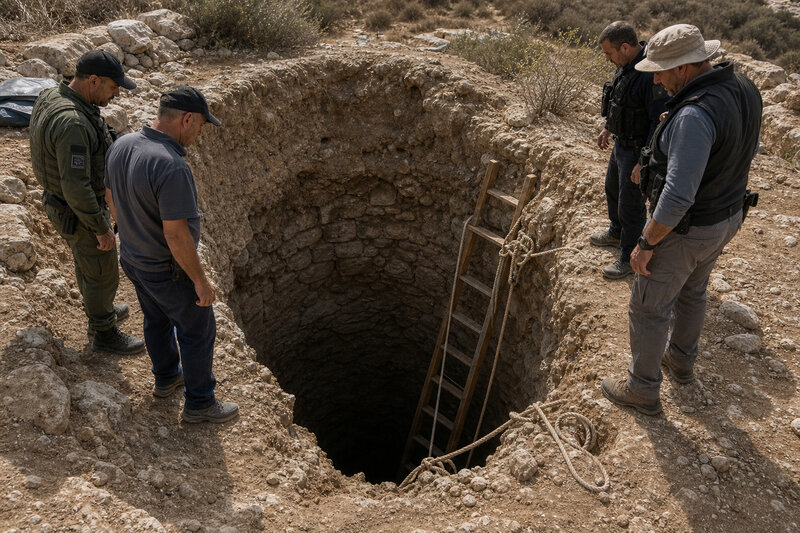
The site sits near Mevo Beitar, a small community in the Judean Hills where pale limestone terraces fold and rise through soil so saturated with buried history that digging almost anywhere risks punching through several civilizations at once. It was here, according to the Israel Antiquities Authority, that six suspects allegedly excavated a shaft nine meters deep — roughly the height of a three-story building — to reach an ancient Judean cistern below.
Nine meters is not a spontaneous hole. It is a project: planned, researched, and executed over multiple visits. The IAA says operations of this kind are increasingly linked to organized looting networks that identify target sites in advance using satellite imagery or tips passed quietly through established channels. These are not opportunists with a shovel. They had a reason to believe the cistern was worth reaching.
What the men found at the bottom was a chamber that had not seen daylight since the Second Temple period. What they found, shortly afterward, was that their own excavation shaft — the only way in — was no longer reliably the way out. Stub’s report for the Times of Israel captured the essential absurdity of their situation: men who had gone underground to steal history, undone by the very depth of their own ambition, waiting in the dark of a Judean cistern for someone to come and retrieve them.
What a Judean Cistern Is — and Why It Survived
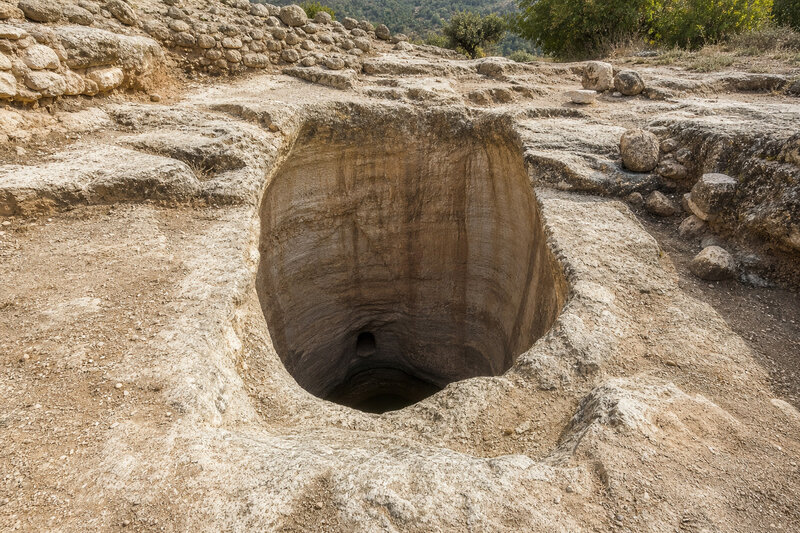
To understand why a cistern two thousand years old was still there to fall into, it helps to understand what it was built to do. During the Second Temple period — roughly 530 BCE to 70 CE — communities across Judea solved the problem of summer water scarcity with considerable engineering precision. Cisterns were hand-cut into the bedrock itself, their interiors plastered with hydraulic lime that swelled slightly when wet, creating a nearly watertight vessel capable of holding tens of thousands of liters of rainwater. In a Judean summer, the difference between a cistern and no cistern was often the difference between a village surviving and a village abandoning its hillside.
Because they were carved downward into solid rock rather than constructed upward from the ground, cisterns outlasted everything built above them. Homes collapsed, walls were razed, terraces eroded — but the rock-cut chambers below simply waited. The IAA has documented hundreds of them across the Judean Hills. Each one functions as a kind of unintentional time capsule: its sealed sediment layers potentially preserving coins, ceramic sherds, organic material, and even microscopic pollen records of a landscape that otherwise vanished long ago.
The cistern’s very integrity — its sealed, oxygen-limited interior — is precisely what preserved the archaeological record inside it. It is also, as the IAA has stressed in cases like this one, what made it genuinely dangerous for six untrained men to descend into without proper equipment. The conditions that protect ancient artifacts are, by definition, not conditions that protect modern humans.
Nine Meters Down: The Mechanics of Looting
The digging itself, under Israeli antiquities law, constitutes the core legal offense — separate entirely from whatever objects may have been found and pocketed. Disturbing a registered site causes what the IAA has characterized, in this case and others, as irreversible damage. The authority uses that word deliberately. It shifts the public framing from “theft” — which implies something recoverable — to “destruction,” which does not. The distinction, as the IAA frames it, is not between taking a rare book and keeping it; it is between taking a book and burning the library.
What gets destroyed is not primarily the object but its context: its address in time and place. A bronze coin pulled intact from a sealed sediment layer, with its stratigraphic position carefully recorded, can tell archaeologists about trade routes, the collapse of an economy, or the precise moment a family buried their savings beneath a floor and never returned to retrieve them. The same coin sold through an antiquities dealer in Jerusalem, London, or New York is, archaeologically speaking, merely old money. The story it once could have told is gone.
The black market for Second Temple-period artifacts is specific and lucrative. Intact oil lamps, stone vessels, bronze coins, and ceramic juglets regularly attract significant sums from private collectors. Stone vessels in particular were produced in large quantities during this period because, under Jewish law, stone cannot contract ritual impurity — a distinction that made them commercially essential and that makes them commercially valuable today. The IAA has long argued that collector demand — from buyers who prefer not to ask searching questions about provenance — directly funds operations like the one near Mevo Beitar.
The Moment the IAA Moved In
The Israel Antiquities Authority’s theft-prevention unit operates across a country where roughly thirty thousand registered archaeological sites are distributed across a territory approximately the size of New Jersey. The unit deploys informants, remote sensors, and aerial patrols to catch looters mid-dig — an enforcement challenge that is, by any honest accounting, enormous.
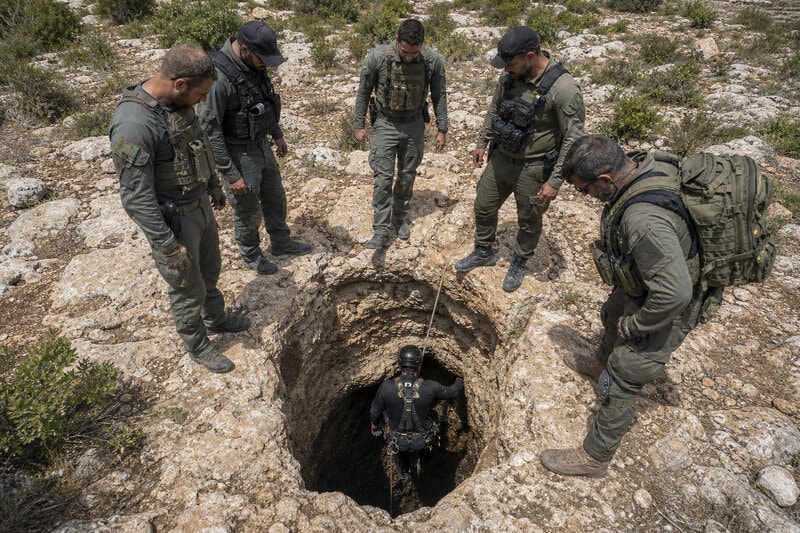
What made the incident near Mevo Beitar unusual was not that the IAA arrived, but that the suspects had not yet left. Authorities found the six men still underground, turning an enforcement operation into something that more closely resembled a rescue. Inspectors and police had to coordinate the extraction of the suspects from a centuries-old stone chamber before anyone could assess the damage those same suspects had caused. It is not the sequence of events any investigator would choose.
The six suspects were detained, and the IAA referred the case for prosecution, as it does in incidents involving what it classifies as severe or irreversible site damage. Stub’s account makes clear that this was an intercept — the comparatively rare scenario in which looters are caught inside the evidence — rather than an after-the-fact investigation of a site already stripped and abandoned. Given the scale of the enforcement challenge, that outcome is worth pausing on.
A Landscape That Has Been Looted Before
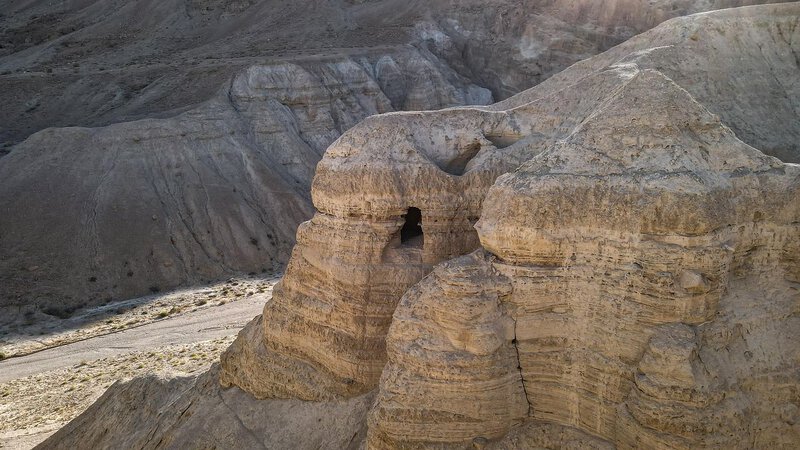
The Judean Hills have been contested, conquered, and excavated — licitly and otherwise — across two millennia. The region around Mevo Beitar sits within an area associated with the Bar Kokhba revolt of 132-135 CE, the last major Jewish uprising against Roman rule, a conflict whose material traces carry both historical weight and considerable market value. Coins stamped with rebel imagery, bronze keys, and personal documents hidden in desert caves are among the artifacts that command the highest prices and attract the most organized looting efforts.
The cistern the six suspects allegedly entered may have been sealed for close to two thousand years before that nine-meter shaft opened it to the air. The sediment at its bottom, left undisturbed, might have preserved an environmental and human record of remarkable granularity — the kind of layered evidence that professional archaeologists spend careers hoping to uncover under controlled conditions. The IAA has already stated that the damage caused is irreversible. Whatever the cistern held, in whatever arrangement two millennia of stillness had preserved, that arrangement no longer exists.
What Comes Next — and What Cannot Be Undone
The six suspects face charges under Israel’s Antiquities Law, which carries penalties including fines and imprisonment. The IAA has pushed, with increasing urgency in recent years, for stricter sentencing in cases involving organized looting operations, arguing that fines calibrated to an earlier era of enforcement no longer deter networks with access to satellite research tools and established black-market channels.
IAA archaeologists will assess the site near Mevo Beitar, but the authority has already characterized the damage as irreversible. That assessment is not a legal formality. It is a statement about the nature of what was lost: not an artifact that might be recovered from a dealer’s inventory or a collector’s display case, but a stratigraphic record that existed in one form, in one place, and cannot be reconstituted from memory or approximation.
Stub’s account reads, on its surface, as a crime story with an almost comic resolution: looters trapped by their own excavation, waiting underground for rescue by the very authorities they had hoped to evade. The story the IAA will likely repeat from this incident is a different one — not the story of men who were caught, but of a site that was damaged before the catching could matter. The cistern kept its secrets for two thousand years. It took one night, and nine meters of ambition, to ensure it never gives them up.