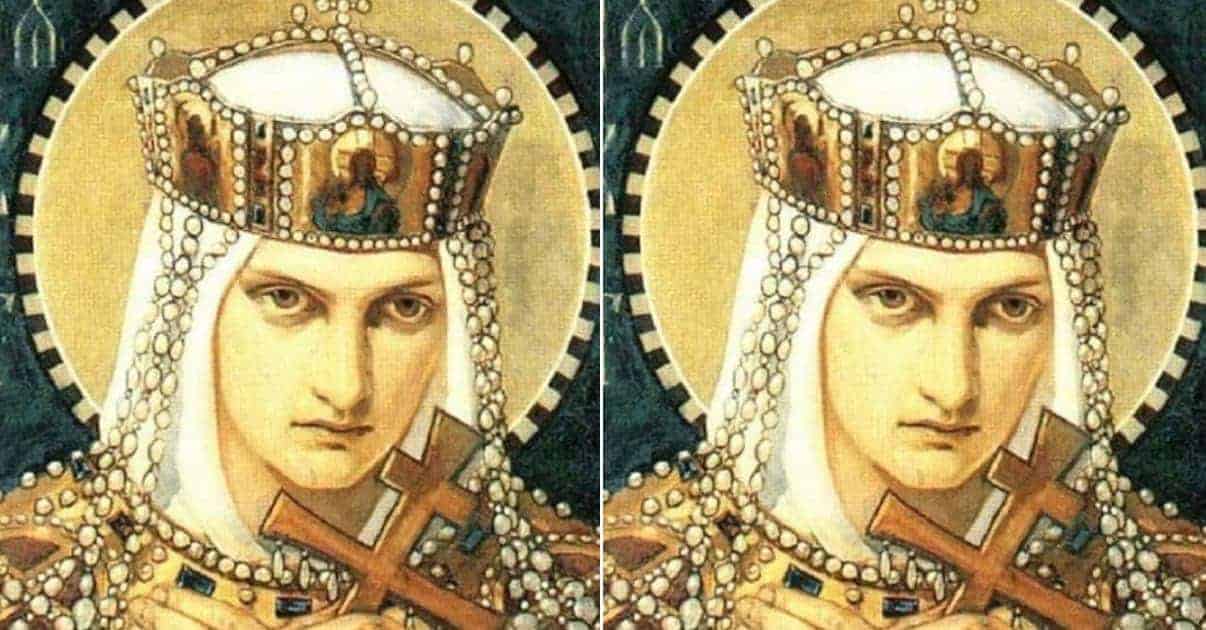
Saint Olga: “Equal to the Apostles”
Olga remained regent until her son was of age, supported not only by the army but the people of Kiev. By the time she handed the reins of power over to him, Olga had forged Kiev into a strong city-state. She consolidated its territory, with a string of new forts. She also made wise concessions to ensure the situation with the Dervlyans never occurred again by changing the system of tribute gathering; the first known legal reform in Europe.
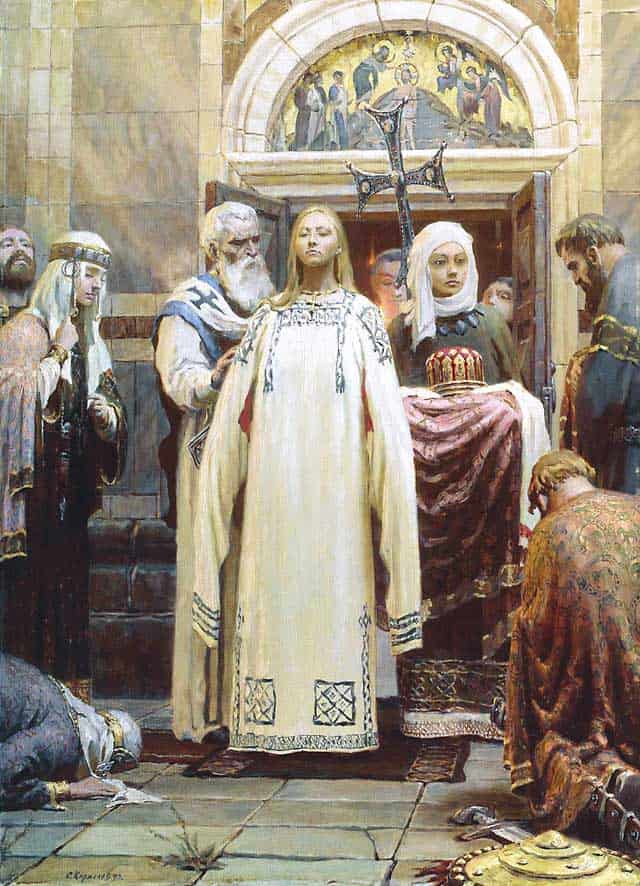
However, Olga became a Christian by accident. The Chronicle claims it was part of a ruse to avoid marriage to the Emperor Constantine VII when the princess visited his court in Constantinople three years after the Drevlyan’s defeat. Olga explained to the emperor that they could not possibly marry because he was a Christian and she a pagan. However, she was more than happy to submit to baptism if it would please him. So, Olga was baptized Helena by the Patriarch of Constantinople, managed to evade marriage to Constantine because he stood as her godfather and underwent a miraculous “enlightened” of faith which left her “rejoiced in soul and body.”
Constantine was already married, so it’s unlikely he proposed to Olga. However, the reason for Olga’s conversion could lie in the reason for her visit to Constantinople in the first place. When she left Constantinople to return to Kiev, as well as her newfound faith, The Chronicle records that Olga returned heavily laden with “presents” from the Emperor. Once home, she immediately fulfilled a promise she had made to send Constantine “slaves, wax and furs.” This reciprocal gift giving sounds more like trade and suggests Olga converted- initially at least to help oil a deal- since, if she was Christian, the eastern church had a way into Kiev’s territory.
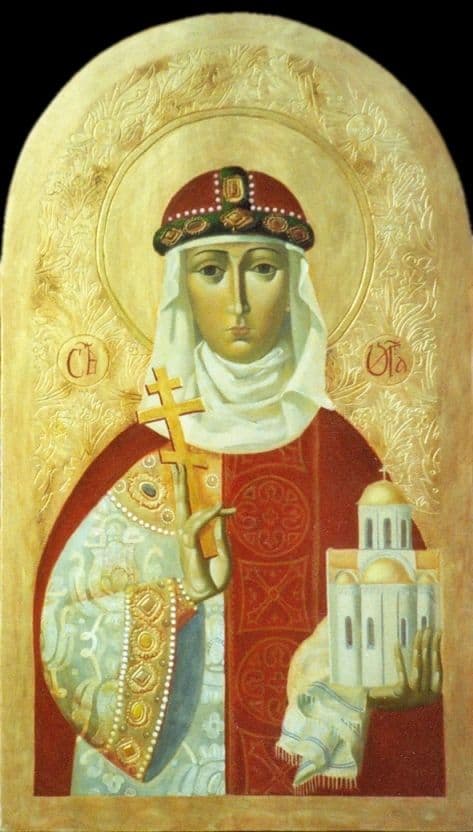
If the church hoped to convert the Kievians, they were out of luck. One archbishop declared them impossible to convert. Olga’s son, Svyatoslav was equally intransigent, believing Christianity a weak religion. However, Olga took her commitment to her new faith seriously and kept her own priest. Once he took the throne, Svyatoslav was often away at war. However, he still believed in his now Christian mother enough to leave Kiev- and his children- in her charge.
Over a decade after her death and Christian burial, the exact extent of Princess Olga’s influence over her grandchildren was revealed. In the 980s her grandson Vladimir took the throne and made Christianity Kiev’s official religion. Olga had ultimately succeeded where all the delegates from Constantinople failed. It was this one deed, despite all the others in her life, which earned her the status of saint and the title Isapostolos in 1547- making Olga of Kiev only one of five women ever to be honored in such a way.
Sources
Zubkova, O. Orfinskaya, D. Likhachev: New Discovery of Viking Age clothing from Pskov, Russia.
Phactual.com: The Viking Saint Queen of Russia: 9 facts about Olga of Kiev
todayifoundout.com: The Saint Who Buried people alive and burned down a city in revenge.


