Sometime in the late summer of 1483, two boys — a twelve-year-old king and his nine-year-old brother — slipped out of history inside the walls of the Tower of London, and the world has been arguing about what happened to them ever since. The easy answer has always been Richard III, but the easy answer, examined closely, turns out to be riddled with holes — and the more uncomfortable suspects have been lurking in the shadows for five centuries. What follows is not a verdict. It is an honest account of what we know, what we can reasonably infer, and where the evidence runs out.
Who Were the Princes, and How Did They End Up in the Tower?
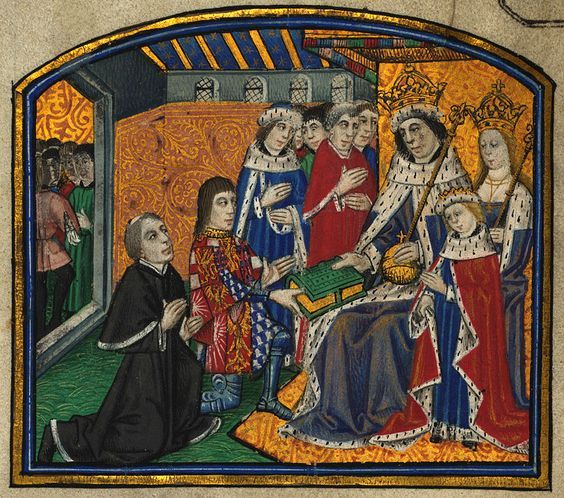
Edward V was born in 1470, the eldest son of Edward IV and Elizabeth Woodville. His brother Richard, Duke of York, was born in 1473. When their father died suddenly in April 1483, Edward was twelve years old and already, in name, king of England. He was in Ludlow at the time, being raised under the guardianship of his maternal uncle Anthony Woodville, Earl Rivers. The plan was straightforward: escort the new king to London, crown him, and begin his reign.
What actually happened was a coup. Richard, Duke of Gloucester — the boys’ paternal uncle — intercepted the royal party at Stony Stratford in late April, arrested Woodville and several other Woodville allies, and assumed the role of Lord Protector. Edward V was taken to the Tower of London in May 1483, ostensibly to rest and prepare for his coronation. His younger brother Richard, still sheltering in Westminster Abbey with their mother Elizabeth Woodville, was persuaded to join him in June. Neither boy was ever seen in public again. The coronation was postponed twice and never took place. By the autumn of 1483, the princes had ceased to exist in any official record, their disappearance not a single dramatic moment but a slow, deliberate fade into silence.
Richard III: Suspect, Not Proven Murderer
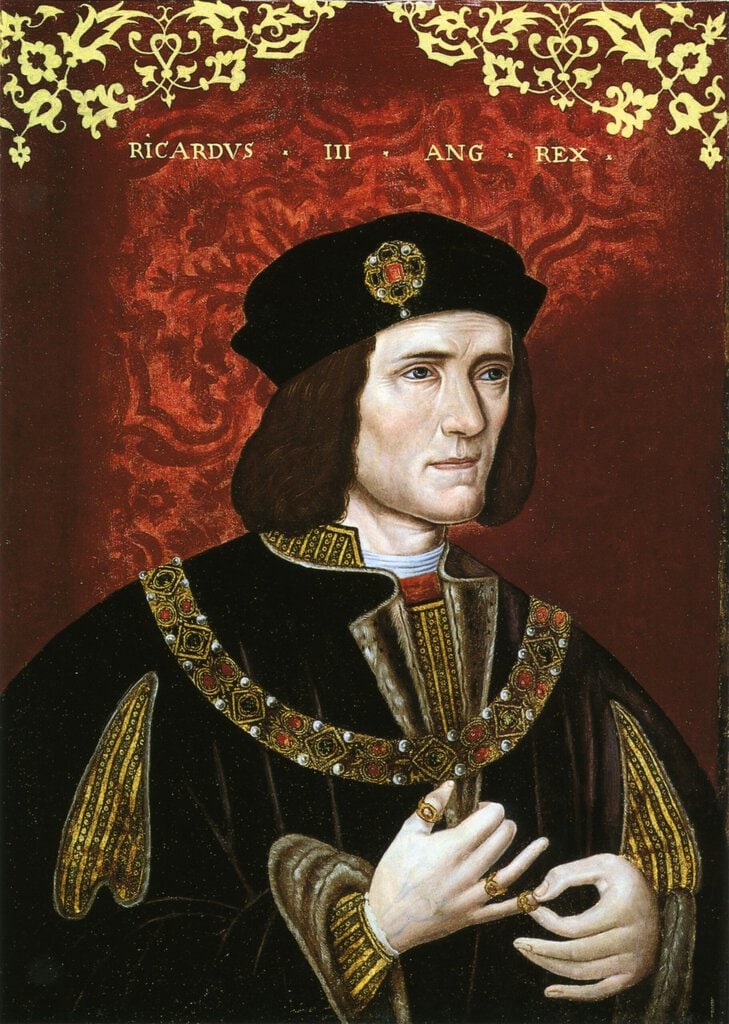
Richard III is the name history reaches for first, and the reasons are understandable: he was the boys’ uncle, he engineered their removal from power, and they vanished while the Tower was under his authority. The case against him is not trivial. He had the means and the access, and he was the person who benefited most immediately from the princes’ removal from public life. In late June 1483 he declared the boys illegitimate through the act of parliament known as Titulus Regius and had himself crowned Richard III on 6 July.
Yet the case against him is also thinner than centuries of storytelling suggest. Titulus Regius, paradoxically, reduced his motive for murder. Boys with no legal claim to the throne are embarrassments, not existential threats; you do not necessarily need to kill a problem you have already solved on paper. More fundamentally, the account of the princes’ murder that most people carry in their heads — Richard dispatching hired killers to smother the boys in their beds — derives almost entirely from Thomas More’s History of King Richard III, written roughly thirty years after the events it describes, under a Tudor regime that had every political interest in portraying Richard as a monster. Shakespeare’s later dramatisation hardened More’s narrative into cultural fact, but neither More nor Shakespeare had access to contemporaneous evidence. Richard III almost certainly deserves to remain a suspect, but a suspect is not a proven murderer, and there is a meaningful difference.
Henry Tudor: The Man Who Had the Most to Gain
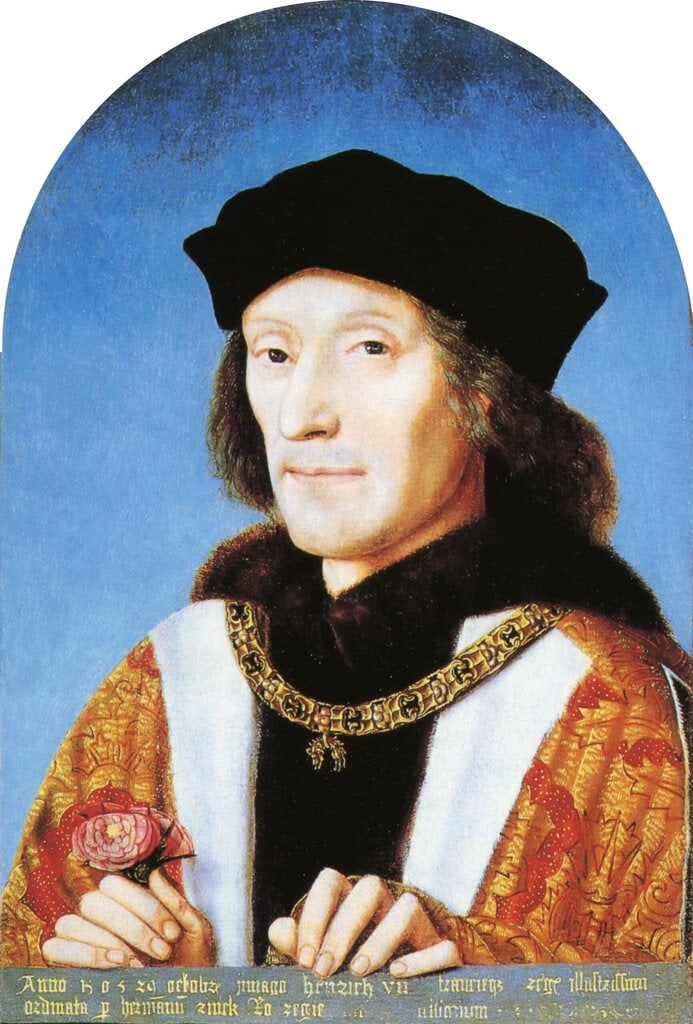
When Henry Tudor rode off the field at Bosworth in August 1485 as Henry VII, he inherited a problem that no amount of battlefield glory could solve: living Yorkist heirs were a standing invitation to rebellion. Edward V and his brother Richard, dead or alive, represented everything his thin claim to the throne could not survive. Richard III at least had a dynastic argument for sidelining the boys; Henry had almost none, which made the princes exponentially more dangerous to him than they had ever been to their uncle.
What makes Henry’s subsequent behaviour so striking is its consistency. After taking the Tower in 1485, he controlled every room, every record, and every man who might have known the truth — yet he never ordered a formal inquiry into the princes’ disappearance. He repealed Titulus Regius and ordered all copies destroyed, ostensibly to restore the legitimacy of Elizabeth of York (whom he would marry), but the effect was also to erase the most detailed surviving official account of the succession crisis of 1483. When Perkin Warbeck surfaced in the 1490s claiming to be Richard, Duke of York, escaped from captivity, Henry had him imprisoned and eventually executed rather than simply producing a body or a credible eyewitness to prove the prince was already dead. That is not the behaviour of a man with nothing to hide. It does not prove Henry killed the princes; it does mean he cannot be dismissed as a suspect simply because he was in France when they disappeared.
The Duke of Buckingham: Richard’s Ally Turned Rebel
Henry Stafford, Duke of Buckingham, was Richard III’s closest collaborator through the events of spring and summer 1483 — present at the arrest of Woodville, instrumental in the machinery that placed Richard on the throne, rewarded lavishly for his loyalty. And then, with bewildering speed, he raised a rebellion against the king that autumn. The rebellion was poorly organised and quickly collapsed. Buckingham was beheaded in Salisbury in November 1483, leaving behind no satisfactory explanation for why he had turned.
Some historians have proposed that Buckingham himself ordered the princes killed — either acting on a signal from Richard, or more intriguingly, acting on his own initiative to destabilise a regime he had helped create and perhaps now wished to supplant. If he had the boys’ blood on his hands and feared Richard would eventually use that knowledge against him, rebellion might have seemed the only viable exit. Others have suggested Buckingham turned against Richard precisely because he had learned of or witnessed the princes’ murder and found it unconscionable. Neither theory is provable. Whatever the truth, Buckingham took it to the scaffold with him, and his inexplicable reversal remains one of the sharpest loose threads in the entire case — a knot that five centuries of historians have pulled at without unravelling.
Anthony Woodville: The First Victim of the Succession Crisis
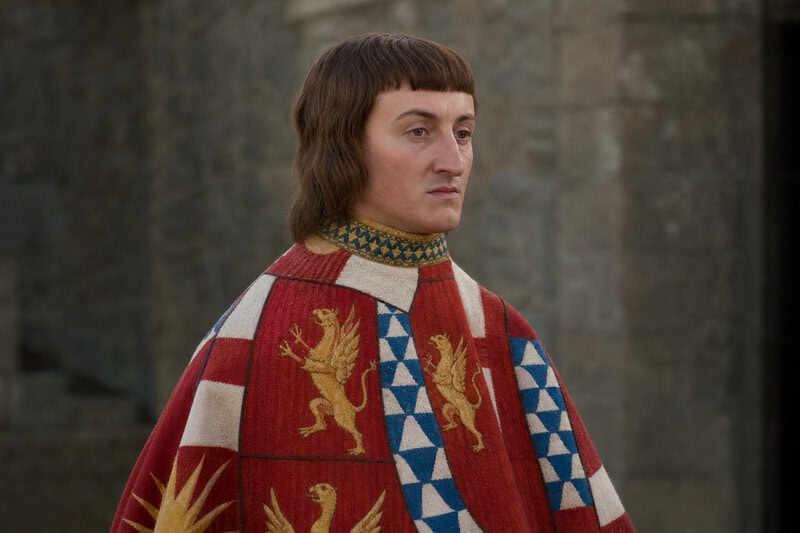
To understand what happened to the princes, it helps to understand what happened to the man best positioned to protect them. Anthony Woodville, Earl Rivers, was not merely the boys’ maternal uncle; he had served for years as the governor of Edward V’s household at Ludlow, shaping the young king’s education and acting as his primary guardian and advocate. He was experienced, well-connected, and loyal to the Woodville interest in a way that made him deeply threatening to Richard of Gloucester’s plans.
Richard arrested Woodville at Stony Stratford in late April 1483, before Edward V had reached London. Woodville was detained at Sheriff Hutton, tried on charges that contemporaries considered dubious, and executed on the orders of Richard III — the same day, by most accounts, that Richard formally claimed the throne. His death mattered enormously to what followed. With Woodville gone, the princes had lost the one adult in their immediate circle who might plausibly have organised or inspired resistance on their behalf. By the time they retreated into the inner apartments of the Tower, their most capable protector had already been in the ground for weeks.
Richard, Duke of York: Lured Out of Sanctuary
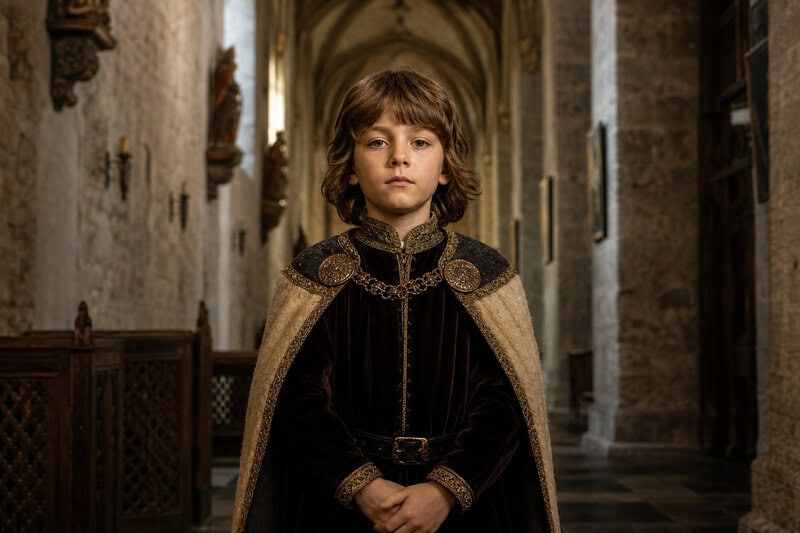
Nine-year-old Richard, Duke of York, was not in the Tower when his brother arrived. He was with his mother, Elizabeth Woodville, sheltering inside the sanctuary of Westminster Abbey — a space that, by tradition and by ecclesiastical law, was supposed to be inviolable even to royal authority. The argument used to extract him was almost insultingly thin: a king needed his brother at his side for the coronation. Under intense and sustained political pressure, Elizabeth released the boy in June 1483. He walked into the Tower and, like his brother, was never publicly seen again.
It is the younger prince who generated the most enduring survival myths. Perkin Warbeck, who appeared in the early 1490s and attracted serious diplomatic support from rulers including Charles VIII of France, Maximilian I of the Holy Roman Empire, and James IV of Scotland, claimed to be Richard, Duke of York, spared from death by a reluctant or merciful guard. Henry VII’s frantic efforts to discredit Warbeck — efforts that stopped conspicuously short of simply producing proof of the prince’s death — kept the mystery alive for nearly a decade. Warbeck was eventually executed in 1499 after an escape attempt from the Tower, his claim unproven but also, crucially, never formally refuted by the production of any counter-evidence.
Elizabeth Woodville’s Calculated Silence
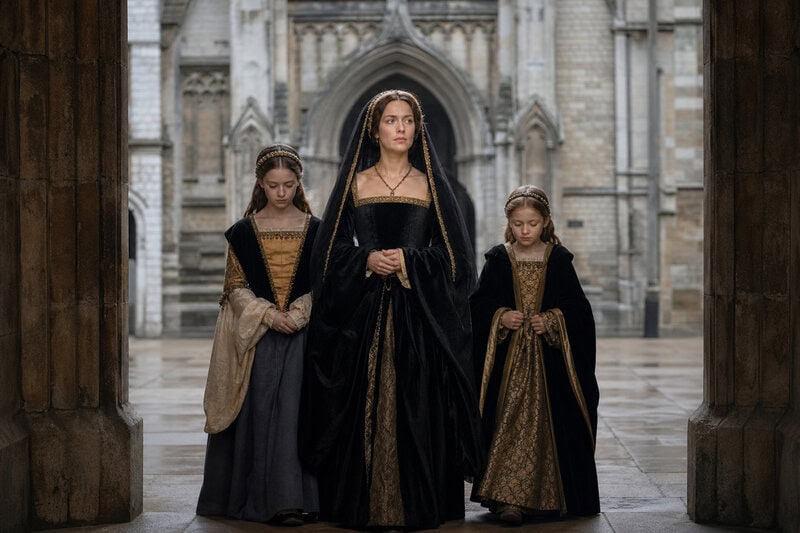
In March 1484, Elizabeth Woodville emerged from sanctuary at Westminster Abbey and made her peace with Richard III. She brought her daughters out with her and accepted Richard’s written promises of safe conduct and financial provision. For contemporaries who assumed Richard had murdered her sons, this was incomprehensible — a mother negotiating amicably with the man who had destroyed her family. The most charitable reading is that she was operating under unbearable duress and had no realistic alternative. But another reading is possible: that she was not, in fact, certain her sons were dead, and that Richard’s promises gave her reason to believe they might still be alive under his protection.
Elizabeth subsequently transferred her support to Henry Tudor, agreed to the marriage of her eldest daughter Elizabeth of York to the new king, and helped cement the Tudor dynasty. Yet throughout all of this political manoeuvring — across two reigns and more than a decade of upheaval — she never publicly named a killer, never made a formal accusation, and left no recorded statement of what she believed had happened to her boys. Her silence was total. In a woman who was demonstrably capable of sophisticated political calculation, that silence looks less like grief-stricken paralysis and more like deliberate, knowing restraint — though whether it reflected uncertainty, fear, or something more complicated remains impossible to say.
The Skeletons Found in 1674: Evidence or Red Herring?
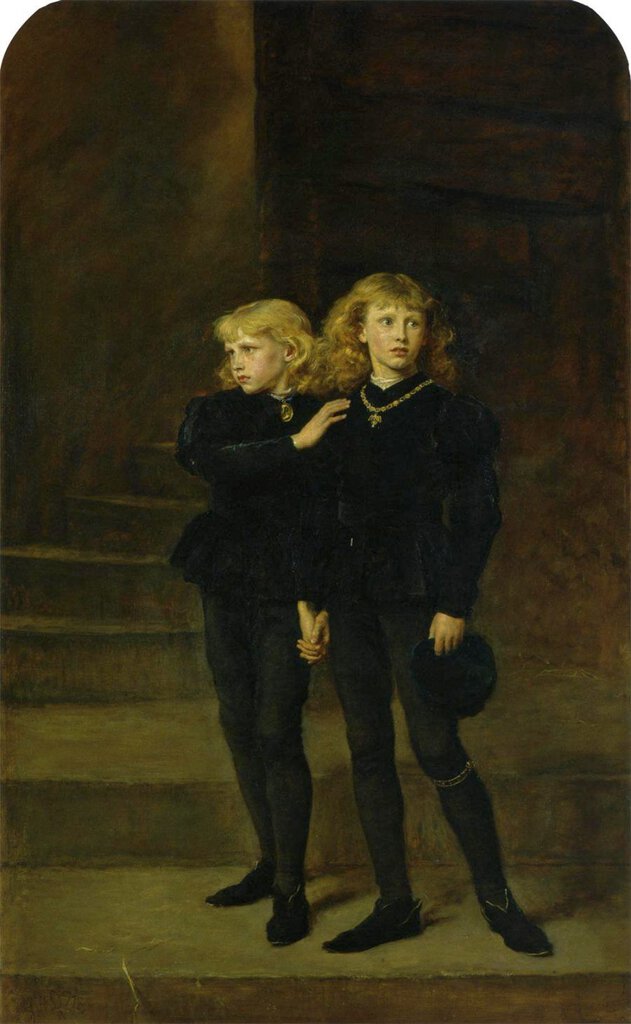
Nearly two hundred years after the princes vanished, workmen renovating a staircase in the Tower of London broke through masonry and found two small skeletons buried in a wooden box. Charles II, apparently satisfied that these were the missing royal children, had the bones reinterred at Westminster Abbey with appropriate ceremony. It was a tidy conclusion to a very untidy story — perhaps too tidy.
A 1933 examination of the bones by Lawrence Tanner and William Wright suggested ages broadly consistent with Edward V and his younger brother at the time of their disappearance, but the methods used were far from rigorous by modern standards, the examination was conducted without full skeletal analysis, and several of the conclusions have since been challenged by physical anthropologists. One significant complication is that bones of children and animals were frequently buried within Tower precincts across the medieval period, meaning that an association between these particular remains and the princes is assumed rather than demonstrated.
DNA testing could, in principle, resolve the question definitively — maternal-line descendants of the boys’ mother Elizabeth Woodville have been identified, making mitochondrial DNA comparison theoretically feasible — but repeated requests to exhume the Westminster remains have been refused. The decision rests with the Crown and the Church of England, and both have so far declined to authorise the disturbance of a royal grave. The most tangible physical clue in this five-century-old case therefore remains locked in an abbey and officially untouchable, a situation that frustrates researchers but that also, it should be said, reflects legitimate ethical concerns about the disturbance of human remains for purposes that cannot guarantee a conclusive result.
The Tower of London: Palace, Prison, and Perfect Crime Scene
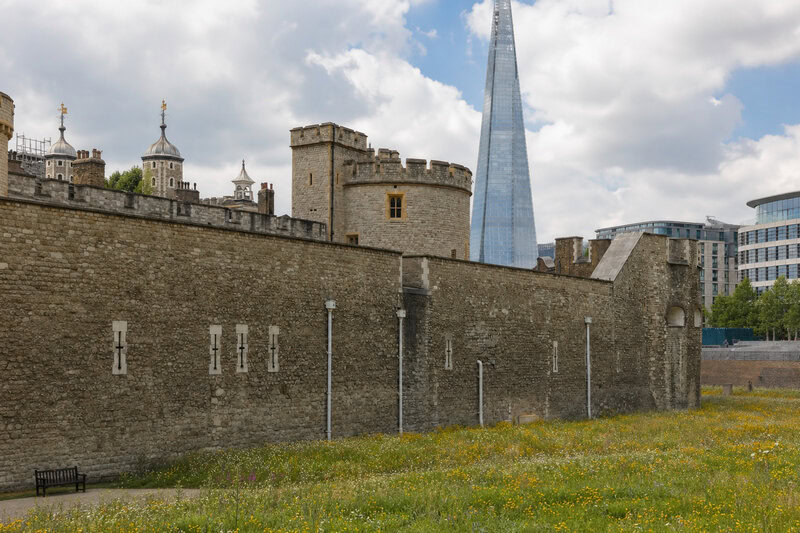
It is easy, from a distance of five centuries, to imagine the Tower of London as an obvious place of dread — somewhere a medieval family would recognise immediately as a death sentence. In 1483 it was nothing of the sort. It was a royal palace as much as a fortress, with well-appointed lodgings and grounds, and it was entirely conventional for a monarch-to-be to stay there in the days before a coronation. The princes’ arrival in May 1483 alarmed nobody at the time, which was precisely what made it such an effective trap if trap it was.
The Tower’s internal geography then did the rest. The inner apartments to which the boys gradually retreated were the most restricted and least observed spaces in the complex, accessible only to those the constable of the Tower chose to admit. An order to kill two children and dispose of the bodies could theoretically have been carried out by a small number of trusted men without generating any written documentation — which is consistent with exactly what appears to have happened. The Tower of London mystery has endured for over five centuries not because the evidence is merely ambiguous, but because the act, if it was an act of murder, was committed in the one place in England best designed to make evidence disappear and to keep secrets indefinitely.
Where the Evidence Leaves Us
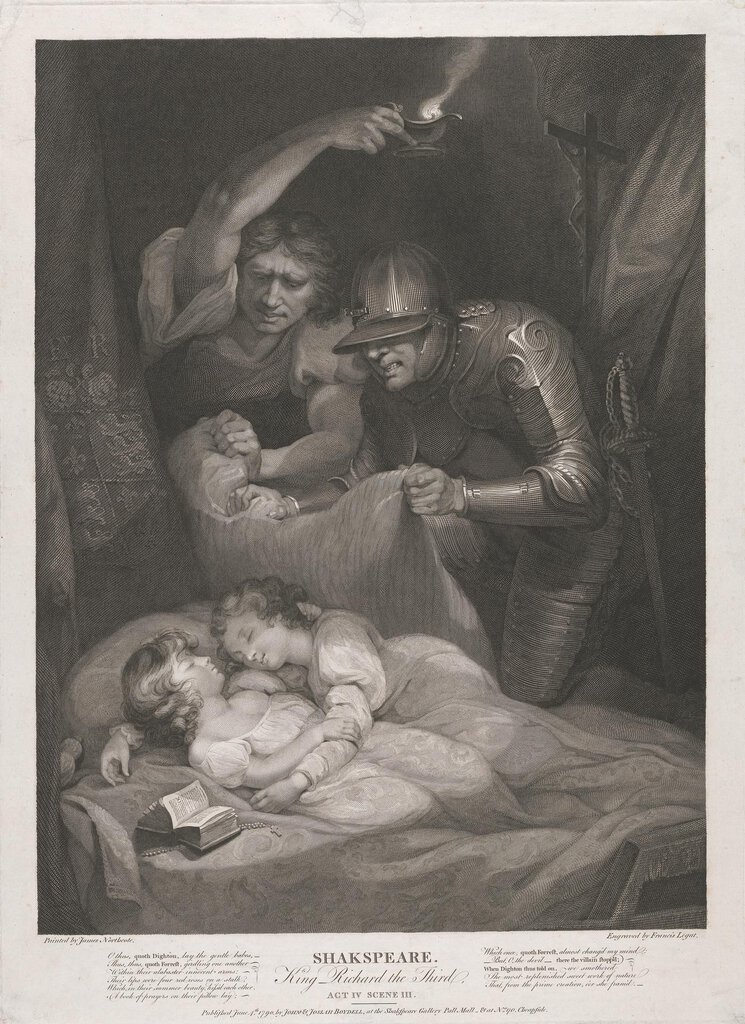
Five hundred years on, the fate of the princes in the Tower remains genuinely unresolved. The physical evidence is locked in Westminster Abbey pending permissions that have not been granted. The documentary record was produced and filtered by men — both Ricardian and Tudor — with strong reasons to shape the story in their favour. Every credible suspect — Richard III, Henry VII, the Duke of Buckingham — had both motive and opportunity, and none can be eliminated on the evidence currently available.
What can be said with confidence is this: two boys entered the Tower of London in 1483 and were never publicly seen again; the political class of the time behaved, almost uniformly, as though they understood the boys to be dead; and yet no one in a position of authority ever produced a body, held an inquiry, or named a killer. That collective silence — sustained across two reigns, two dynasties, and decades of dynastic upheaval — is itself the most telling fact in the case. The mystery endures not because history has forgotten, but because someone, long ago, made very sure it would.