Hidden Agendas
Although five of the Pendle witches admitted their witchcraft, the rest did not. Indeed, many of the later accused seemed wholly out of place from the original defendants, regarding location, social standing- and the evidence against them. These discrepancies suggest that in the cases of some of these later witches, there was a hidden agenda.
Jennet Preston was one. A Yorkshire woman, it seems she was attached to the list of accused because of a long-standing grudge held by Thomas Lister, the man who prosecuted her in April 1612. Lister was the son of Preston’s former employer. Lister senior had favored Preston, who may even have been his mistress. When he died, Lister accused her of his father’s death by witchcraft. However, he had no evidence with which to charge her.
Lister, however, was acquainted with Roger Nowell. Preston had only been acquitted days before the Malkin Tower meeting. The Lancashire witch investigation must have seemed the perfect opportunity to put Preston back in the dock. The statements of James Device and Old Chattox, both implicated Jennet Preston. Were they prompted to name her?
As for Roger Nowell, he had his own agenda. Early in 1612, every Justice of the Peace had been ordered to compile a list of those who refused to attend Protestant church services- in other words, secret Catholics. Roger Nowell was one of the magistrates who had agreed to round up and prosecute Catholics after that Easter. The papist elements in the witches’ curses made an implied link between witchcraft and Catholicism- and so the perfect excuse to catch a few Catholics in the same net. Thus the investigation was a double feather in Nowell’s political cap.
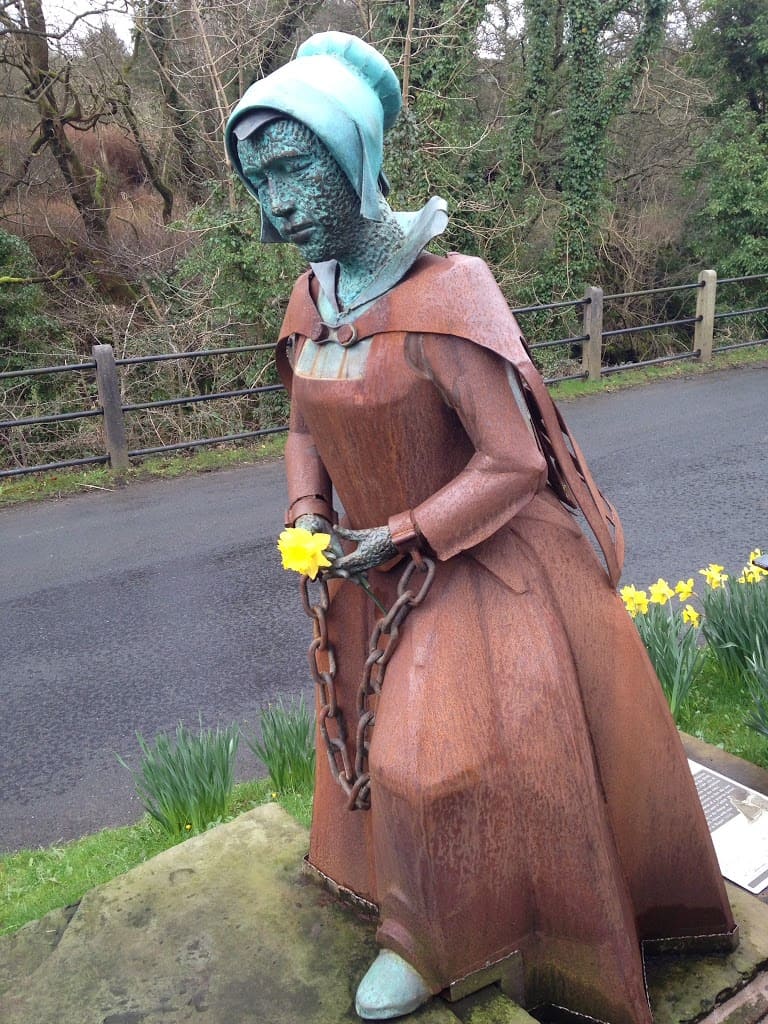
Alice Nutter was the victim of this. A member of the landed gentry; she did not fit the demographics of the rest of the witches. However, she came from a staunch Catholic family. Her conviction of witchcraft, on non-existent evidence would have sent out a strong message to other prominent Catholics that no one was safe.
Ironically, Alison Device, the girl who started the whole sorry affair was the only witch who pleaded guilty and the only one to show true remorse. She truly believed she had special powers, as did her grandmother and Old Chattox. Perhaps these women needed to think they possessed otherworldly skills that gave them power over others; skills which allowed them to seek their own justice and retribution. If the Pendle witch trials illustrate anything, it shows that for marginal people like the Devices and Whittles, there was little hope of it from the law.


