
August 19: The Final Day
The next day, it was the turn of Anne Redferne, Alice Nutter, Katherine Hewitt, Jane and John Bulcock, Alison Device, Isabel Robey and Margaret Pearson to face justice. The evidence against the accused was even thinner than the day before- except in the case of Alison Device, who was the only one of the eleven witches to plead guilty, Once again, nine-year-old Jennet Device had a crucial role to play.
The court convicted Ann Redferne on no other evidence other than the testimony of James Device. Despite the enmity between the Devices and the Whittles, James claimed to have seen Ann making a clay image of Christopher Nutter, the father of Robert Nutter. Despite being a witch himself, he was taken at his word.
The majority of the accused, however, were convicted by the joint evidence of James Device and his younger sister Jennet. This was despite the fact that the sibling’s testimonies differed regarding the people at the meeting at Malkin Tower. The prosecution may have prepared Jennet for her court appearance. Such coaching was not improbable. Her willingness to testify against her relatives, coupled with her youth and her freedom from the taint of witchcraft made her the best witness they had.
The cases against Alice Nutter, Katherine Hewitt (alias Mould Heel) and John and Jane Bulcock were based on James Devices unsubstantiated accusations and Jennet Device’s identification. James’s original statement had named them all as attending the meeting at Malkin Tower. James’s had also provided particulars of their crimes. Alice Nutter was supposed to have helped Demdike murder a Henry Mitton. James stated Katherine Hewitt had killed a child, Ann Foulds and the Bulcocks had bewitched a woman into madness and death.
There was no physical evidence linking any of the defendants to these crimes beyond this hearsay. Jennet Device had named none of them as being in attendance at Malkin Tower in her original statement. But at the trial, Jennet picked them all out, despite court officials trying to test her. Her positive identification was enough to convict the four as witches.
Margaret Pearson and Isobel Robey concluded events. Pearson was only charged with causing harm by magic. Both were found guilty on equally flimsy evidence as the rest, but in Pearson’s case, she was lucky. As she had not killed anyone, her crime was a misdemeanor. She was sentenced to the pillory.
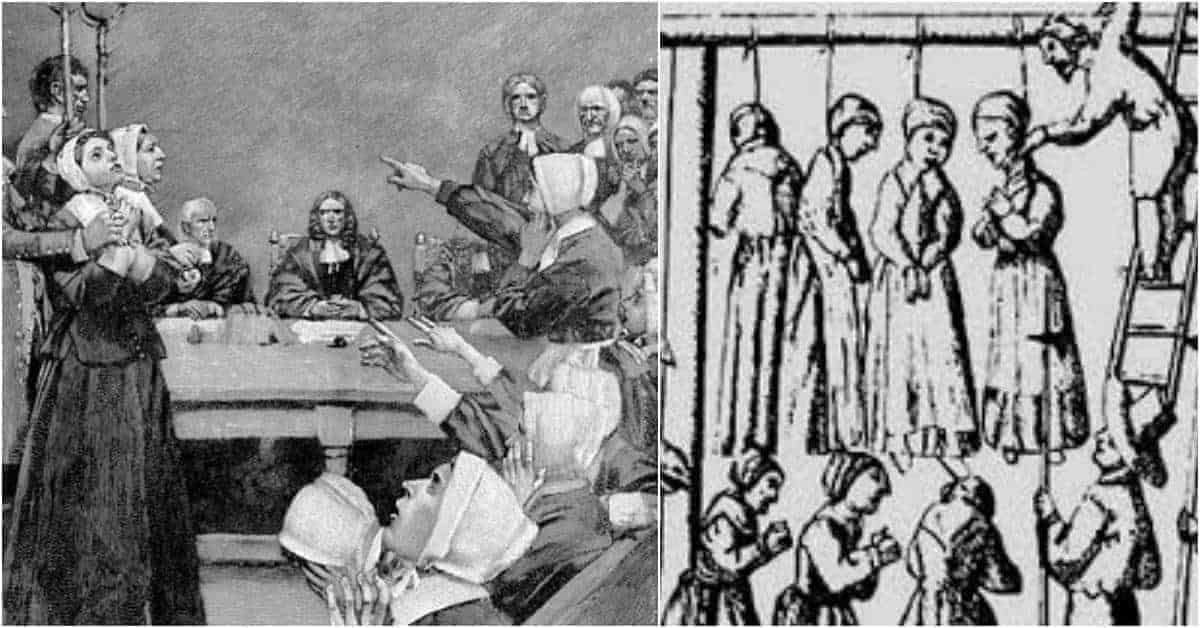
However, the rest of the convicted were sentenced to hang. The next day, the ten Pendle witches were taken from the castle to the moors above Lancaster, and their sentence was carried out.


