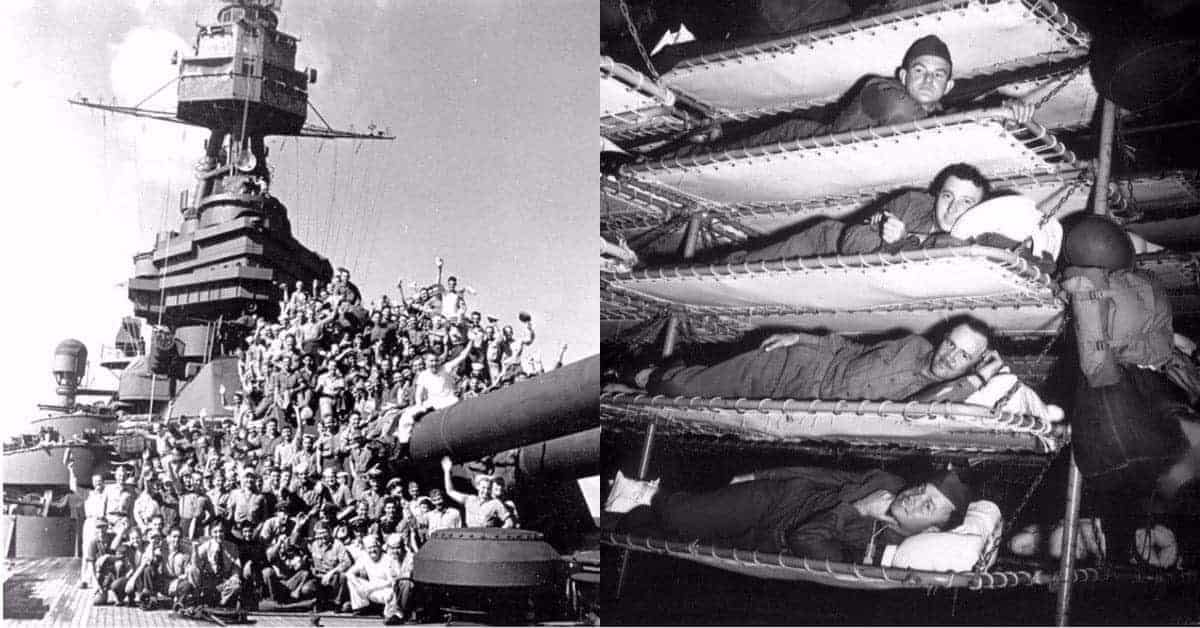
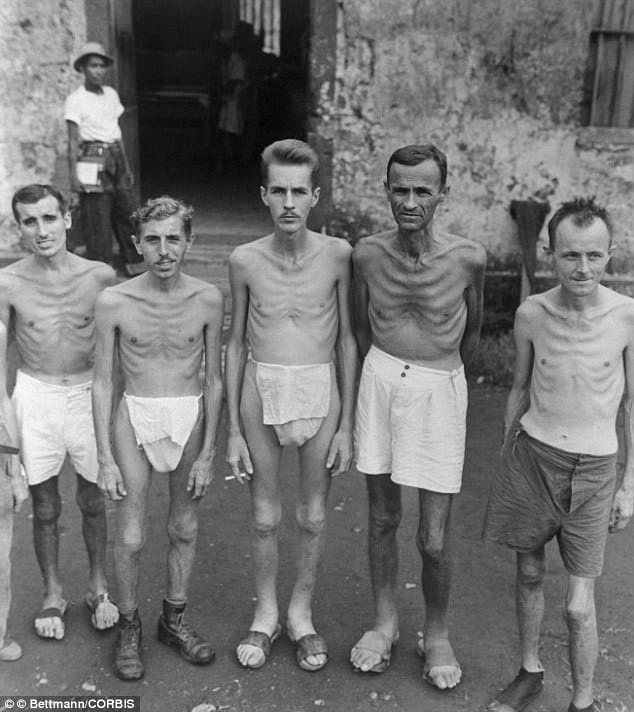
To that end, once the ceasefire was declared in the Pacific on August 15, 1945, aerial reconnaissance missions were flown from US aircraft carriers to try and pinpoint POW camps in Japanese territory. Once located, airdrops of supplies, especially food and medicine, sometimes accompanied by courageous medics and doctors who volunteered to parachute in, were conducted to succor the malnourished and ill captives. As soon as the Japanese surrender was officially signed, and sometimes even before, American POWs were retrieved from Japanese captivity and, given a high priority, started off on their long journey home.
Magic Carpet in the Pacific Theater of Operation was concluded by September of 1946, when the War Shipping Administration, created as an emergency measure during the crucible of war, was finally stood down, and its functions were returned to the civilian Maritime Commission. A subset of Magic Carpet, termed Operation Santa Claus, aimed to bring home as many eligible troops as possible in time for Christmas of 1945. December, 1945, was the peak month of the entire sealift, with the number of returning personnel spiking from the monthly average of 435,000, to 700,000 from just the Pacific alone.
Unfortunately, as many as 250,000 returning servicemen found themselves stranded on the East and West Coast, unable to reach their homes home due to the mother of all rail jams – and railways were the primary mode of long-distance travel then. Fortunately, thousands of civilians opened their hearts and homes, welcoming servicemen to join them for Christmas. They might not have enjoyed the warmth of their own families, but they enjoyed the warmth of strangers who made them a part of their family that day.
Other examples of generosity abounded, including a trucker who took 35 troops from Denver to Dallas and points between, or a Los Angeles cabbie who drove 6 servicemen veterans all the way to Chicago, and another LA cabbie who did him one better, and transported 6 returning heroes to New York City. Even for those who spent Christmas stranded in barracks, the reaction of one returning private best captured the mood, noting that simply touching US soil once again was: “the best Christmas present a man could have”.
The movement of personnel during Magic Carpet was bi-directional. Not only were Americans being shipped from around the world back to the US, but German, Italian, and Japanese POWs were also being shipped back to their homes from captivity in the US. In one round trip, the USS Wasp transported 1200 Italian POWs from the US to Naples, and the following day sailed back to the US, carrying 4000 American servicemen.
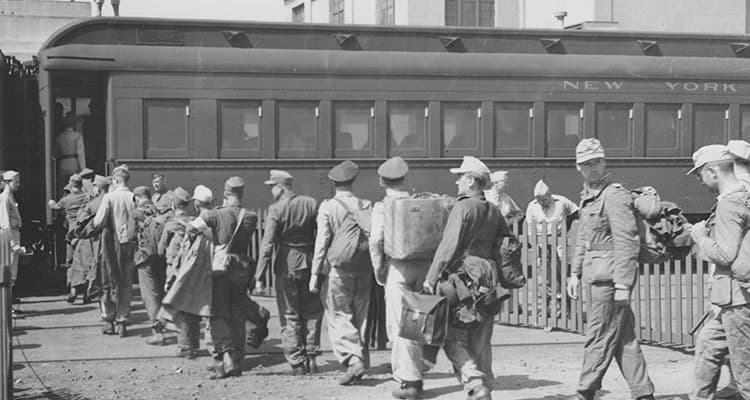
US occupation forces were also ferried to Germany, Japan, Korea, and China. Simultaneously, Chinese troops were sealifted from southern to northern China to disarm the Japanese, as well as oppose Chinese communists in the region. And hundreds of thousands of disarmed Japanese were shipped from all over eastern and southern Asia, as well as numerous Pacific islands, back to the Japanese home islands.
It had taken nearly four years for America to deploy 8 million servicemen overseas. It took only 14 months to reverse the torrent and return most of them home. In short, Operation Magic Carpet was an enormous, and enormously successful, feat of logistics, planning, and execution.


