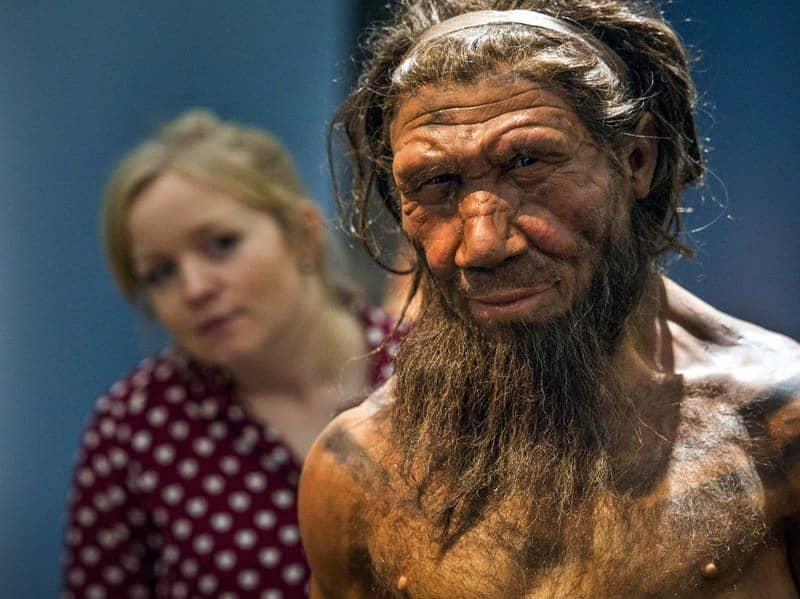

How the Neanderthals Lived
The Neanderthals lived in Eurasia during an ice age; conditions were harsh. Glaciers covered some areas of land, and winters were both long and harsh. Temperatures were quite cold, and summers were short. Their physical appearance is likely the direct result of the climate; the heavier, shorter bodies and broad nostrils were practical adaptations to cold climates.
They lived in small, extended family groups, much like early modern humans. These groups were close-knit, collaborating to meet the essential survival needs of the group. It is likely that they had some, but relatively minimal contact, with other groups. Finds of multiple Neanderthal individuals suggest that groups typically included multiple extended family members, including both old and young. Groups likely usually numbered around 10 to 15, with some groups having higher numbers, perhaps up to 30 individuals in total. Analysis of the genes of Neanderthals have shown that men typically remained within the family group, while women married out into other groups.
Neanderthals lived in caves. Caves, of course, are ideal shelters for groups of humans. They are relatively warm in cold weather and cool in hot weather, provide protection from cold, wind, sun and rain, and require no additional time or resources for construction. Along with providing shelter, caves are relatively easy to defend from predators. A single guard could adequately monitor most cave openings.
They were hunter-gatherers, following herds of food, and hunted a wide range of animals, including the megafauna roaming Eurasia at the time, like mammoths and rhinos. Neanderthals living near the sea consumed shellfish and other seafood. They almost certainly collected plant foods when available; however, cold temperatures and short summers would have limited access to those foods much of the time. When plant foods were available, they included them in their diets. Overall, Neanderthals consumed a diet higher in meat than modern humans, even those who lived at roughly the same time.
Neanderthals were tool makers and users, creating a variety of multi-purpose tools, most crafted from stone. They also used bone, in the same way as stone, for tool production. Examples of tools included scrapers, hand axes, and notches.


