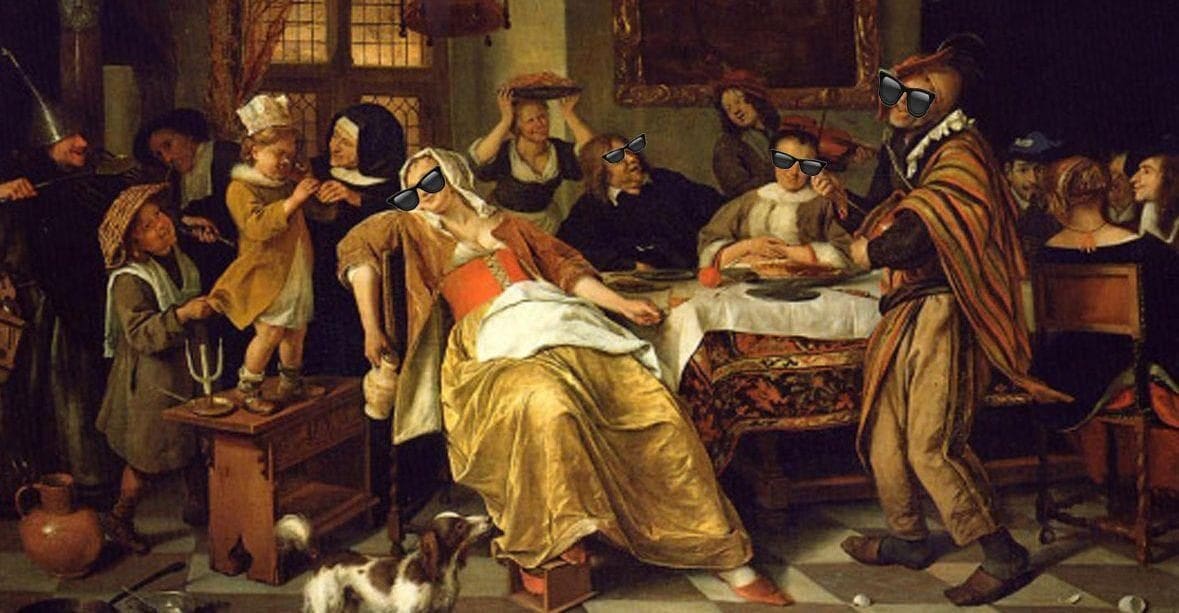
Are these stories real? Yes. And no. And partially.

Readers of these scandalous tales need a critical mind to consider where they came from. Some of these parties were recorded by historians and chroniclers who weren’t there. For instance, while he’s a respected Roman historian Pliny the Elder’s account of Cleopatra’s pearl-and-vinegar cocktail, was recorded roughly 120 years after the event took place. It was as much a legend then as it is today.
Political opponents wrote some of the tales, determined to make their target look bad. Some of the stories are victim of a millennia-long game of ‘telephone.’ In those cases, the basic facts may be right but the details have been changed and embellished as the story was told. And some accounts may be unbiased, factually correct, and recorded by those who where there. It’s not always possible to tell which party was truly “rockstar-level,” and which exaggerated the story to be grand and notorious.
Where did we find this stuff? Here Are Our Sources:
Cleopatra’s very expensive dinner. Dana Rovang, Obscure Histories.com, (n.d.)
Digging up the truth about the notorious hellfire clubs. Nuala McCann, BBC.com, 12 October 2016.
Greek Drinking Parties. Robert Garland, History Today. 6 June 1982.
Historical Context for The Symposium by Plato. Kate Brassel, Columbia University, (n.d.)
History’s Greatest Feast. (n.a) Table of the Gods (n.d.).
The History of Alexander. Quintus Curtius Rufus. C. 37 CE.
Natural History, Book IX. Pliny the Elder, 77 CE.
The Party of the Delights of the Enchanted Island. (n.a.) Chateau de Versailles (n.d.).


