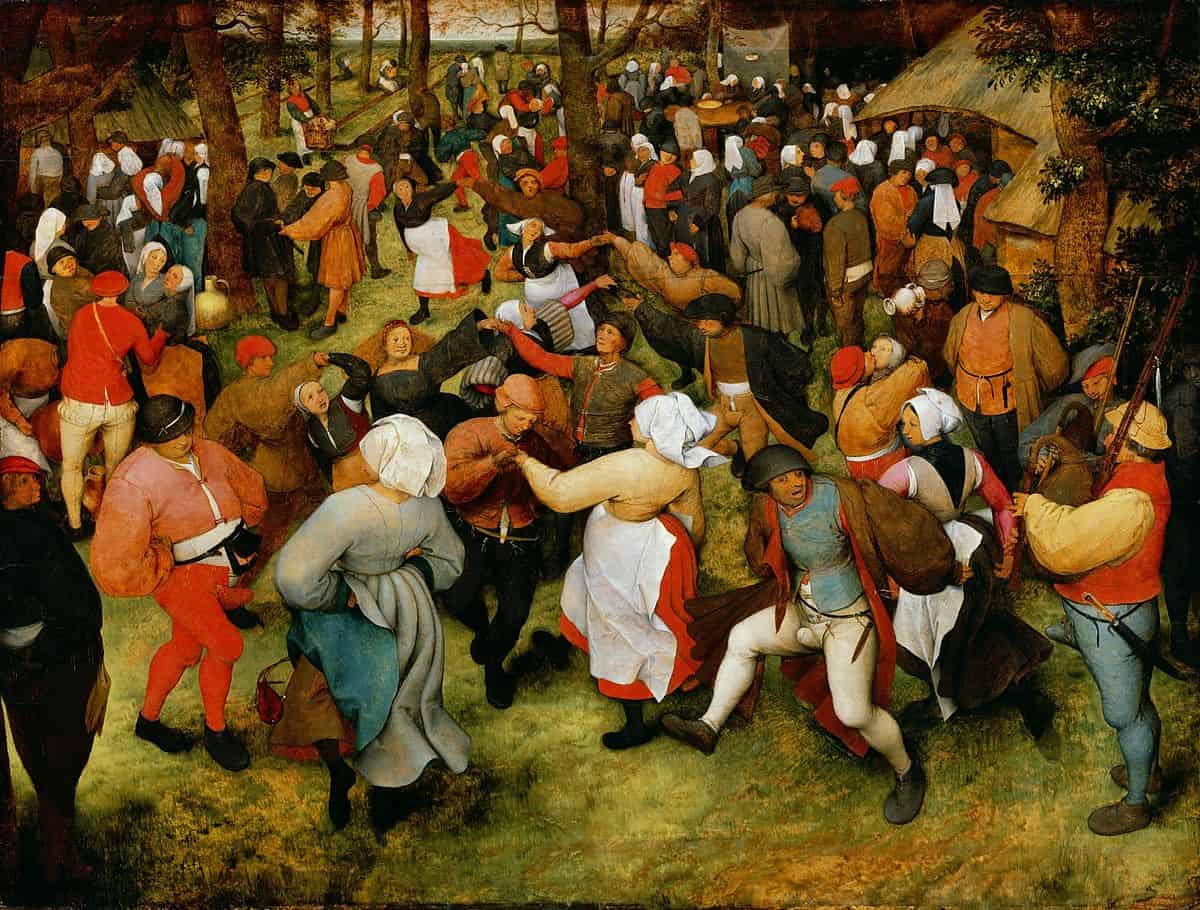
The medieval era is full of fascinating but little-known facts. Take the mysterious disease known as the “sweating sickness”. We don’t know exactly just what it was, but it terrorized and devastated people for decades, then vanished, never to be recorded again. Or the scary sickness known as “Saint Anthony’s Fire”, which killed untold thousands in excruciatingly painful ways. Or the time convents erupted in frenzies of biting nuns, that drove authorities to distraction. Following are thirty things about those and other fascinating medieval facts.

30. The Medieval World Was Pretty Rough
The medieval era was not a great time to be alive. Especially if you were a commoner in feudal Europe. There, society was divided into de facto castes or layers, with the toiling peasants, serfs, and other manual workers – the overwhelming majority of the population – at the bottom. They were ruthlessly exploited by those in higher layers up the medieval structure, who benefited from the commoners’ labor, in exchange for “protection”. There was a twist, though: the protection offered was often from fellow members of the upper castes.

Although those in the upper social layers were not as screwed as the commoners at the bottom, life was no bed roses for them. Violence was rife across all classes. Even discounting deaths in wars or bullying knights rampaging against peasants, the homicide rate was 50 times greater in medieval Europe than in the modern EU. Put another way, Europeans were 50 times more murderous back then than they are today. However, as seen below, it was not violence, but diseases, that did the most to keep life expectancy low. High mortality rates, especially in childhood, kept the average life expectancy around 35, give or take a few years.


