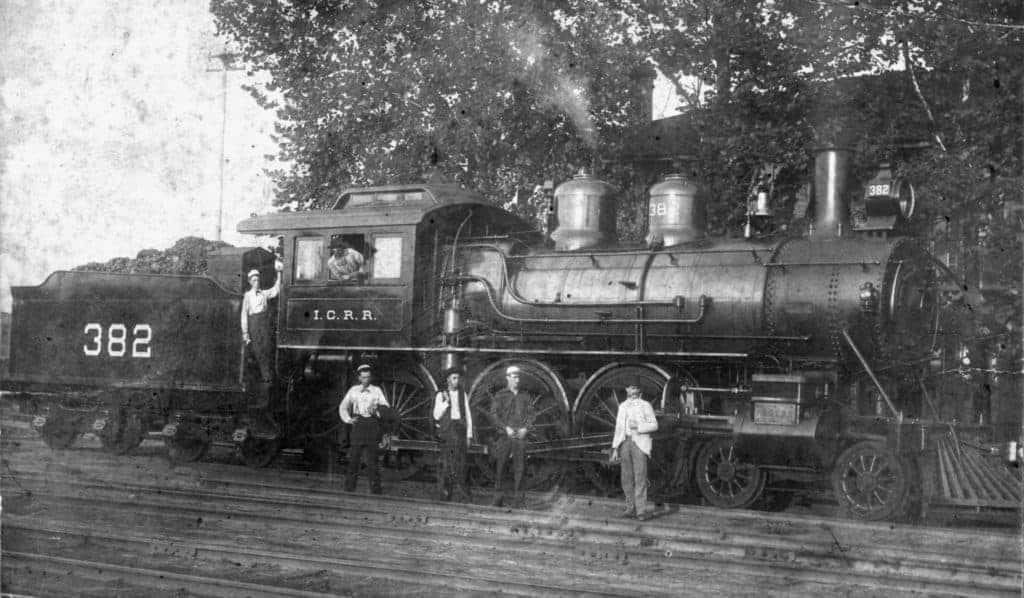

The Wreck
For almost 155 miles, Casey Jones managed to drive the train over “light and shaky rails” and “speed-restricted curves” at close to 80 miles per hour (128 kmh). Roughly every 50 miles or so, the train stopped for a 15 minute water break. As Train No. 1 pulled into the Durant, Mississippi depot Jones was informed that a passenger train would be sitting on a siding outside of Vaughan, and his train would have the right of way. This meant it was very likely that Casey Jones would be able to continue making up time on his route.
Train No. 1 continued traveling at a high rate of speed. When the train pulled out of Goodman, Mississippi it was only 25 miles away from Canton and merely 5 minutes behind schedule. Jones had a good feeling that he would be successful in making up every minute of the 75-minute delay he inherited and that his train would enter the station at 4:05 am as “advertised.” Feeling confident, Casey Jones directed Train No. 1 in a left-hand curve at about 75 miles per hour (121 km/h). Suddenly, Sim Webb yelled to Casey Jones, “Oh my Lord, there’s something on the main line!”
Without hesitation, Casey Jones yelled back to Webb, “Jump Sim, jump!” Sim jumped off of the fast-moving train and could only watch what happened next. According to eyewitness accounts, Casey Jones pulled the train whistle to warn all people around the stalled freight cars to get out of the way. He pulled back on the throttle and threw on the emergency brakes in an attempt to slow the train down. Engine 382 had slowed down significantly, but not enough to avoid hitting first a wooden caboose, then cars full of hay, corn, and timber before leaving the tracks and hitting an embankment.
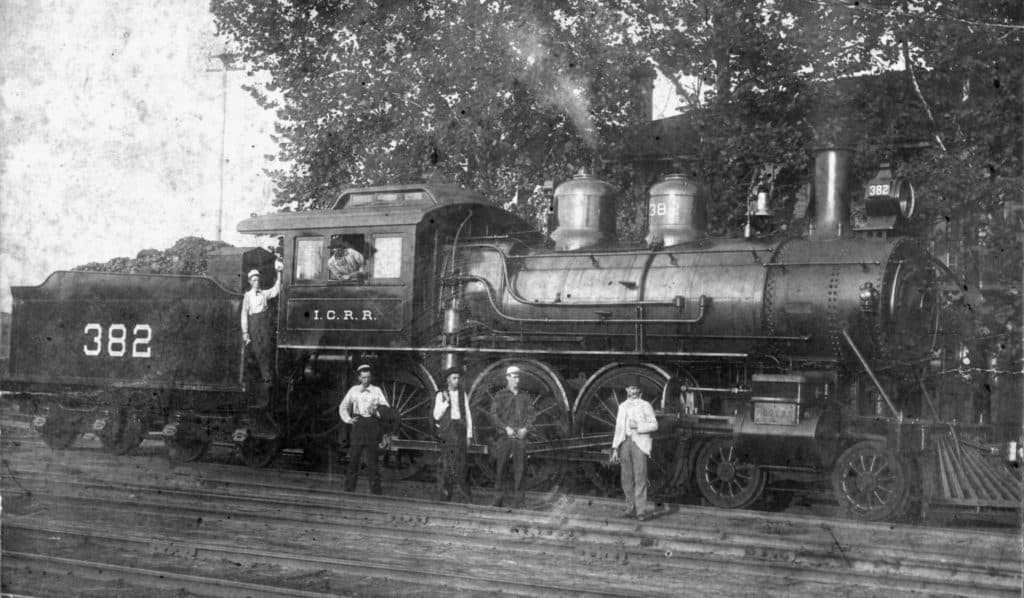
Headlines in the Jackson, Mississippi newspaper proclaimed that Casey Jones was found under the cab with his skull crushed and his “right arm torn from its socket.” The freight train crews removed a lifeless and broken Jones and carried him on a stretcher a half mile to the station in Vaughan. Casey Jones’s watch stopped at the time of impact which was 3:52 am. He was the only casualty and has been credited with saving the lives of all passengers and train workers because he remained on the train and slowed it down.
Almost immediately Casey Jones became a legend as he sacrificed his own life for his fellow train workers and passengers. One headline proclaimed that “Heroic Engineer Sticks to his Post at Cost of Life.” Some passengers recalled the incident as nothing more than being “jarred a little.” In the aftermath of the wreck, Wallace Saunders, an African American songwriter, wrote “The Ballad of Casey Jones.” The song became very popular and made Casey Jones a folk hero.
Casey Jones’s body was sent back to Jackson, Tennessee. A funeral mass was held on May 1, 1900, at St. Mary’s Church where, 14 years earlier, Casey had married Janie Brady. He is buried in Mount Calvary Cemetery. Today his home is part of a railroad museum and family entertainment complex that includes a railroad museum with artifacts about Jones and that fateful night.
Where did we find this stuff? Here are our sources:
The Sources of Country Music – Country Music Hall of Fame.


