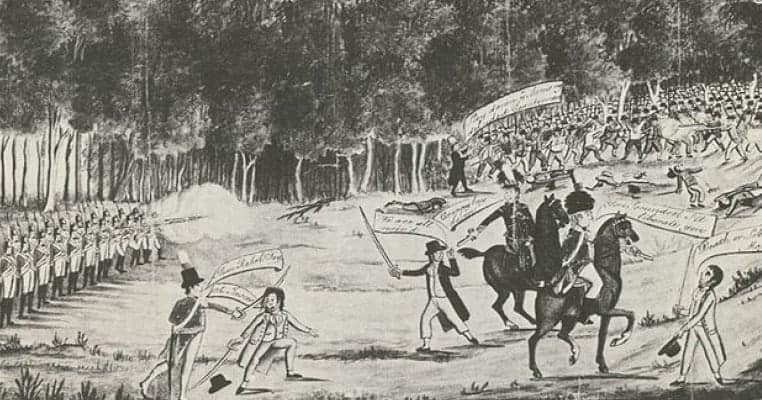
6. The Castle Hill convict rebellion

Irish rebels from the failed rebellions of the late 1790s were among the convicts deported to New South Wales, many of them without trial, and with indefinite sentences. They proved troublesome for the authorities in the Australian colony from the outset. In March, 1804, Philip Cunningham led 233 convicts, mostly Irish, in a mass escape. The convicts overpowered the guards at armories and other government storehouses. Obtaining weapons and supplies, they were joined by like-minded compatriots. The population of New South Wales was then about 5,000 free citizens.
Both the Sydney Loyal Militia – a volunteer force – and the New South Wales Corps were mustered to suppress the rebellion. Governor Gidley King declared martial law. The force of convicts swelled to around 600 well-armed men, on the march to a rendezvous with other escaped bands at Constitution Hill. Cunningham announced his intention to overthrow the British government of the colony, establish an Irish one, and prepare a military unit to send to Ireland in support of rebels there. The exact number of convicts who escaped and joined the uprising is debated, but the government response was swift, driven by panic among the colony’s free citizens.


