Back to the front page
American History

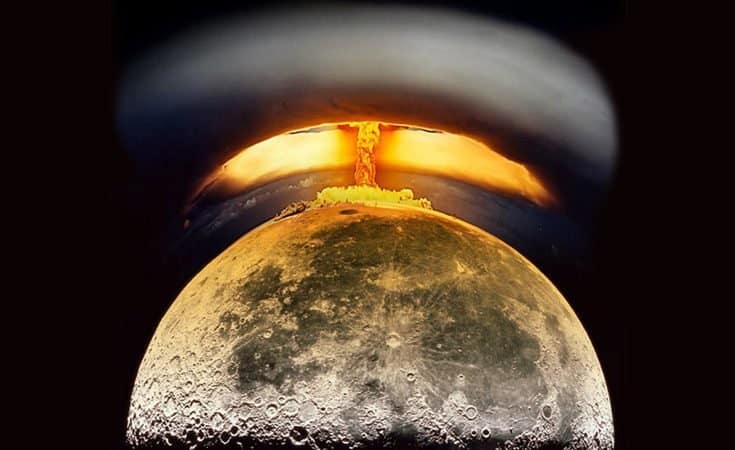
America Wanted to Nuke the Moon and Other Weird History

United States - List of nuclear weapons tests of China
Nuking the Moon. Stillness in the Storm
Advertisement

26. Albert Einstein’s Greatest Breakthroughs Were Accomplished by the Time He Was 26

Albert Einstein. Wikimedia

When most people picture Albert Einstein, they picture an aging man, with disheveled and wild white hair. It stands to reason that most people would assume that Einstein’s most important work must have occurred at the tail end of a long life, spent doing complex physics and math stuff.

It might sound weird – especially to those of us who spent our 20s in a haze – but Einstein did most of his heavy intellectual lifting by the time he was in his mid-twenties. His greatest contributions to science, such as his theory of relativity, had taken place by the time he was 26. In 1905, after graduating from the University of Zurich, Einstein was working as a patent office examiner, and dabbled in physics in his free time. During a span of a few brief months, he came up with four theories that revolutionized science.

Written by

A lifelong history buff, I developed a particular passion for WW2 history as a child, when I spent hours listening to my grandfather, enraptured, as he recounted his wartime experiences in the British East African Campaign and with the British 8th Army in North Africa.

I graduated with a history BA from George Mason University, then went on to get a JD from the University of Virginia School of Law. After lawyering for a decade, I moved to sunny Rio de Janeiro and a less demanding career, opening a tourism agency in Copacabana.

A big chunk of my free time is spent blogging (you can follow me on Quora https://www.quora.com/profile/Khalid-Elhassan ) or freelance writing, mostly about my favorite subject, history.

Advertisement

Keep reading