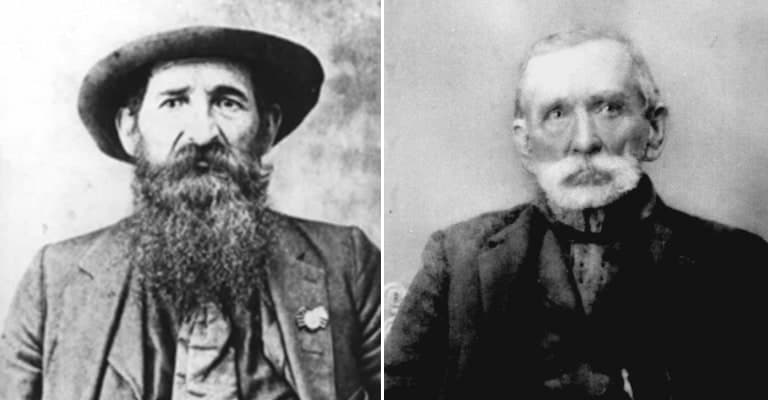
17. Testimony in the trial was that Cap Hatfield had been the killer at the McCoy home

Cap Hatfield was the second son of Devil Anse, a man known to have a violent streak and a quarrelsome nature throughout the Tug River region. Cap was the type of man who preferred fighting to discussion and believed that vengeance was a duty of the offended. Cap was one of many of the feud’s participants of which there are conflicting accounts, some say he was arrested by Frank Phillips on the same day that the latter killed Uncle Jim Vance, others recount that he escaped Phillips on that day. At one point he was in the Logan County (later Mingo County) Jail, from which he reportedly escaped and eluded justice, probably with the help of his father. Cap was never brought to justice.
During the trial which led to the sentencing of Ellison Mounts to death, eyewitness testimony from Randolph McCoy was that it was Cap Hatfield who had killed Alifair McCoy, testimony which conflicted with the confession offered by Mounts. As Cap frequently sided with his mentor, Jim Vance, who consistently recommended violent solutions to perceived slights, it seems likely that he was present during the attack, probably leading it along with his uncle. Cap escaped the feud and the pursuit of the vigilantes and vanished. In 1930, he died at Johns Hopkins Hospital in Baltimore, Maryland, one of the last survivors of the feud. His death was described in the New York Times as being the result of a brain ailment.